


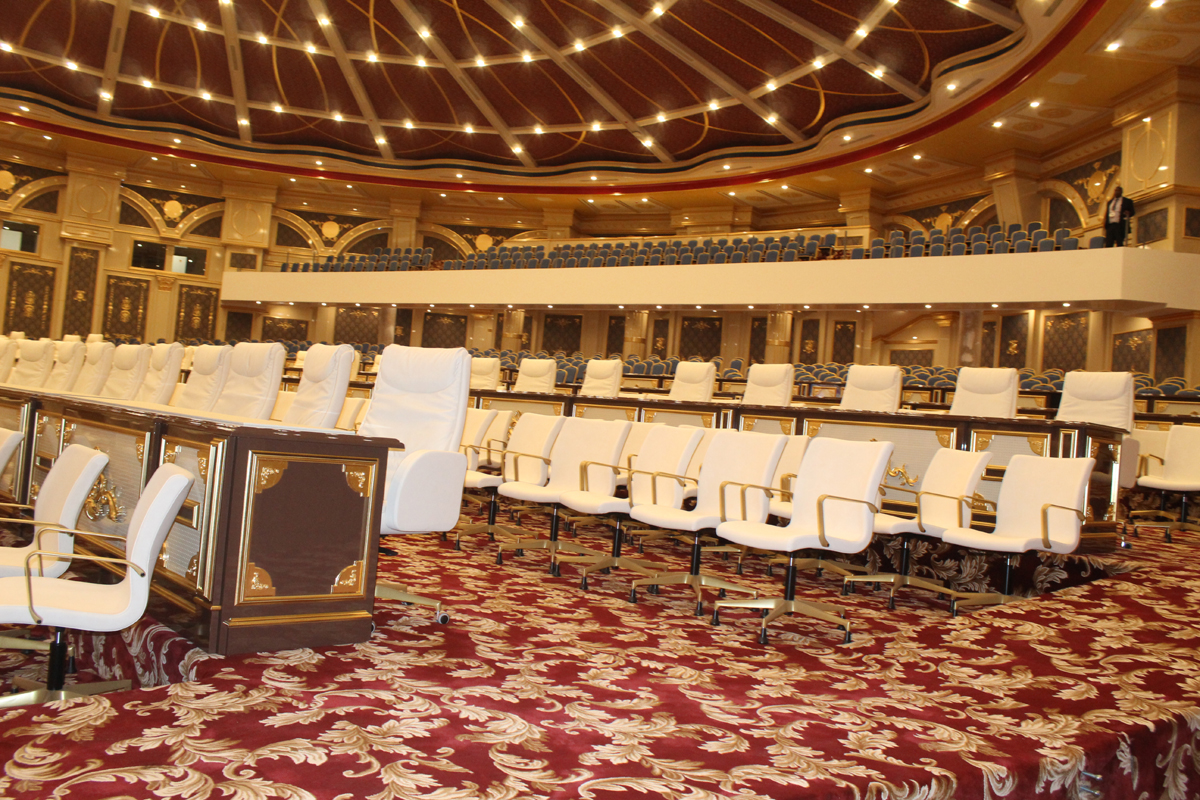
THE opening of the International Convention Centre (ICC), christened Ezulwini Palazzo by His Majesty King Mswati III, marks the country’s strategic entry into the meetings, incentives, conferences and exhibitions (MICE) sector.
Economist Sanele Sibiya said it created a surge in demand for specialised private sector services. He said the new value chain offered immediate opportunities for high-end event management firms to specialise in simultaneous interpretation, world-class audio-visual technology, and professional digital security.
This follows the completion of the ICC, and official opening by His Majesty in Ezulwini on Saturday. The massive building is a 4.2 hectare project, and there is none like it in Africa.
The opening formed part of the country’s double celebration honouring the king for his 40th anniversary since inauguration in 1986; Ruby Jubilee and his 58th birthday.
Furthermore, Sibiya said a significant gap has emerged for specialised logistics, including luxury transport services, protocol-trained security, and white-glove courier services designed to handle high-value materials for global expos.
In line with the mandate that no Liswati should be left behind, he said the integration of micro, small and medium enterprises (MSMEs) into this ecosystem was vital.
Sibiya added that the ICC and hotel operators will require a steady supply of premium agro-processed goods, such as organic Eswatini coffee and gourmet condiments, as well as artisanal heritage products like Ngwenya Glass and Indalo crafts for corporate gifting.
ALSO READ | King Letsie praises king’s four decades of steadfast rule
He said the concurrent launch of the Royal Signature Expo further signalled a new market for luxury branding, allowing local companies to use the ICC as a global stage to launch products and position themselves as first world players without leaving the country.
From a national and strategic perspective, he said the ICC serves as a powerful tool for diversifying foreign exchange, reducing the country’s heavy reliance on the Southern African Customs Union (SACU) receipts and sugar exports by attracting international business tourism.
He said the influx of global delegates brings in hard currency that stimulates the hospitality, retail, and local tour sectors.
Crucially, while the facility is government-owned, its private sector-led operation shifts the employment burden away from the taxpayer and toward a self-sustaining commercial entity.
This transition is already evident in the specialised training of Emaswati in the United Arab Emirates (UAE) and the intense competition for new, high-skill roles, effectively creating jobs that exist outside the traditional public wage bill.
Ultimately, he said the ICC acts as the boardroom of the nation, serving as a catalyst for the Nkwe (fast-track) mandate by hosting global capital allocators and luxury houses.
“By providing a world-class environment where companies with E10 billion turnovers can engage with local partners and witness the nation’s infrastructure first-hand, Eswatini can secure major investment deals within its own borders rather than in external hubs like Sandton.
“Additionally, the facility generates a significant tourism spill over effect; international delegates attending multi-day conferences are likely to explore the Highveld and Lowveld, providing a vital multiplier effect for the entire tourism corridor, from rural lodges to cultural heritage centres,” he said.

![Alpheous Mfana Nxumalo.[Illustrative Image]](https://eswatiniobserver.com/wp-content/uploads/2026/04/Money-In-The-Bag-218x150.jpg "Govt offers Alpheous E1.2m")