


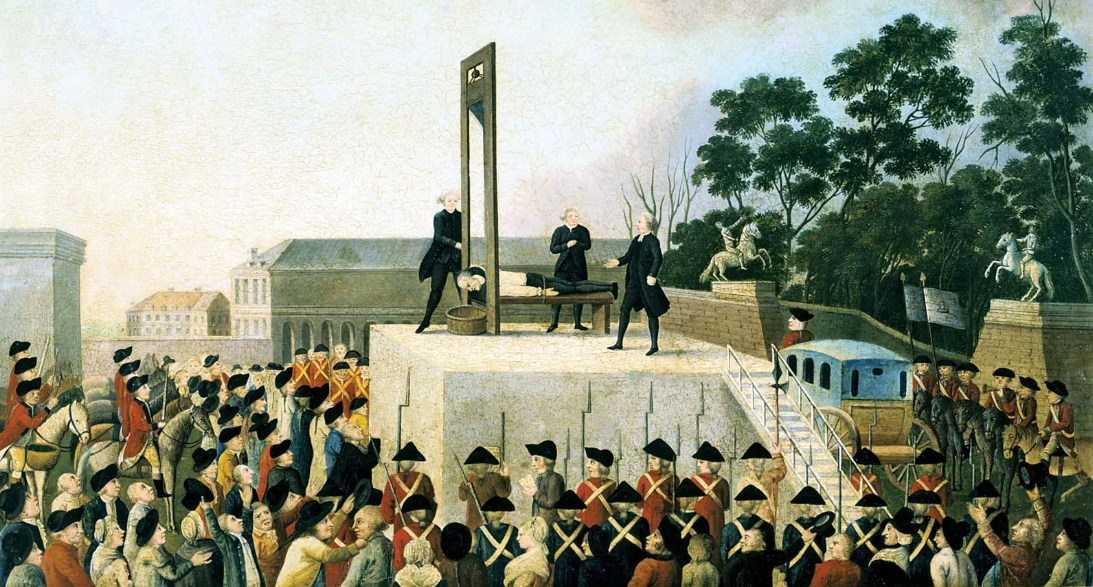
It has become fashionable for anti-establishment activists to self-label themselves as revolutionaries. This has far less to do with any coherent ideology and more to do with amassing a grotesque collection of rabid haters of the monarch.
Too much of our political discourse has been diverted into unproductive obsessions with rituals, expensive watches and cars — a preoccupation and incitement that undoubtedly created the context for the destructive 2021 riots. That discourse has since been exposed as too transient and hollow to serve as a basis for genuine nation-building engagement.
The revolution obsession displayed by radicals bent on causing chaos to spite the authorities remains the biggest threat to the country’s political stability. Though bereft of any sensible ideology, radicals have demonstrated both the inclination and the capability for senseless violence, destruction of property and political assassinations.
The choice of violence is not surprising. Anti-establishment activists are waging a war against a system conceived during a period when Africa’s forebears were engaged in deep soul-searching to decolonise politically, culturally and economically. Across the continent, a range of political experiments emerged during that era — some successful, others producing deeply undesirable autocratic outcomes.
Speaking on decolonisation, Walter D. Mignolo observes:
“Decolonisation is the horizon of thinking and being that originated as a response to capitalist and communist imperial designs.”
It was also the era in which Ghana’s first president, Kwame Nkrumah, famously declared: “We face neither West nor East; we face forward.”
ALSO READ: LIZZIE WAS RIGHT AND THAT WAS HER CRIME
Against this backdrop, it is far too simplistic to dismiss the tinkhundla system as a thoughtless project designed solely to serve the selfish interests of a clique. We have previously argued that this no-party state system represented one of the most Afrocentric and decolonisation-driven political experiments in post-independence Africa — an attempt to reconnect with indigenous governance while charting a forward path of development and dignity.
Aspersions
To cast aspersions on this Afrocentric and culturally rich system is, for radicals, to deny their own Africanness. There is nothing treasonous or blasphemous about interrogating the effectiveness, relevance or appropriateness of tinkhundla. On the contrary, continuous re-engineering is necessary to ensure the system remains fit for purpose.
Radicals calling for revolution are merely regurgitating rhetoric imported from progressive movements in South Africa — despite the fact that South Africa’s own transition was not the result of a revolution.
Indeed, the South African experience has demonstrated the impracticability, undesirability and unviability of revolutions. Yet this has not stopped parties such as the EFF, SACP and MK Party from continuing to nurse ambitions of a future revolution that would magically catapult them into lifelong political dominance.
This context helps explain the nature of the revolution now being pursued locally.
Brutal Uprooting of Traditional Institutions
When progressive leaders describe the centuries-old monarchy as nothing more than an expression of “royal supremacy,” they reveal an ideology devoid of originality, thoughtfulness and democratic maturity.
One radical leader, currently based in the UK, has gone further by publicly targeting pastors who refuse to align with rebellion politics. This confirms that radicals are not merely opposed to the monarchy, but hostile to a broad range of traditional institutions — including the church and the family.
Only progressive pastors who preach heresies and embrace permissive lifestyles appear acceptable within radical circles. Public attacks on clergy reflect a culture of incivility fundamentally at odds with Eswatini’s core values of respect, honour, faith and life.
Conservative Christians should not make the mistake of believing radicals oppose only the monarchy. The entire fabric of Judeo-Christian values is under attack.
Ideology
It is deeply concerning that the fastest-growing radical grouping is built around a personality cult. Lacking any identifiable ideology beyond the emotional rhetoric of its founder, this movement is especially vulnerable to manipulation, with potentially disastrous consequences.
At its inception, this grouping claimed to seek merely an elected prime minister within tinkhundla. Within two years, however, it had become the most aggressively anti-monarchist movement in the country — driven almost entirely by rhetoric.
Older radical formations, while still problematic, at least exhibit predictable ideological frameworks, largely mirroring South Africa’s ANC-alliance politics. This ideology increasingly incorporates issues such as LGBTQ+ advocacy, abortion, same-sex marriage and a wide array of so-called minority rights.
The Expansionist Agenda of Revolutionaries
Since 1994, the SADC region has faced a growing threat to peace and stability: interference by non-state revolutionary actors across borders. While SADC protocols have been effective in regulating state conduct, they have struggled to address destabilisation driven by revolutionary organisations operating from South Africa.
Zimbabwe’s opposition has long complained about fraternal ties between ruling parties across borders — ties viewed as part of a broader revolutionary expansionist strategy rather than mere political solidarity.
History offers cautionary parallels. Fascist revolutions in Italy and Germany under Mussolini and Hitler were driven by ambitions to export ideology beyond national borders. The sponsorship of progressive entities in Eswatini by South African comrades today represents one of the most serious destabilising risks in the SADC region.
Conservatives across the region must oppose this expansionism decisively. While revolutionary actors have achieved limited domestic success in South Africa, they wield disproportionate influence over foreign policy, as evidenced by close ties with Russia and China.
There are allegations that radical entities locally have also cultivated links with Mainland China — a country with a troubling record on religious freedom. Such alliances would reverse Eswatini’s democratic gains and usher in an unsustainable and deeply undemocratic transition.
Walter D. Mignolo warns:
“While European modernity should be admired for its many virtues, its imperial bent to ‘save the world’ by making the world an extended Euro-America is unacceptable.”
Similarly, while progressives may be credited for expanding social safety nets in South Africa, their ideological imperialism — seeking to remake the region into an anti-West, anti-business and anti-Israel bloc — is equally unacceptable.