


You could argue that Kareem Ashraff is not the only person to have paid the ultimate price for a health crisis that has not only ravaged this kingdom’s healthcare system, but has also fractured society along deep and lasting fault lines.
Swazi Pharm’s director was turned into the central villain through a forensic audit so controversial, so compromised, that it is unlikely to ever face proper scrutiny in Parliament.
On the strength of that same report, government removed Swazi Pharm from the list of critical suppliers — at the height of a drug shortage — despite the company being the country’s largest and most reliable supplier of essential medicines.
As it is, a relatively small supplier has been handed an emergency supply tender that they cannot service — and three months later, no supplies have been delivered. Yet the rules are clear here: an emergency tender of this nature means supply within 48 hours.
This decision alone tells you almost everything you need to know.
Anyone who has followed the crisis with clear eyes understands that it was prolonged not by accident, but by reckless and self-serving decisions taken by government and the Ministry of Health.
The blacklisting of Swazi Pharm was not just irrational; it was dangerous. It took place at a moment when every supplier was needed to keep the supply chain alive. At the same time, procurement specialists were sidelined and procurement processes descended into chaos — chaos that conveniently created room for certain interests to benefit.
Three years into a crisis that shows no sign of resolution, the country is still being fed the same tired narrative: that one man was responsible, that one company was the problem, that one report explains it all — a report excitable MPs brandish in our faces every time they are confronted.
In any case, they have never had the appetite to scrutinise this report, except to rely heavily on the word of those who brought it in.
ALSO READ: Three Months Later: E25m Emergency Medical Tender Delivers Nothing
Meanwhile, hospitals remain short of drugs, patients continue to suffer, and accountability remains elusive.
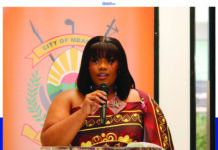
And then there is Lizzie Nkosi, who watched it all unfold — and thought, if not found it her duty, to fight what she saw was a manufactured crisis.
Over the past year or so, it has become increasingly clear that Lizzie Nkosi is another figure who has been blamed for doing the right thing. She was turned into a scapegoat because she saw the crisis coming early — and spoke up.
As such, she is not in Parliament as a senator because of failure at the Ministry of Health, nor because of dishonesty or incompetence. Nor is she there because she presided over the crisis at a time when the system buckled. Rather, she is there because she had to fight to remain in politics. She is occupying that seat because she had to find a way to survive after being thrown under the bus.
She was made to look politically expendable — unfortunate to be in office when structural failures could no longer be concealed.
In fact, if you look back to the early years of Lizzie Nkosi in Cabinet — from the admirable roles she played in the wake of the coronavirus outbreak to fighting to ensure the health system stayed firm and strong — you could say she deserved a second term. She could do no wrong, until the manufactured health crisis.
It was when she started speaking out about the signs that we were headed into a drug-shortage crisis due to unavailability of funds and the government’s cash-flow crisis, and later raised the alarm over the forensic audit by the auditor-general, that her stock started to fall.
In the last year of her term, Nkosi fought fiercely against a certain oxygen plant project. She put her foot down against a certain institution being given a subvention. She publicly stated that she had been bypassed in the establishment of the forensic audit and was later sidelined within a Cabinet task team.
Those who closely followed the Sibaya proceedings will recall her frustrated attempts to raise alarm over what now appear to have been early warning signs of a powerful cabal operating behind the scenes to ensure their agenda prevailed, regardless of consequence.
Nkosi eventually secured a seat in Parliament, having lobbied relentlessly to remain politically relevant. It is an open secret that she nearly missed out. By the time she succeeded, however, the damage had already been done.
She was no longer considered for Cabinet appointment. Her name had been tainted.
She had become damaged goods — the convenient fall person. Had she not fought to remain in the game, she might have been quietly pushed into political obscurity.
In a recent conversation, the personal cost of that decision was impossible to miss. The pain was evident. So was the injustice. Nkosi remains one of the few people capable of explaining how the system collapsed and how it might be fixed. Instead, she has been isolated, discredited and blamed.
Even as a senator, her role has been deliberately diminished. Her voice is ignored. Her experience is treated as a liability rather than an asset.
And all the while, those who engineered the crisis continue to hide behind a report that answers nothing and absolves no one.
When you speak to her, the hurt is palpable. The same false narrative she fought against continues to dominate public discourse. The real culprits remain in place, draining the country while hiding behind a report that offers neither accountability nor answers.
Everything Lizzie Nkosi warned about has come to pass. Decisions taken to discredit her have been disproved by events themselves. And still, glaring gaps remain — gaps that now make it painfully clear she was right all along.
Behind the scenes, her name continues to be linked to the very failures she sought to prevent. Despite holding public office, she remains unable to clear her name or meaningfully shift the discourse, while the architects of this crisis cloak themselves in ambiguity and silence.
You get the sense that the political actors in this crisis have known all along who the main players in this scandal would be — and worked out how to give them leading roles.
Everything has worked to script, except that those scripting this did not bank on the tenacity of the people they sought to destroy.
Three years on, what must happen is obvious. We can solve the health crisis, or we can continue scapegoating. We absolutely cannot do both and then act surprised when people start asking uncomfortable questions about who benefits from this arrangement — and why nobody in charge seems interested in listening to those who were right all along.
Choose one.