

The ministry of public works and transport will collect around E300 million annually through the Road Authority (RA) levy.
The Road Authority levy is a public institution that will be responsible for the maintenance of roads in the country.
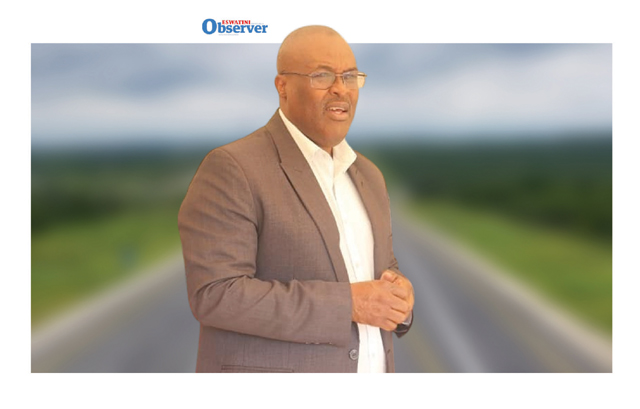
According to the ministry’s Principal Secretary, Thulani Mkhaliphi, the proceeds would be deposited in a dedicated account at Nedbank and would not be tansferred to the government directly.
He stated that, for now, since the governing body of the agency was still not in place, the funds would not be used but will await the establishment of the governing body.
The account will also hold the fuel levy, road tolls collected at border posts and vehicle licensing fees.
Speaking in an interview to the Market View, Mkhaliphi stated that the current requirement for road maintenance in a year costed a few billions of Emalangeni, so this account would need to accumulate funds for several years before it can start being useful.
He provided an example of the MR3 Ngwenya through Ezulwini to Matsapha road, stating that it required over a billion this year alone for its complete refurbishment.
He said once they start collecting the levy, the budget requirement from the government would not be cut off completely, but it would gradually reduce.
He noted that most public roads were in a bad state due to lack of maintenance.
The PS stated that the 0.40 cent levy will also assist in addressing the E6 billion road budget backlog.
Explaining how this levy came about, Mkhaliphi mentioned that, sometime last year, the minister of public works and transport piloted a bill in Parliament aimed at establishing the Road Authority agency.
He stated that Eswatini would not be the only country with a road authority, as almost all SADC countries had one.
explained
He explained that road authority agencies were financed through the usage of road infrastructure.
“Those who use the roads pay a certain amount to finance the operations of the agencies,” he said.

He noted that in other jurisdictions, they established road tolls where road users pay for tolls, and the agency uses that money in the levy.
Another way of raising funds for road maintenance is through the licensing of motor vehicles.
The third option would be fuel levies and the country would then determine which of these road financing streams would be viable.
He mentioned that in Eswatini’s case, the issue of road tolls was discussed, but it was decided to put it on hold until the economy picked up.
He explained that people use the roads for various reasons, and if tolls are implemented, the cost would then be transferred to the end user.
Mkhaliphi stated that Parliament opted not to explore road tolls for now. “This was a discussion that was still ongoing, particularly for some roads,” he said.
He also noted that the road toll for foreign-registered vehicles would still be collected at border posts, though the collection from that fund stream was very small.
“It is in the region of about E70 to E100 million, so it does not make much impact in terms of road maintenance,” he said.
He mentioned that before the 40 cent levy was implemented, there were intense consultations with relevant stakeholders.
Mkhaliphi stated that during these consultations, they finally agreed on the 40 cents, which he considers a happy medium.
They agreed that the levy should not be heavy enough to overburden taxpayers, but also not so small that the collection does not make economic sense for its intended purpose.
He explained that the ministry of finance then provided guidelines on how the levy would be collected and reported in terms of accountability.
collecting
He said the ministry also suggested that it would be good to start collecting the levy at the beginning of the financial year.
This comes after the Ministry of Natural Resources PS Lindiwe Mbingo issued a statement announcing the 40 cent per litre levy implementation, as previously outlined by the ministry of finance during the budget speech.
The PS emphasised that the levy aimed to ensure sustainable maintenance and improvement of the nation’s road infrastructure, enhancing transportation efficiency and safety for all road users.
She added that the collected funds will be dedicated to the upkeep, rehabilitation and development of road networks nationwide.
However, the PS reassured fuel consumers that the levy’s introduction would not result in an immediate fuel price increase this month, due to slight over-recoveries in fuel product pricing.