Russia is proposing granting visa-free entry to Emaswati, in what the Kremlin has described as part of its efforts to deepen diplomatic, economic and people-to-people ties between Moscow and the kingdom.
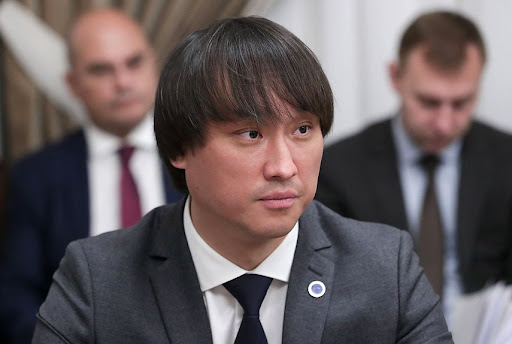
The proposal, now under active discussion, was announced by the head of the State Duma’s tourism committee, Sangadzhi Tarbaev, and has been formally confirmed by the Russian Embassy to Eswatini.
If concluded, the agreement would allow ordinary passport holders from Eswatini to enter Russia without a visa, expanding on existing arrangements that currently apply mainly to diplomatic and service passport holders.
Tarbaev revealed the plans during engagements with Russian media, stating that negotiations were underway to extend visa-free travel to Zambia, Zimbabwe, Mozambique and Eswatini.
He framed the initiative primarily as a tourism and economic measure, but one clearly embedded in Russia’s wider diplomatic outreach to Africa.
“Africa, with the exception of Egypt, is not a mass destination, but it does attract tourists,” Tarbaev said, stating that Russian interest in African travel has been steadily increasing as political and economic ties with non-Western partners deepen.
Russia already maintains visa-free or simplified visa regimes with a number of African states, including Angola, Botswana, Cape Verde, Mauritius, Malawi, Morocco, Namibia, São Tomé and Príncipe, Seychelles, Tunisia and South Africa.
According to Tarbaev, Moscow sees mobility as a cornerstone of its Africa policy.
“Introducing visa-free travel with the majority of African countries could help develop tourism,” Tarbaev said.
The proposed visa-free regime builds on steadily expanding relations between Eswatini and Russia over the past few years.
Eswatini is already included in Russia’s electronic visa programme, easing short-term travel for certain categories of visitors.
In addition, the two countries have signed agreements allowing holders of diplomatic and service passports to travel without visas, a privilege that has supported high-level exchanges.
Military and security cooperation also forms part of the relationship, with Eswatini among a group of African states that have concluded such agreements with Moscow.
High-level diplomacy has reinforced these ties.
Minister of Foreign Affairs and International Cooperation Pholile Shakantu has participated in Russia–Africa Partnership Forum meetings, while Russian Foreign Minister Sergey Lavrov has visited the kingdom in person, where he committed Moscow to deeper cooperation across a wide range of sectors.
During his visit, Lavrov highlighted education, healthcare, energy, agriculture, information technology, mineral exploration and security as priority areas.
He also pointed to plans to expand scholarships for Emaswati students studying in Russia, currently capped at around twenty per year.
Addressing delegates from 52 African countries at the Second Ministerial Conference of the Russia–Africa Partnership Forum, held in Cairo last month, Lavrov reiterated Moscow’s central message: that Russia seeks partnership without political conditions, without interference in domestic affairs, and without leveraging aid or cooperation to influence internal policy choices.
“Russia’s renewed focus on Africa is underpinned by structural realities rather than sentiment alone,” Lavrov said, pointing to the continent’s rapidly growing population and expanding economic potential.
African leaders and officials were told that Moscow prefers long-term planning, practical projects and mutually beneficial outcomes, rather than short-term assistance tied to governance or geopolitical alignment.
The Cairo meeting reviewed progress on the 2023–2026 Action Plan adopted at the Second Russia–Africa Summit in St Petersburg in 2023 and committed both sides to accelerating cooperation in trade, investment and industrial development.
Proposal huge opportunity for Eswatini, but… – International Relations expert
Russia’s proposal to grant visa-free entry to Emaswati should be understood primarily as an opportunity for enhanced people-to-people contact and economic engagement, but one that must be approached with clear-eyed caution and a firm grounding in the kingdom’s national interest, an international relations expert has said.
Reacting to Moscow’s disclosure that it is in discussions to allow ordinary Eswatini passport holders to enter Russia without a visa, Melusi Simelane, Civic Rights Programme Manager at the Southern Africa Litigation Centre, said such arrangements are, in principle, consistent with international norms on freedom of movement and can yield tangible social and economic benefits if properly managed.
“Fundamentally, the Universal Declaration of Human Rights and the International Covenant on Civil and Political Rights establish the right to free movement of people, of course within the scope of national laws,” Simelane said.
“We must always welcome bilateral agreements between nation-states that promote free movement, particularly because they almost always come with social, political and economic benefits for the people of those states,” he added.
Russia’s proposal, announced by the head of the State Duma’s tourism committee, Sangadzhi Tarbaev, and confirmed by the Russian Embassy to Eswatini, would expand existing arrangements that currently apply mainly to diplomatic and service passport holders.
If finalised, it would allow locals to travel to Russia without a visa, easing mobility for tourism, business, education and cultural exchange.
Simelane cautioned against viewing such agreements through a purely cynical or geopolitical lens, arguing that the kingdom should be confident in pursuing partnerships that align with its domestic laws and development priorities.
“We must never anticipate only bad sentiments in such agreements. What matters is whether they follow the dictates of our domestic laws and whether they are in the national interest. Nothing precludes our government from entering into such agreements if they are lawfully concluded and beneficial to the country,” he said.
At the same time, Simelane warned against uncritical engagement, stating that foreign policy decisions must be tested against both immediate gains and longer-term strategic implications.
“Caution is the name of the game in any international relations tactic. The litmus test must always be what the people of a nation-state stand to benefit. We must ask, what is the national interest, and what do our domestic laws require?” he added.
Russia has consistently insisted that its engagement with Africa, including Eswatini, comes without political conditions or interference in internal affairs.
While Simelane acknowledged the appeal of this framing, he said Eswatini should remain anchored in multilateral principles and international law as it deepens bilateral ties.
“As the world moves towards a multipolar order, it is inevitable that countries will pursue bilateral agreements that best serve their interests, but we must be cautious that such agreements do not undermine the international human rights framework to which we have committed ourselves,” he advised.
He pointed to the country’s obligations under international instruments such as the Rome Statute of the International Criminal Court, arguing that people-to-people engagement should not come at the expense of principled positions on accountability and the rule of law.
“We must be confident enough to advance a foreign policy that serves Eswatini’s interests, including the social and economic gains of free movement, while still upholding international law and holding leaders, foreign and domestic, accountable,” Simelane said.
In this sense, he argued, visa-free travel should be seen neither as a threat nor as a panacea, but as a policy tool whose value depends on how carefully and transparently it is implemented.
“There can only be benefit in advancing free movement if it is undertaken within legal frameworks and with a clear understanding of what our people stand to gain,” he emphasised.