



Parents of learners at a pre-school in Manzini have raised concerns over alleged corporal punishment at the institution, arguing that the practice is inappropriate for children of such a young age and instils fear rather than discipline.
The parents claimed that some children had been beaten or subjected to punitive measures at the school, despite corporal punishment having been phased out in Eswatini’s education system.
Corporal punishment in schools in the Eswatini has gradually been discouraged and phased out over the past decade as government shifted towards child-centred discipline methods.
The Ministry of Education and Training introduced school discipline reforms aimed at abolishing physical punishment and replacing it with ‘positive discipline’, which focuses on guidance, counselling and constructive behavioural correction rather than physical force.
The policy shift was influenced by growing evidence that corporal punishment can have harmful psychological and emotional effects on children, including fear, aggression and reduced self-esteem.
READ MORE | MPs against municipality’s closure of Mbabane liquor outlets
Education authorities have argued that such practices undermine a safe and supportive learning environment and may negatively affect children’s development and academic progress.
The reforms also align with international child-protection standards promoted by organisations such as the United Nations and UNICEF, which advocate for non-violent forms of discipline in schools.
These standards emphasise that children should learn in environments that respect their dignity and protect them from physical or degrading punishment.
As a result, schools in the country have increasingly been encouraged to adopt alternative disciplinary methods such as counselling, restorative practices and behavioural guidance, particularly in early childhood education where children are still developing emotionally and socially.
Meanwhile, one parent said her child recently returned home distressed after allegedly being punished by a teacher.
She said the child told her that she had been beaten at school, adding that this was not the first time such an incident had occurred.
The parent further alleged that on another occasion the child had been grounded and instructed to face a wall indoors as punishment for being slow in completing writing work, a situation she said resulted in the school bus leaving the child behind.
She argued that such disciplinary measures were not suitable for pre-school learners.
“As a parent, I do not think this is good because it instils fear in the child. Corporal punishment was phased out for a reason. We should not have our children fearing and hating school because of this,” she said.
The parent also claimed that during a recent meeting, parents were told that if they were uncomfortable with corporal punishment being administered to their children, they were free to transfer them to other schools where such punishment was not practised.
“This is wrong,” the parent said.
The school head acknowledged that corporal punishment had been administered to some learners, but insisted that she alone carried out the punishment and not the teachers.
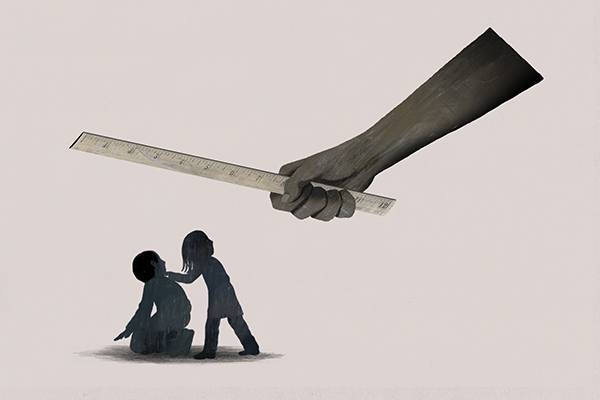
She said in one instance she personally disciplined a child for failing to colour, explaining that she believed the learner should have been able to perform the task at that stage.
“I understand that children are still at the elementary stage and cannot do certain things such as writing. But at that particular age the child should be able to colour. I just used a stick,” she said.
ALSO READ | Don’t drink and drive – King
The headteacher said she had immediately informed the parent after disciplining the child and explained the reason for doing so.
She added that in another case she had administered corporal punishment at the request of a parent who believed the child was progressing slowly.
Asked about the school’s disciplinary approach, the headteacher said the institution also used non-physical measures, including instructing learners to face a wall for a period of time as punishment.
However, she acknowledged that corporal punishment has already been phased out in the country.
Following the concerns raised by parents, the headteacher said the school would no longer use corporal punishment and would apologise to parents.
“Moving forward, we will not employ corporal punishment at the school at all. We will also apologise to the parents,” she said.
The matter has sparked debate among parents, many of whom say disciplinary approaches in early childhood education should prioritise guidance and support rather than punishment.
Communications Officer Gugulethu Masuku said corporal punishment was banned in all schools in the country, including pre-schools.
She advised parents to report the matter to the regional education office (REO) so that the ministry could be made aware of the situation.
Masuku warned that although some schools operate independently of government, they are still required to comply with government regulations as they obtain licences to operate from the State.
Context
Education reforms in Eswatini have increasingly promoted positive discipline and child protection policies, particularly in early childhood education, where psychological safety and emotional development are considered critical for learning.



![Alpheous Mfana Nxumalo.[Illustrative Image]](https://eswatiniobserver.com/wp-content/uploads/2026/04/Money-In-The-Bag-218x150.jpg "Govt offers Alpheous E1.2m")