

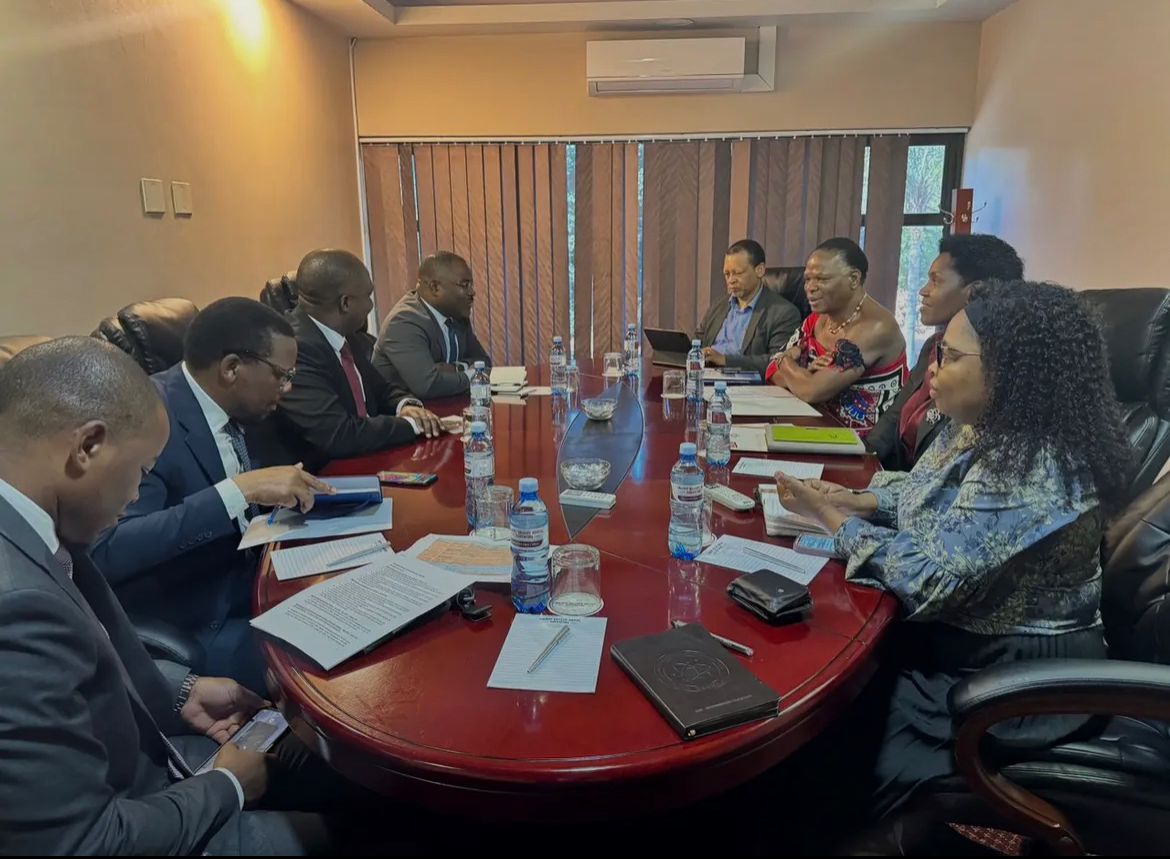
The Minister of Natural Resources and Energy Prince Lonkhokhela, met with World Bank Executive Director Dr. Zarau Wendeline Kibwe, to evaluate the implementation progress of various World Bank-funded energy and water projects in the country.
During the discussions, Prince Lonkhokhela expressed profound gratitude for the invaluable support provided by the World Bank, highlighting the impressive achievements in energy and water accessibility in Eswatini, with current statistics showing 88 per cent access to energy and 75 per cent access to water.
He remarked on the importance of these projects in enhancing the quality of life for citizens and driving sustainable development.
The minister particularly emphasised the ongoing Eswatini ASCENT project, supported by the World Bank which aims to achieve universal electricity access by 2030.
This ambitious initiative reflects Eswatini’s commitment to improving energy infrastructure and ensuring that all citizens had reliable access to electricity.
Prince Lonkhokhela reiterated the importance of the World Bank’s assistance in securing supply for these essential resources.
“The collaboration between Eswatini and the World Bank is crucial in ensuring that our energy and water projects are not only implemented effectively, but also contribute to the long-term sustainability of these vital resources,” he said.
Dr. Kibwe acknowledged Eswatini’s remarkable progress in the energy and water sectors, affirming the World Bank’s commitment to continue supporting these programmes.
The discussions reflected a shared vision for further development initiatives aimed at enhancing infrastructure and resource management in the kingdom.
Dr Kibwe also met with the Minister of Commerce, Industry and Trade Manqoba Khumalo.
This meeting reflected the importance of strengthening collaboration and exploring on-going and potential development initiatives between the World Bank and Eswatini.
Minister of Finance Neal Rijkenberg, participated in the discussion, focusing on aspects of economic growth, investment opportunities and fiscal policy support.
His insights added a broader perspective on how the collaboration could enhance economic stability and development in Eswatini.
The World Bank Board had recently approved a Development Policy Loan (DPL) operation to support Eswatini’s effort to strengthen fiscal governance, foster private sector development and enhance energy security and climate resilience.
This was the first in a programmatic series of two operations, as the country faced critical constraints in achieving broad-based economic growth, efficient public resource allocation and poverty reduction.