


This past Wednesday, government announced a sharp fuel price increase linked to escalating tensions in the Middle East following the ongoing conflict involving Israel, the United States and Iran.
This is a development expected to deepen pressure on households already grappling with the rising cost of living.
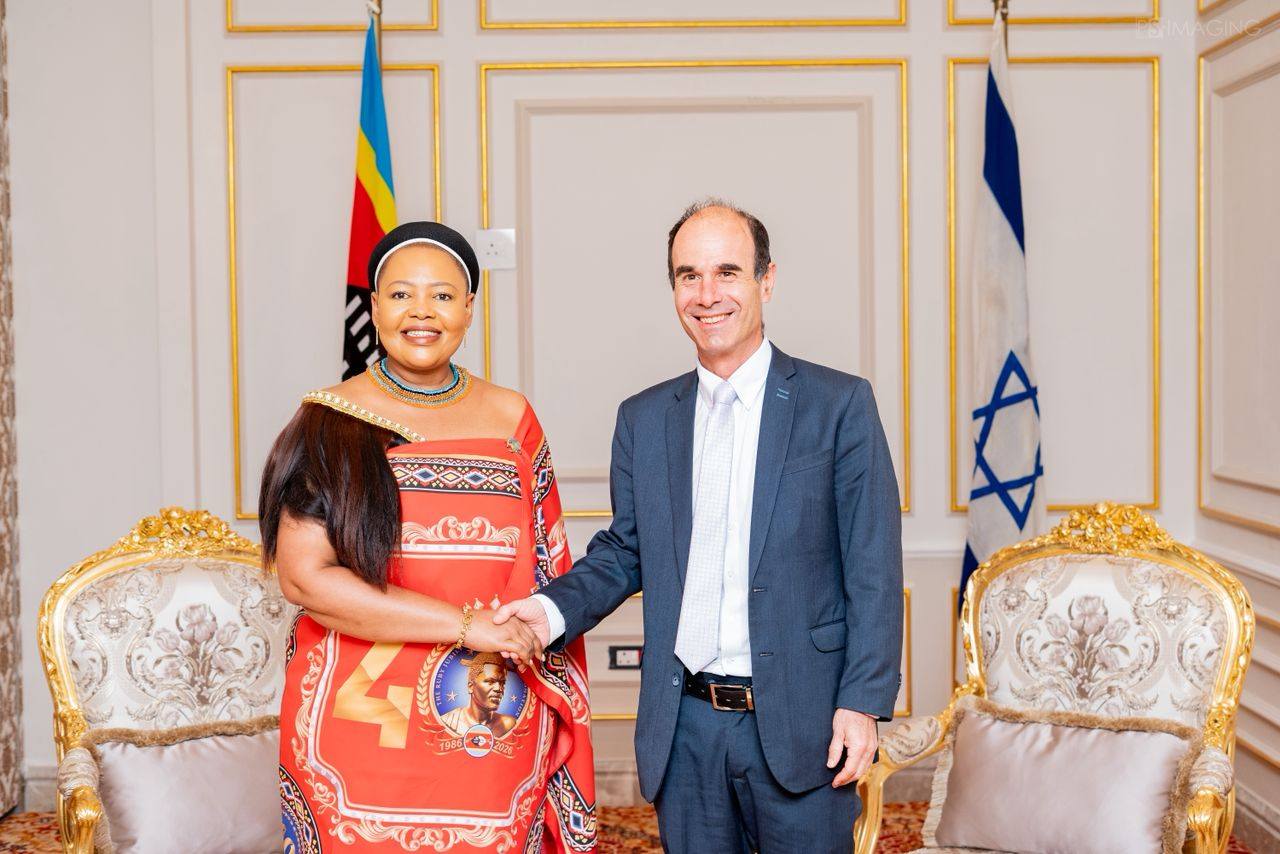
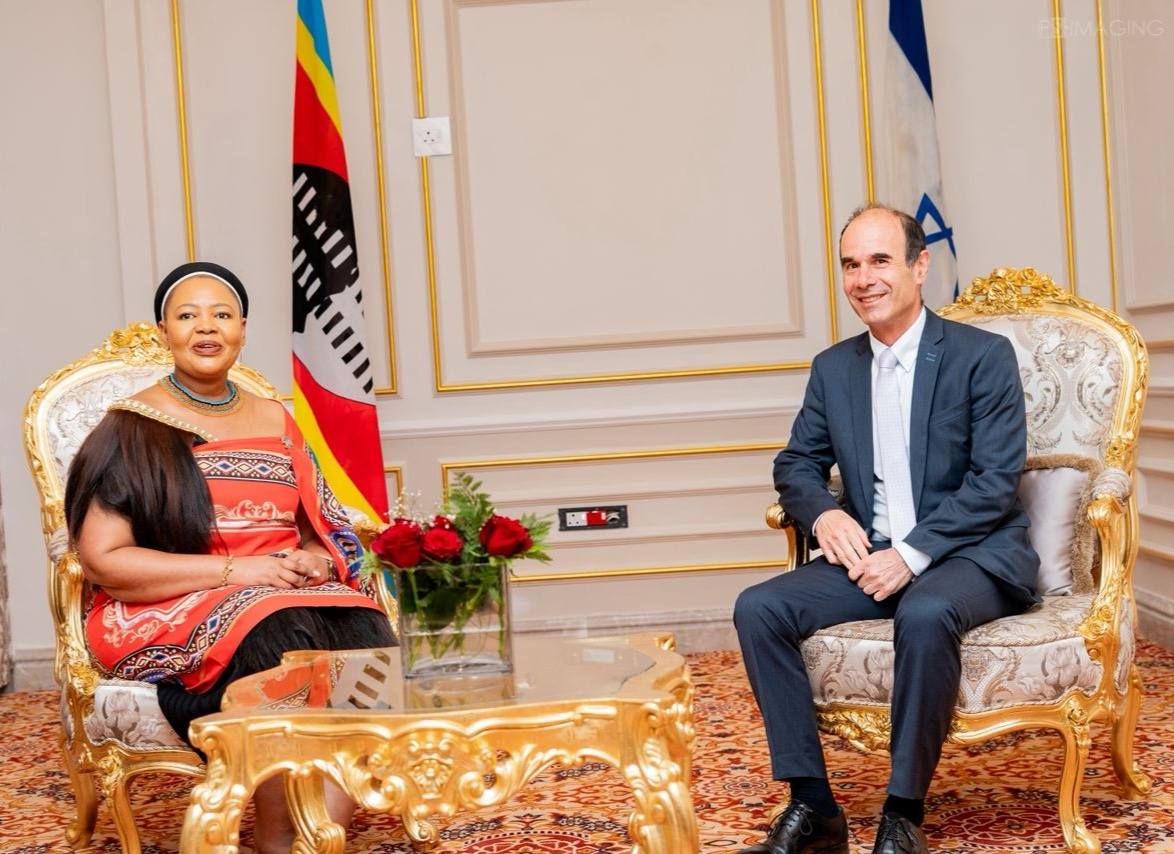
On the very same day, Israeli Ambassador Ilan Fluss was in the country for talks with Minister of Foreign Affairs and International Cooperation Pholile Shakantu on strengthening cooperation between Eswatini and Israel, even as the economic effects of the conflict were already felt by ordinary Emaswati at fuel pumps.
The Sunday Observer interviewed Fluss during his brief visit to obtain Israel’s perspective on the escalating confrontation and the growing economic impact the conflict is having on ordinary citizens in countries such as Eswatini, far removed from the battlefield.
Asked specifically about the impact the conflict is having on locals, who now find themselves absorbing its economic consequences, Fluss said Israel understood the hardship the conflict was causing ordinary citizens in Eswatini, but defended his country’s actions against Iran.
The ambassador insisted that Israel was acting in self-defence against what it views as an existential threat.
“We feel for Emaswati who are getting the consequences of such impacts as fuel hikes and fuel shortages and all the trickle effects, we really do,” Fluss said.
“But one has to state that while this is not the intention of Israel, we have been pushed to a corner where we have no other option because Iran is a threat to the existence of the State of Israel,” he added.
The latest fuel adjustments announced by the ministry of natural resources and energy will see the price of petrol rise from E22.35 to E25.27 per litre, diesel from E25.20 to E31.60 and illuminating paraffin from E19.50 to E26.28.
ALSO READ | Ministry Of Natural Resources and Energy announces fuel hike
For many consumers, the increases are expected to ripple through the economy through higher transport costs and rising food prices as instability in the Middle East disrupts global energy markets and shipping routes.
Fluss described Iran as the central force behind regional instability and said Israel viewed Tehran as a threat in three key areas: its alleged pursuit of nuclear weapons capability, its ballistic missile programme and its support for armed groups across the region.
“As Liswati, nobody is presenting an existential threat to your existence as a nation and if someone did, you would do anything in your power to defend yourself. We are doing just that,” he said.
On the nuclear issue, the ambassador said Israel believed Iran continued to pursue nuclear weapons capability despite public denials from Tehran.
He argued that Iran should allow broader international inspections to demonstrate that its intentions were peaceful.
“They should open up and allow inspectors from independent parties to come and prove that the threat is not real,” he stated.
Fluss also pointed to Iran’s missile arsenal, saying Israel regarded it as capable of causing widespread destruction across Israeli territory.
In addition, he accused Tehran of funding and directing a network of allied groups, including Hezbollah in Lebanon, Hamas in Gaza and the Houthis in Yemen.
Israel, he said, viewed these organisations as part of a coordinated regional strategy aimed at surrounding and attacking the Jewish state.
The ambassador said his visit to the kingdom focused heavily on expanding bilateral cooperation between the two countries, prompting questions on the specific areas Israel is seeking to strengthen with Eswatini and more importantly, why the relationship with the kingdom remains strategically important to Israel.
Fluss said Israel was particularly interested in sharing expertise in technology with the kingdom.
“We lead the world with technology and we would like to share such technology with our partners such as Eswatini to help improve their socio-economic conditions, including in areas such as education,” he stated.
He also highlighted the political importance Israel places on maintaining diplomatic ties with countries that continue to recognise and engage with it at a time when divisions over the Gaza war remain sharp internationally.
“I have said that the very existence of Israel as a state is questioned in some areas, so having friends around the world, who recognise us is significant for us and we appreciate that friendship,” Fluss said.
That diplomatic significance became more visible last year when Eswatini refrained from voting during a landmark United Nations General Assembly resolution backing irreversible steps towards the establishment of an independent Palestinian state.
The New York Declaration on the Peaceful Settlement of the Question of Palestine and the Implementation of the Two-State Solution passed overwhelmingly, with 142 countries voting in favour, 10 against and 12 abstaining, among them Eswatini.
The kingdom’s decision placed it at odds with most of southern Africa, where governments largely backed the declaration and renewed calls for Palestinian self-determination.
South Africa, one of Israel’s strongest critics over the Gaza war, voted in favour alongside Lesotho, Mozambique, Zimbabwe, Botswana and most of the region.
The country instead joined a far smaller group of abstentions that included Cameroon, Togo and the Democratic Republic of the Congo.
Co-chaired by France and Saudi Arabia, the declaration called for time-bound and irreversible steps towards a two-state solution, while condemning both the Hamas attacks of October 7, 2023 and Israel’s military campaign in Gaza.
It also called for the release of hostages held by Hamas, reconstruction of Gaza, a permanent ceasefire and broader regional security guarantees that would include Israel.
Analyst raises concern over deepening Eswatini-Israel ties
International relations analyst Melusi Simelane has raised concern over the strengthening relationship between Eswatini and Israel, arguing that the public must critically interrogate the nature of the cooperation being pursued, particularly around security and surveillance technologies.
Simelane was responding to remarks made this week by Israeli Ambassador Ilan Fluss during an interview with this publication, in which the envoy defended Israel’s escalating confrontation with Iran and described Tehran as the ‘strategic centre of gravity’ behind instability in the Middle East.
The ambassador also signalled Israel’s interest in expanding cooperation with Eswatini in areas including technology, innovation and development initiatives following his meeting with Minister of Foreign Affairs and International Cooperation Pholile Shakantu.
Simelane however, argued that such framing required much closer scrutiny, saying the roots of instability in the Middle East could not simply be reduced to Iran’s regional influence.
“That framing is, with respect, an inversion of the historical record and, as a position in international relations, does not withstand serious scrutiny,” Simelane said.
He argued that the region’s modern instability could not be understood outside the historical context of the Nakba in 1948, which saw the displacement of hundreds of thousands of Palestinians during the establishment of Israel.
Simelane further contended that Israel had historically acted as the initiating military force in several major regional conflicts, including operations in Lebanon, Gaza and Syria.
“To then describe Iran as the ‘centre of gravity’ of regional instability is to confuse a country that has supported resistance movements in Palestine and Lebanon with one that has actually conducted cross-border military operations,” he added.
At the same time, Simelane highlighted that criticism of Israel should not be interpreted as an endorsement of Iran’s internal human rights record.
He said Iran must also be held accountable for the repression of protests, persecution of journalists and the use of the death penalty.
He however, argued that Israel’s position failed to adequately account for mounting international legal scrutiny surrounding its own conduct in Gaza and the occupied Palestinian territories.
Simelane pointed to ICC arrest warrants issued in November 2024 against Israeli Prime Minister Benjamin Netanyahu, and the country’s former defence minister over allegations linked to war crimes and crimes against humanity.
He also shone light on that Israel’s military conduct remains the subject of proceedings before the International Court of Justice.
Simelane’s strongest criticism, however, centred on the growing cooperation between Eswatini and Israel in the area of technology and security.
He argued that references to ‘technology, innovation and development’ could not be viewed in isolation from longstanding allegations surrounding Israeli-linked surveillance systems and security partnerships in Eswatini.
“We have a public record to reckon with,” he said, pointing to previous reports involving Israeli-linked cybersecurity and intelligence-related arrangements in the country.
He further referenced findings published by the International Consortium of Investigative Journalists in 2024 alleging that Israeli-supplied surveillance technology had been provided to this country’s law enforcement.
According to Simelane, the broader global controversy surrounding Pegasus spyware and NSO Group raised serious questions about the nature of technology partnerships involving authoritarian-leaning states.
“When an Israeli ambassador speaks of deepening cooperation with Eswatini in ‘technology and innovation’, citizens are entitled to ask plainly: which technologies and innovations, and for what?” he said.
“The most plausible reading of this relationship is that its centre of gravity is security cooperation and surveillance capability,” he emphasised.
Simelane argued that such concerns carried added significance ahead of Eswatini’s upcoming fourth-cycle Universal Periodic Review before the United Nations Human Rights Council later this year, highlighting that several international organisations had already raised concerns around judicial independence, suppression of dissent and unresolved allegations linked to the 2021 unrest.
“A state that procures surveillance capability from a supplier whose product has become globally synonymous with targeting dissidents is not engaged in a neutral technology partnership. It is acquiring the means of repression,” he said.
Simelane also questioned what he described as contradictions within this country’s foreign policy posture.
“For decades, Eswatini has defended Taiwan’s right to self-determination and that is a defensible position, but it is unconscionable to uphold that principle for one people and abandon it for another. Palestinians are entitled to exactly the same right to self-determination under international law,” he contended.
On Israel’s argument that weakening Iran’s regional influence was necessary for lasting peace, Simelane said historical evidence suggested the opposite.
“The proposition that lasting peace can be achieved by militarily degrading one regional actor has been repeatedly tested over the past forty years, yet it has not produced peace,” he stated.
He cited the 1982 invasion of Lebanon, the 2003 Iraq war and repeated bombardments in Gaza as examples where military campaigns had ultimately deepened instability and radicalisation rather than ending conflict.
“Lasting peace requires addressing the root causes of the conflict, which lie in unresolved questions of occupation, dispossession and self-determination that have festered since 1948. There is no military path through those questions. Only a political path remains,” he argued.
Simelane further warned that the economic consequences of the conflict were already being felt far beyond the Middle East, including in countries such as Eswatini following this week’s fuel price increases.
“The impacts on energy markets, shipping costs and food prices are felt directly in households in Pigg’s Peak and Lavumisa. We therefore, cannot afford a posture of false neutrality between aggressor and victim, particularly when small states like ours rely on international law and multilateral institutions for protection,” he said.