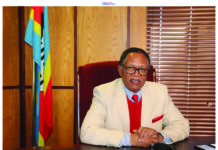



The ministry of health has attributed the ongoing drugs shortage crisis to the cancellation of pharmaceutical orders totalling over E40 million by different suppliers.
This is according to responses tabled by the Minister of Finance Neal Rijkernberg but compiled by the acting Minister of Health Apollo Maphalala yesterday when giving reasons behind the shortage in public health facilities.
This is after Ngudzeni Member of Parliament (MP) Charles Ndlovu moved a motion last week asking the minister of health to appraise the House why there was an acute shortage of essential medications in public health facilities.
When moving the motion, Ndlovu said Emaswati upon visiting government hospitals and clinics, were frequently prescribed medication to buy from private pharmacies.
He said this practice did not only burden citizens financially, but also raised serious questions whether government was committed to providing adequate healthcare services to its citizens.
Maphalala in his responses said the ministry had noted a cancellation of a large amount of purchase orders by suppliers, amounting to about E40 million in the last financial year (the year ended March).
He said most of these orders were of essential medicines and medical supplies, which were mostly needed in theatre and maternity wards.
He said the reasons for the cancellations could not be ascertained and unfortunately the cancellations occurred towards the end of the fiscal year when the government finance system was shutting down, therefore, alternative suppliers could not be engaged to source the supplies.
He said the ministry was experiencing inadequate availability of medicines and medical supplies, resulting in an outcry from the health workers and the public at large. He said the shortages of these health commodities was a challenge of more than 20 years ago and spanning a number of administration periods.
“The major reasons for the shortage remain the same as those in previous years. This includes failure of procurement systems to adequately respond to the needs for health commodities from health facilities, the delays in payments from suppliers, who in turn delay supplying medications, weak warehousing management systems, resulting in accumulation of obsolete stock and sub-optimal use of digital inventory systems,” he said.
Adding, Maphalala said in response to the delayed deliveries, the ministry instituted an emergency procurement process with suppliers from neighbouring countries, with the promise of quick deliveries and payments.
Some delays experienced during the tender evaluation process for medical supplies, mainly contributed by lack of quality documents, among other requirements.
“These medical supplies are those for which health facilities report shortages. The ministry has continually engaged the suppliers and deliveries are expected before the end of the month of May,” he said.
He added that there was a stock taking exercise that the ministry conducted in the month of March and April, which was the time suppliers could not deliver the commodities.
Maphalala said before the stock-taking exercise, the health facilities were advised to order larger quantities, however, some may have not received the full complement of the commodities they ordered, which was why their medication ran out quickly.
“As soon as the stock-taking exercise was completed, the Central Medical Stores expedited the delivery of health commodities according to their orders. Hospitals and health centres were prioritised during the first week after the stock-take and clinics followed thereafter,” he said.
He added that their analysis conducted in April indicated that while some products were generally available, such as those for managing HIV and TB, other products such as medical supplies were at low stock.
Maphalala said the ministry was aware of the situation and has procured the items through emergency procurement. Deliveries of the medical supplies was expected by end of May, latest end of July.