
A game-changing agreement set to result in tangible gains has been reached and will see the EU bringing in practical support especially in the country’s digital and science space, transforming it into a knowledge-based economy.
The renegotiated partnership will also see the country being assisted to attain its much-awaited first world status with the EU committing to bringing its prominent programmes including Global Gateway, Erasmus and Horizon which will bring in a paradigm shift in the country’s course.
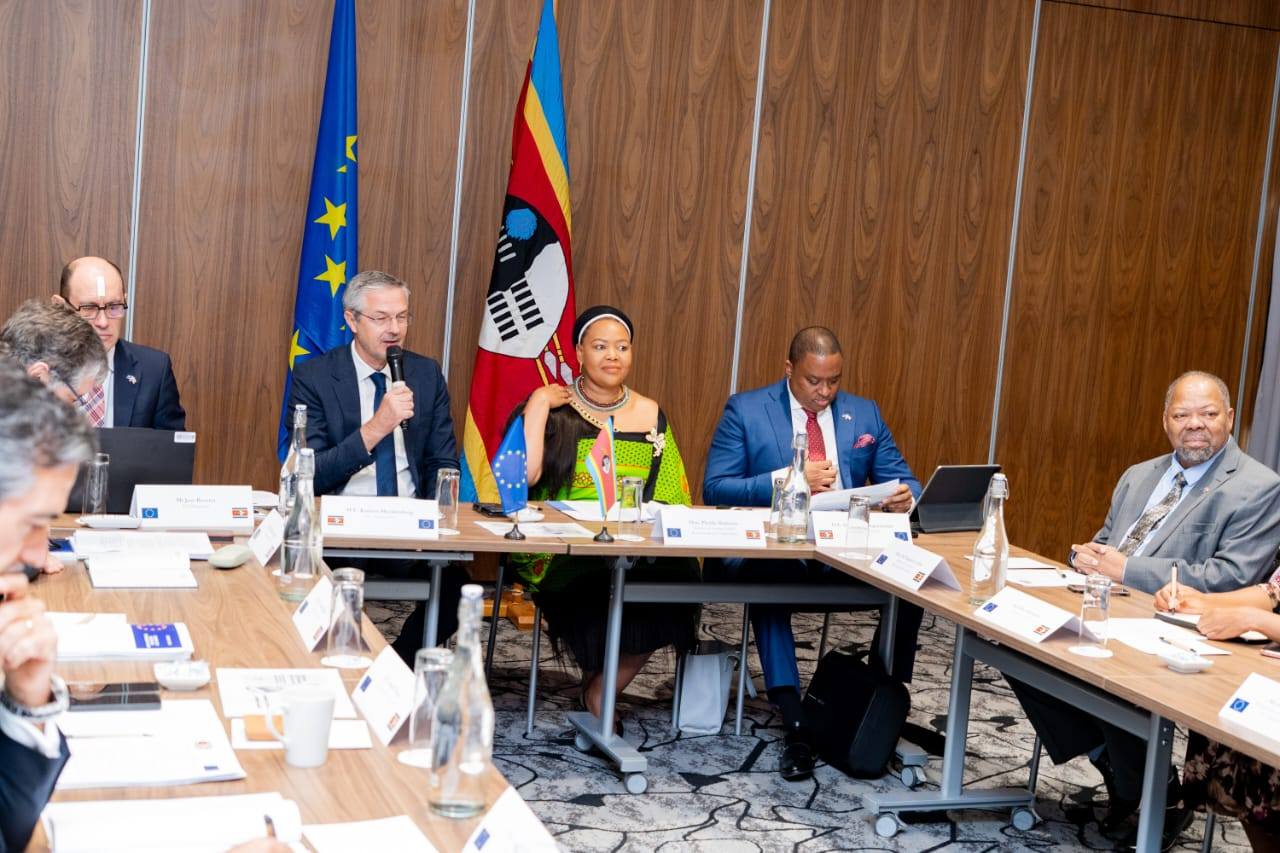
This was after the 3rd Partnership Dialogue between Eswatini and the European Union (EU) that took place on Friday in Mbabane yielded tangible fruit as there will also be positive interventions in enhancing the country’s economy, rule of law and tackling unemployment.
According to a joint communique by the country and the European bloc, in the context of the 50th anniversary of EU-Eswatini mutual engagement, both parties successfully concluded a renewed partnership under the new OACPS-EU (Samoa) Agreement, reaffirming their commitment to a robust, long-term relationship based on mutual respect and shared values.
The partnership dialogue is a key mechanism, under the Samoa Agreement, for deepening cooperation for the mutual benefit of both parties. Both Eswatini and the EU expressed confidence that these open exchanges will accelerate concrete, impactful action, ultimately supporting the kingdom’s drive towards realising the national vision of attaining first world status through sustained and inclusive growth.
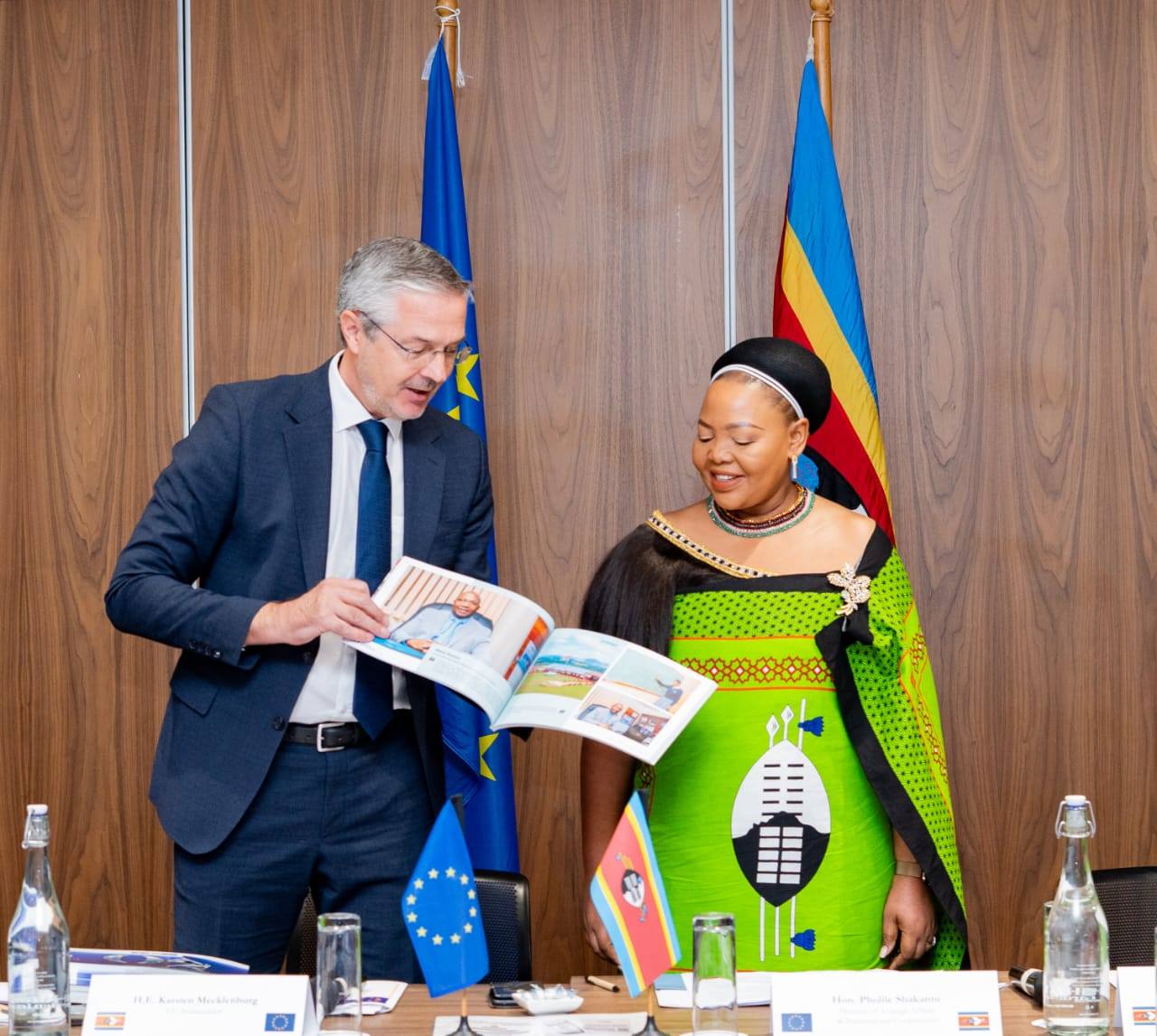
Friday’s dialogue was co-chaired by EU Ambassador to Eswatini Karsten Mecklenburg and Minister of Foreign Affairs and International Cooperation Pholile Shakantu with the presence of several EU Member States ambassadors accredited to Eswatini underlining the comprehensive Team Europe approach to this vital partnership.
“Discussions were held upon several of EU-OACPS priority areas for cooperation, including governance, human rights and democracy; peace and security; human and social development; inclusive sustainable economic growth; digital and science policy. The agenda was comprehensive, ensuring alignment with Eswatini’s national development priorities and the Government’s Programme of Action,” reads the communique.
On economic, trade and investment partnership, both parties committed to fostering stronger trade and investment ties by leveraging the full potential of the EU-SADC Economic Partnership Agreement, which is celebrating its 10th anniversary this year, as well as the EU’s current cooperation priority in Eswatini on market-driven skills development and youth empowerment, in addition to numerous ongoing bilateral and regional programmes.
The partners discussed future potential opportunities under the EU’s Global Gateway strategy as well as bilateral cooperation.
“With the ambition of Eswatini to become a first world status nation, the parties discussed the potential of digital and science to transform Eswatini into a knowledge-based economy and the various EU support instruments on this matter, including in support of academic exchange and encouraging scientific cooperation, both bilaterally as well as under relevant EU Programmes Erasmus and Horizon,” further reads the communique.
On good governance, rule of law and fundamental freedoms, the parties discussed preparations to the 4th cycle of the Universal Period Review of Eswatini, welcomed the numerous advancements on the area of governance, rule of law and fundamental freedoms but also the work in progress.
“Options to provide additional assistance, support and expert advice were discussed, including possible institutional capacity-building and the strengthening of the rule of law.”
Furthermore, with conflicts increasing worldwide since the last Partnership Dialogue in 2025, both sides discussed the current challenges to peace and security and reiterated their commitment to defending effective multilateralism and a rules-based international order.
The next Partnership Dialogue will be held next year on a date to be mutually agreed upon.