

Bayethe wena Waphakathi! On your opportune trip to the Republic of Ghana, during the kingdom’s transformative and historic period. When the country is deliberating on the One Country; One System of Local Government which in my professional view should be One Country and Governance System dialogue.
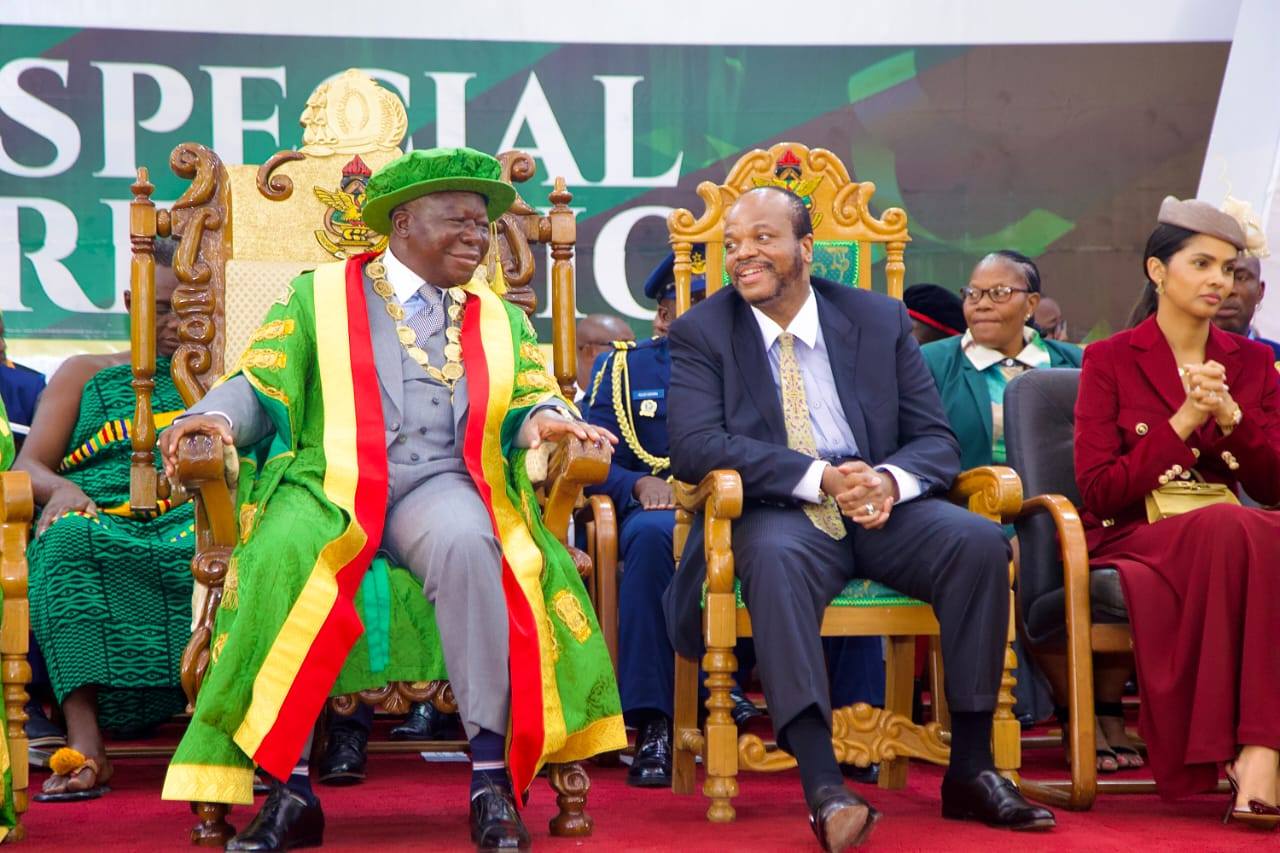
A view further motivated when watching on YouTube as Ingwenyama spoke at National House of Chiefs in Kumasi, this historic moment captured in the African briefing: Tradition is Africa’s future: “in a stirring speech before Ghana’s National House of Chiefs in Kumasi this week, His Majesty King Mswati III made an impassioned case for the preservation and integration of traditional leadership into modern governance.”
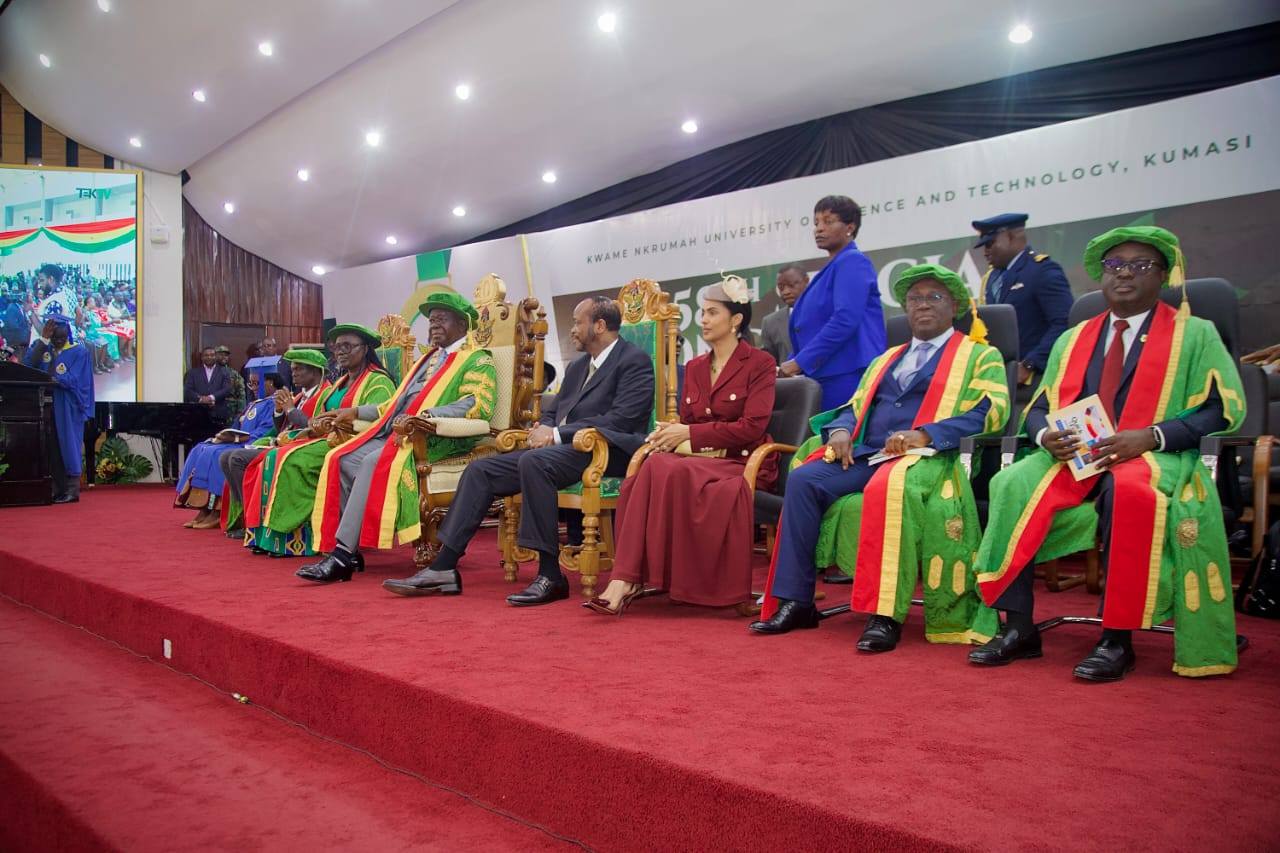 I will strategically use the African Briefing media that captured His Majesty King Mswati III in Kumasi: “Standing before Ghana’s top traditional leaders, King Mswati III declared that while elected governments rotate every five years, traditional leadership remains a permanent institution grounded in community, ancestry and trust. Governments come and go, but traditional leadership never goes.”
Words of wisdom indeed that can transform the public discourse into futuristic imperative: one country and governance system, thus providing politicians and policy makers an opportunity to reflect on their proposed One Country; One System of Local Government.
Establishing the Council of Chiefs
When His Majesty King Mswati III announced the establishment of a formal Council of Chiefs, my voice shouted Hallelujah. The African Briefing statement reads: “The king drew comparison between Ghana’s House of Chiefs and Eswatini Tinkhundla Governance Model, where chiefs are empowered to mediate, preserve heritage and shape community life. These structures, he argued, are not remains from the past, but vital governance pillars in the present. In Eswatini, this is not only cherished, but enshrined in our Constitution and he said, chiefs were the foundation of our monarchy, ensuring the were people’s voices are heard.” By this time my voice must have been echoing in heaven as my dreams were becoming real, explained in section on relevance.
Ingwenyama revealed that Eswatini is establishing a formal council of Chiefs to advise the state of tradition, custom and cultural preservation; an effort to institutionalise indigenous wisdom in national decision making.
This statement as preserved by foreign media is transformative and revealing His Majesty entrusting leadership on chiefs in advising on local governance which is their area of expertise as the state is established according to colonial government norms and standards.
Yet the chiefs are the foundations of monarchy embodying indigenous wisdom of precolonial local governance, which has been infiltrated, but still part of the community and chiefdoms psyche. Hence this article is on one country and one governance system, an initiative that would advance the integration of local governance and modern government.
Council of Chiefs Relevance
In the miscellaneous section of the 2005 Constitution of the Kingdom of Eswatini Section 251 is on the council of chiefs. Section 251 (1):
“There shall be a council of chiefs which shall be comprised of twelve chiefs drawn from the four regions of the kingdom appointed by Ingwenyama on rotational basis.”
This section has always inspired my thoughts on how the governance of this country needs to consider transforming the House of Senate into House of Chiefs. It should comprise of princes, princesses and chiefs with a few distinguished elders embodying outstanding accolades within the country and internationally as its chair or president if it transforms into House of Chiefs.
This view was articulated in the national dialogue submission, prepared in consultation with various elders, including my late uncle Knox Nxumalo as a developmental lawyer.
Therefore when Ingwenyama stated that the council of chiefs would be established as they are the foundation of the monarchy and voices of the people, a heavy log was removed from my shoulders and it does not matter in what shape or form, there has to be a council of chiefs.
This must be done to ensure that Tinkhundla system of governance is rooted within the indigenous wisdom, as it begins with personal and family values, the community and chieftaincy, before it manifests within the Tinkhundla constituency where MPs are finally elected, a process that includes families, communities and chieftaincies.
It stands to reason that a council of chiefs would play a pivotal oversight role in the governance systems that is supported by the African Briefing caption on Ingwenyama in Kamusi: “Chieftaincy is not a symbol but a system.” In essence, chieftaincy is the local governance system that must have governance power over government systems.
Tinkhundla System of Governance
I had the privilege of attending the Eswatini Local Government Conference in June 4-6, which was for reporting to key stakeholders and give feedback from lessons learnt during consultative meetings held in the Republic of Ghana, Kenya, Rwanda, Uganda and Zambia.
This conference also wished to enhance common understanding and capacity strengthening of the key stakeholders on the importance of operationalising the Chapter XIII of the constitution and consolidate views to inform the legislation development process. Unfortunately there was no mention of Chapter XVIII Miscellaneous, which is where the Council of Chiefs is constitutionalised.
During the two times I held the microphone, the powers of the chiefs were on my lips, as without a formalised council of chiefs, Tinkhundla will be a government system and not a governance system.
This view further informed by my pilot research at the Royal Chamber of the State of African Diaspora through zoom meetings, two kingdoms in Nigeria, Liberia, Angola, Kongo and South Africa. What emerged during these conversations with kings and queens is that African kingdoms continue practicing their indigenous governance, spirituality, diplomacy and cultural technologies.
These are currently marginalised by the local or national governments that control land within offices of mayors, provincial or federal, including national leaders, leaving chiefs with limited power.
Hence, my insistence on how one country and one governance system be futuristic imperatives for protecting the powers of chiefs, supported by the formal establishment of the council of chiefs.
This pilot project originates from my 2023 doctorate thesis on Aba-Ntu Governance Theory, A People’s Sovereignty Model which manifests.
Conclusion:
Evidently in my view, His Majesty’s visit to Kumasi, Ghana is divine intervention from God and ancestors, bringing him to the front row seat on the practical experiences of the House of Chiefs and integrating indigenous governance and modern government. Moreover, I insist on stressing the indigenous governance as I studied it during my thesis and I also worked in local government and urban development, in Manzini in the Zambian Cities of Lusaka, Ndola and Livingstone where kings and chiefs were members of city councils.
Moreover I worked in South African context of urban development where I managed USAID technical assistance for Tshwane, Johannesburg, Ethekwini, Port Elizabeth and Cape Town, where I witnessed how local government marginalises, when it excludes local governance systems of chiefs resulting in landlessness.
Therefore, having a council of chiefs is about protecting and preserving the land such that chiefs as custodians of the land, can have governance oversights in local and national government.
This country must mitigate the emerging risk of landlessness that is manifesting in informal settlements, ticking time bombs in community conflicts and violence.
However, if there is a council of chiefs with national oversight, their governance role would be vital in curbing landlessness in dense areas.
Eswatini Observer Press Reader