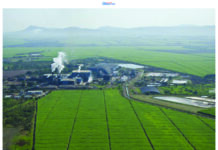



The impacts of climate change continue to affect the Royal Eswatini Sugar (RES) Corporation agricultural activities.
Board Chairman Dr Absalom Themba Dlamini said they implemented several measures to reduce their own impact on climate change, including reducing greenhouse gas emissions, water consumption and, most importantly, moving towards increased use of renewable energy.
| Eswatini Observer WhatsApp Channel
In the 2025 integrated report, Dlamini said the total comprehensive income for the year attributable to owners of the company at E414.3 million was 35% lower than the record achievement of E641.8 million in the prior reporting year.
He noted that the sugar volume was 5% higher than the prior year while ethanol sales volumes were 11% lower due to difficult trading conditions.
Strategic Outlook
Sharing their strategic outlook on performance, sustainability and growth, Dlamini noted that world market sugar prices retreated by 19% while the local currency was firmer throughout the year.
He added that the impact of geopolitical events such as trade tariff issues, the Russia/Ukraine war and Middle East tensions also continued to cause business shocks.

“I am pleased to report that we have added our first sustainability report to our reporting suite which now consists of the integrated report, the sustainability report and the consolidated annual financial statements. This is a big step forward in our public reporting journey.
The board considered a new business strategy (2025 – 2030) and will monitor its implementation closely. One of the pillars on which the strategy is built is increased diversification within the ethanol and energy generation portfolios,” he said.
RES Corp is also seeking to enter the retail ethanol space and generate renewable energy on a large scale, with base load being available to Eswatini and beyond its borders.
Investments and Oversight
Dr Dlamini explained that this would require more capital investments, and an ad hoc board committee was established to consider projects aligned to the new business strategy.
He highlighted that integrated thinking was central to their business model and actively promoted across the company. The board continued to provide oversight, direction and guidance while keeping a close eye on changes in the legislative and regulatory environment, especially those affecting financial management and audits.
He noted that new Global Internal Audit Standards (GIASs) came into effect in January and that RES Corp was working towards an integrated assurance model comprising risk management, regulatory compliance and internal and external audits.
Ethics and Citizenship
“The risk, social and ethics committee has a wide range of responsibilities. Among other things, the committee focused on enhancing the sustainability of our operations, including our impact on the natural environment. The transition from SAPEEC to SAPS/4HANA and its implementation is also closely monitored.
Stakeholder engagement and the company’s commitment to responsible citizenship is another important focus area.
I want to express my gratitude to all the members of the board for their continued hard work, as well as the managing director, executive committee, management and all employees of the company,” Dlamini said.
MD’s Perspective
Managing Director (MD) Nick Jackson said this year proved challenging but RES Corp emerged resilient, reinforcing its ability to navigate increasing adversities.
He echoed the chairman, noting profitability fell by 35% compared to the previous year, primarily due to sugar and ethanol price increases lagging behind inflation, influenced by lower global prices and a stronger local currency.
Jackson explained that the ethanol sector struggled as key customers in the Southern African Customs Union (SACU) market shut down operations.
He also noted that adverse weather conditions impacted crops, with estates achieving yields of 89 tonnes per hectare—below the target of 97.9 tonnes and last year’s 89.7 tonnes.
Mill Performance and Future Plans
Despite this, sugar mills improved recovery rates from 85.8% to 87.0%, ranking among the top five of 25 factories in Southern Africa for the fifth consecutive year.
Jackson further stated that RES supported a sugar miller in the south by toll milling 72,000 tonnes of cane, benefitting both RES Corp and the local industry.
To tackle lower yields, the company is developing a strategy focused on improving sucrose production efficiency, including an in-depth study of weather patterns over the past 10–15 years.
“RES engaged with outgrowers, providing extension services, particularly to small and medium-scale growers. A new outgrower area of 116 hectares was planted, enhancing future cane supply.
Africa’s population growth presents significant opportunities in the sugar and renewable energy markets, which we will continue to explore. As we finalise plans for modernising our aging sugar mills, I remain optimistic about our future,” Jackson said.
Eswatini Observer Press Reader | View Here