


SOCCER – The Ingwenyama Cup has long prided itself on being more than just a football tournament. It is a competition where hierarchy is challenged, reputations are tested, and the cultural heartbeat of Eswatini football is placed firmly at centre stage.
The Last 32 round of the 2025/26 edition stayed true to that identity, delivering drama, goals, upsets, near-upsets, and powerful storylines that extend beyond the final whistle.
Across 16 matches played at various venues, the round offered a revealing snapshot of where local football currently stands. From the dominance of Premier League sides to the resilience of National First Division (NFD) outfits, from tactical maturity to emotional farewells, the Ingwenyama Cup once again proved why it remains the most unpredictable and compelling knockout competition in the country.
It delivered exactly what the competition promises: excitement, emotion, and enlightenment. Premier League sides largely imposed themselves, goals flowed freely, and individual brilliance shone through. Yet, beneath the surface, the round also revealed deeper truths about growth, resilience, and identity in local football.

As the tournament moves into the Last 16, the stakes will rise, margins will shrink, and pressure will intensify. If the opening round is any indication, the journey ahead will be as unpredictable as it is compelling — and that is precisely how the Ingwenyama Cup likes it.
Here are seven key lessons from an absorbing Last 32 phase.
1. Premier League clubs assert their authority
One of the clearest trends to emerge from the Last 32 was the dominance of Premier League sides. Of the 16 matches, top-flight teams progressed in the overwhelming majority, often doing so with convincing scorelines.
Mbabane Highlanders swept aside Lozitha Spurs 3-0, Royal Leopard dismantled Usuthu Liverpool 4-0, Manzini Sea Birds thrashed Masundvwini Royal Swallows 5-0, and Mbabane Swallows brushed past Richmond Aces 4-1. Even when faced with early scares, Premier League teams generally found solutions through superior depth, tactical flexibility, and game management.
Malanti Chiefs survived an early shock against Louis XIV to win 2-1, while Young Buffaloes edged past stubborn Magwanyana with a narrow 1-0 victory. These results underline a widening gap in consistency and composure between divisions. While lower-league sides remain capable of moments of brilliance, sustaining performance levels over 90 minutes against elite opposition remains a significant challenge. That said, the dominance was not absolute and the competition’s magic lay precisely in those moments when the hierarchy was threatened.
2. Goals flowed freely – 48 in 16 matches
The Last 32 produced a remarkable 48 goals, averaging exactly three goals per match. This attacking return speaks volumes about the intent with which teams approached the competition.
Several factors contributed to the goal glut. The knockout nature of the tournament encouraged ambition, particularly from underdogs with little to lose. Defensive structures, especially among lower-division sides, were often stretched by the pace and movement of Premier League attacks. In some cases, game state played a decisive role, with teams forced to chase matches and leaving spaces behind.
Hat-tricks, braces, late goals, and emphatic scorelines defined the round. Siyabonga Mkhonto’s treble for Highlanders stood out, while Manzini Sea Birds and Royal Leopard showcased ruthless efficiency in front of goal. Even tightly contested matches frequently opened up in the latter stages, as fatigue and desperation set in. For neutrals, it was a spectacle. For coaches, it highlighted both attacking promise and lingering defensive vulnerabilities.
3. Wanderers’ misery deepens
Few clubs will reflect on this round with more regret than Manzini Wanderers. Once again, the cup proved unforgiving, as they were eliminated by Madlenya FC on penalties after a 1-1 draw.
The sense of déjà vu was impossible to ignore. Madlenya had knocked Wanderers out at the same stage last year, also via penalties. This time, despite the return of key senior players and early signs of control, Wanderers failed to impose themselves decisively.

Their inability to convert chances and their composure in the shootout told a familiar story. Missed penalties and an absence of cutting edge under pressure pointed to deeper structural and psychological issues. Head coach Zenzele ‘Ace’ Dlamini acknowledged that the club remains in a rebuilding phase, but patience is wearing thin among supporters accustomed to Wanderers’ historical stature.
In contrast, Madlenya’s progress was no accident. Their youthful energy, tactical discipline, and calculated decision to manage the game towards penalties reflected a team that understands its strengths. For Wanderers, the Ingwenyama Cup continues to be a painful reminder of unfulfilled potential.
4. Penalties underline fine margins
Three matches were decided by penalty shootouts, reinforcing the fine margins that define knockout football.
Madlenya edged Wanderers 4-2 on penalties, Msumpe Manchester stunned Tabankulu Celtics 7-6, and Amawele outlasted Red Rhinos by the same scoreline. In each case, regulation time proved insufficient to separate the sides, highlighting the competitiveness of the encounters.
Penalty shootouts exposed contrasting mentalities. Teams that held their nerve, trusted their preparation, and embraced the moment progressed. Those that hesitated or carried the weight of expectation faltered. These outcomes also emphasised the growing tactical maturity among smaller clubs. Rather than chasing reckless late winners, some teams like Msumpe were content to manage games intelligently and back themselves from the spot. It is a sign that the competitive floor of domestic football is rising, even if the elite remain dominant.
5. Hleliso makes an immediate statement at Leopard
Few debuts could have been scripted better than Hleliso Gamedze’s introduction at Royal Leopard. Fresh from signing a two-year deal, the former Rangers striker announced his arrival with a composed goal in Leopard’s 4–0 victory over Usuthu Liverpool.
Beyond the goal itself, Hleliso’s performance symbolised Leopard’s intent to defend their title with renewed firepower. His movement, pace, and confidence added a new dimension to an already formidable attack, complementing the experience of Felix Badenhorst and Andiswa Malaza.
The symbolism of Hleliso donning the iconic number 20 shirt, previously worn by Zweli ‘Mlilo’ Nxumalo, added further weight to his debut. It was a reminder that the Ingwenyama Cup often serves as a stage for narratives to take shape early, setting the tone for what may follow. If his debut is any indication, Leopard have strengthened at precisely the right moment.
6. Msumpe, Madlenya fly the NFD flag
While Premier League clubs dominated numerically, Msumpe Manchester and Madlenya FC ensured the National First Division was not merely making up the numbers.
Msumpe’s penalty shootout victory over Tabankulu Celtics was a triumph of belief and resilience. Facing a more fancied opponent, they matched intensity, defended with discipline, and showed remarkable composure when it mattered most.
Madlenya, meanwhile, once again proved to be giant-slayers. Their elimination of Wanderers was built on pace, youth, and a clear tactical plan. Head coach William Gamedze’s admission that penalties were part of the strategy revealed a level of pragmatism often associated with more experienced sides. Their progression serves as inspiration for lower-league teams and reinforces the idea that preparation and clarity of identity can narrow structural gaps, at least in knockout football.
7. Football and culture intertwine seamlessly
Perhaps the most distinctive lesson from the Last 32 was how effortlessly football and culture blended, particularly during the grand opening at Mavuso Sports Centre.
Between matches, fans were treated to traditional performances such as Sibhaca and Ingadla, transforming the stadium into a celebration of identity as much as competition. This cultural integration remains a defining feature of the Ingwenyama Cup, setting it apart from conventional tournaments.

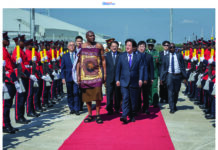
The promise of regional cultural phases leading up to the main finals, where His Majesty King Mswati III is expected to attend, reinforces the tournament’s broader significance. It is not merely about who lifts the trophy, but about preserving heritage, unity, and pride through sport. In this sense, the Ingwenyama Cup continues to fulfil its unique mandate: showcasing football not in isolation, but as part of the country’s social and cultural fabric.