



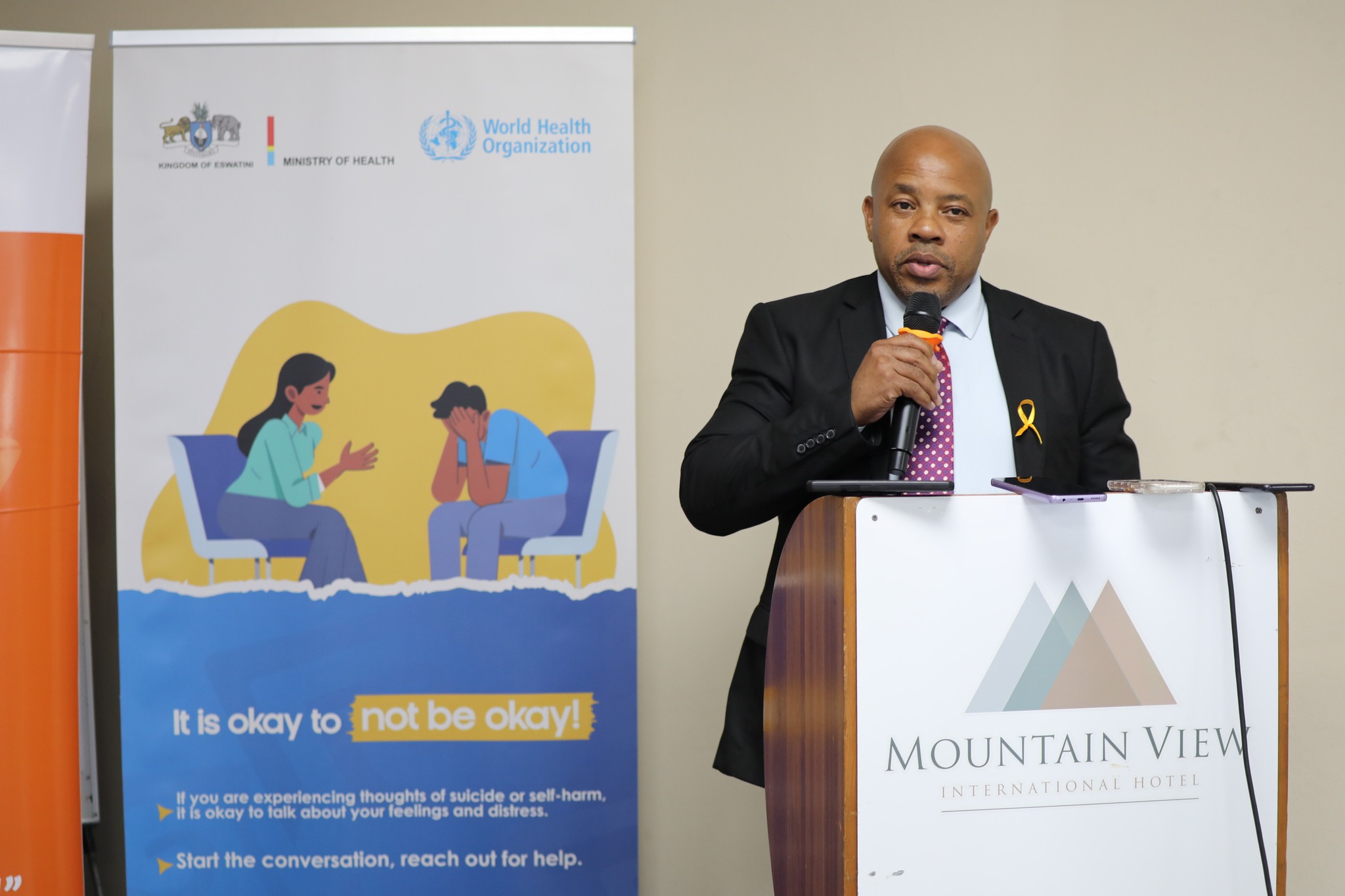
Eswatini has recorded the highest male suicide rates in the world, placing the country at the centre of a deepening public health emergency that the World Health Organisation (WHO) says demands immediate, coordinated national action.
Globally, the kingdom ranks second overall for suicide, with men accounting for about 80% of completed cases.
This assessment has been highlighted by BIO50+, a research and briefing platform, which analysed the WHO’s Q3 2025 public health briefing for Eswatini, that warns that suicide rates in the kingdom have reached levels that can no longer be treated as a marginal or isolated health concern.
Instead, the agency frames it as a systemic national challenge with implications for health policy, social cohesion and economic stability.
According to the WHO briefing, men bear a disproportionate share of suicide deaths in the country, accounting for roughly four out of every five completed cases.
The imbalance mirrors a broader global pattern, but is far more pronounced in the kingdom, pushing the country to the top of global rankings for male suicide mortality.
Data compiled from health facilities and law enforcement between 2021 and 2025 point to hundreds of suicide-related cases, with the majority involving adults aged 25 and above.
RELATED | MSF provides 314 mental health consultations
While women and adolescents are also affected, the scale among men has raised particular concern among public health experts, who link the trend to social expectations around masculinity, economic pressure and low rates of help-seeking for mental distress.
The WHO cautions that these figures likely underestimate the true scale of the problem, as suicides are often underreported due to stigma, misclassification of deaths and gaps in community level surveillance, particularly in rural areas.
“The rising number of suicides in Eswatini is a serious public health concern that requires urgent and coordinated action,” the WHO has warned, calling on government, communities, institutions and the media to treat prevention as a shared national responsibility.
Speaking at a media engagement in Mbabane during World Suicide Prevention Day, WHO Representative to Eswatini Dr Susan Tembo emphasised that suicide prevention cannot rest with the health sector alone.
She said stigma remains one of the greatest barriers to care, discouraging people, especially men, from seeking help until they reach crisis point.
“Suicide is not just a health issue; it is a societal one,” Dr Tembo said, urging stronger collaboration across government departments, civil society, faith groups, employers and the media.
She highlighted the WHO’s LIVE LIFE framework, which identifies responsible media reporting as a key pillar of prevention.
The engagement, attended by media practitioners, focused on equipping newsrooms with tools to report on suicide accurately and responsibly, avoiding sensationalism while promoting help-seeking and awareness of support services.
The ministry of health has acknowledged the severity of the problem and committed, with WHO support, to reducing the country’s suicide rate by one-third by 2030.
During the World Suicide Prevention Day commemoration, Minister of Health Mduduzi Matsebula shone light on the urgency of addressing these challenges by calling on the nation to start the conversation, talk about mental health issues, and seek help early.
ALSO READ | Eswatini Ranked Second in Africa for High Suicide Rates, WHO Warns
He further urged citizens to check on each other, highlighting the need to strengthen community support and address persistently poor health-seeking behaviour related to mental health.
The Ministry’s Communication Officer, Nsindiso Tsabedze, said the strategy centres on public awareness, health education and strengthening the capacity of the health system to identify and manage mental health risks earlier.
He identified several high-risk groups, including adolescents and young adults, people with untreated mental illnesses, survivors of abuse and trauma, individuals facing substance use disorders and those experiencing unemployment, isolation or financial stress.
While these vulnerabilities cut across gender, the ministry conceded that men are less likely to access mental health services, compounding their risk.
The ministry’s approach to curb this, he said, includes integrating mental health more firmly into primary healthcare, expanding psychosocial support services and improving referral pathways, steps that align with broader WHO recommendations for low- and middle-income countries facing rising suicide rates.
The suicide calamity is unfolding alongside a wider overhaul of the country’s public health data and surveillance systems, another priority flagged in the WHO’s Q3 briefing.
According to the briefing, the ministry of health has committed to rolling out event-based surveillance to detect health threats in real time, drawing on multiple sources beyond traditional clinical reporting.
A new verbal autopsy programme is also reportedly being introduced to improve understanding of deaths occurring outside health facilities, using updated international standards.
The programme is said to be part of the ministry’s recognition that better data is essential to designing effective suicide prevention strategies.
The WHO says strengthening data systems will not only improve suicide surveillance, but also support broader health security, enabling faster responses to emerging risks and more informed policy decisions.