

An examination of how history, the 1971 United Nations decision and global diplomacy continue to shape Taiwan’s position in international relations, despite its functioning state structures and growing ties with countries around the world.
Last week, I wrote an article titled ‘Eswatini Patronised to Cut Ties with Taiwan’.
As the days went by and the conversation carried into a new week, it became clear that while that perspective spoke to a real and present diplomatic situation, it was not fully grounded in the deeper historical account of the issue.
To restore that balance, and to give proper context to the discussions we are seeing now and those that will follow it is necessary to go back and trace the matter from its roots.
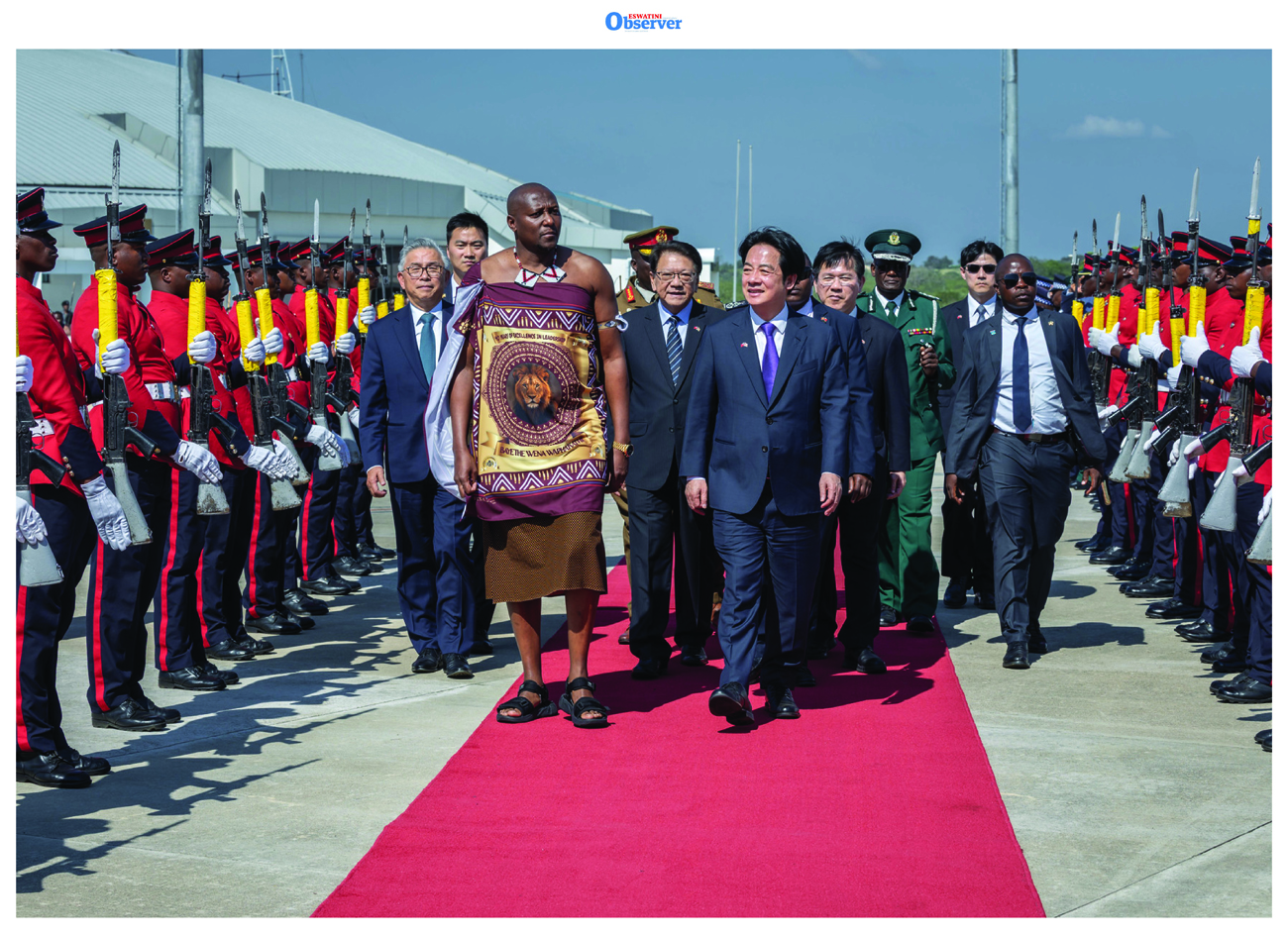
Recent diplomatic exchanges have once again brought global attention to the long-standing tension between Beijing and Taipei, following the visit of Taiwan’s president to the Kingdom of Eswatini.
The visit, which included official engagements with the country’s leadership, drew a sharp response from the People’s Republic of China, which reiterated its position that Taiwan had no standing in formal state-to-state diplomacy, such as honouring the visit to Eswatini.
On the surface, such reactions may seem sudden, when in truth they are part of a much longer story—one shaped by the outcomes of war, civil conflict and decisions made decades ago that still carry consequences today.
For Emaswati, particularly in a country that maintains close ties with Taiwan, understanding this situation means looking beyond the news headlines and into how the China–Taiwan conflict was formed.
HOW TWO GOVERNMENTS EMERGED
The roots of the current situation go back to the aftermath of the Chinese Civil War in 1949.
But the story of Taiwan begins even earlier.
Following Japan’s defeat in World War II, Taiwan—after 50 years under Japanese colonial rule—was placed under the administration of the Republic of China in 1945. Japan had taken control of the island after defeating China in the First Sino-Japanese War, with Taiwan ceded to Japan under the Treaty of Shimonoseki.
When Japan surrendered in 1945, its control over Taiwan came to an end, and the island was handed to the Republic of China. At that moment, the Republic of China governed both mainland China and Taiwan as one country.
That unity or restoration did not last. By 1949, Communist forces had taken control of the mainland and established the People’s Republic of China. The Nationalist government that had been in charge of the Republic of China retreated to Taiwan, where it continued to operate under the same name — Republic of China.
From that point on, two governments existed, each asserting its power and claiming to represent China.
THE UNITED NATIONS DECISION OF 1971
For more than two decades, the Republic of China held China’s seat at the United Nations.
That changed in 1971 when the UN General Assembly adopted United Nations General Assembly Resolution 2758, which now forms the basis of the diplomatic tension around the China-Taiwan dispute.
The resolution recognised the People’s Republic of China as the only legitimate representative of China to the United Nations and transferred the Republic of China’s seat, including its place on the Security Council, from Taipei to Beijing.
The Republic of China was removed from the UN system through that resolution.
What is fundamentally overlooked is what the resolution did not stipulate. It did not declare Taiwan part of the People’s Republic of China, nor did it formally settle the question of Taiwan’s sovereignty. It addressed one issue only, who would represent China at the United Nations.
A STATE THAT FUNCTIONS WITHOUT RECOGNITION
Since then, Beijing has leaned heavily on that decision to argue that the Taiwan question had already been settled within the United Nations framework.
Because the resolution gave China’s seat to Beijing and removed Taipei, it has become the backbone of what is now widely known as the “One China” approach in global diplomacy.
The United Nations, however, does not step in to reinterpret or correct how countries use past resolutions. It operates on political agreement, not legal rulings.
Changing or revisiting the 1971 decision would require broad agreement among member states, including the permanent members of the Security Council. That agreement simply does not exist.
In the years that followed, most countries aligned themselves with Beijing, recognising the People’s Republic of China as the sole government of China while maintaining informal ties with Taiwan.
This alignment was mostly influenced by the People’s Republic of China’s economic standing in the international community.
Yet on the ground, Taiwan continues to run its own affairs. It has an elected government, its own military, a working legal system, and a strong economy.
It trades, engages and it operates as a state in almost every practical sense. Over time, it has also moved away from claiming authority over mainland China in favour of shaping its own sovereign identity.
Still, Taiwan remains outside the United Nations system. Not because it lacks structure or capacity, but because the global framework has not shifted or been translated to define the future of Taiwan since 1971.
China’s position as a permanent member of the Security Council also gives it the ability to block (veto) any move towards Taiwan’s membership.
POSSIBLE PATHS FORWARD AND ESWATINI’S POSITION
Over the years, different ideas have been put forward to deal with this situation.
Some have suggested allowing both Beijing and Taipei some form of representation. Others have proposed full membership for Taiwan under its own name, or participation in specific UN agencies.
None of these ideas have gained enough support to move forward, largely because many UN member states are aligned with Beijing from an economic benefit standpoint and Beijing’s opposition itself.
Nothing else is blocking Taiwan’s application process as an independent United Nations member except these two circumstances.
Within these global circumstances, Eswatini has taken a clear and consistent stance.
The country has openly supported Taiwan’s inclusion in the United Nations and has raised this position in international platforms. This reflects not only its diplomatic ties with Taiwan, but also a broader view that Taiwan’s exclusion does not reflect the reality of how it operates today.
TAIWAN MATTER NOT ISOLATED
The world has faced questions around representation and contested statehood. In other situations, the international community has found ways—sometimes slowly and imperfectly—to accommodate shifting political realities.
The Taipei-Beijing issue is no exception at all.
The Taiwan situation, unfortunately, has remained largely unchanged for decades, even as global politics and economies have moved on.
As tensions between Beijing and Taipei continue to surface through diplomatic exchanges, the responsibility does not rest with the two sides alone. The wider international community also has a role to play.
What is at stake goes beyond being a country seeking diplomatic recognition. It touches on stability, global trade and the predictability of international relations.
A prolonged standoff carries risks not just for the region, but for the wider world, including economies and livelihoods that depend on steady global cooperation.
The fact that Taiwan has had to adopt an arrive-and-announce strategy and the use of fighter jets to escort its president back home demonstrates how highly escalated the tensions have become.
FINAL THOUGHTS
At some point, this question will have to be confronted more directly—not by Eswatini as a lone voice, but by the wider international community; how should the global system respond to a reality that clearly no longer fits neatly within the framework set in 1971?
It is a conversation that remains open and one that cannot continue to be avoided.
Until next week,
God bless.
Feedback & Correspondence:
Email: johnpires@live.com
Mobile: +268 7606 5993
WhatsApp: +268 7602 7758