



The psychologist disclosed that Shongwe revealed that he was remorseful about the death of Gamedze.
He made it clear that he was not remorseful because he gave instructions but because of the loss of life.
He said Shongwe said what would he have gained with the death of Gamedze because there is no money in Eswatini’s football but people invest in it because of passion.
psychologist
The psychologist said Shongwe confided in him that he never gave drugs or money to the alleged killers of Gamedze.
He stated that he was framed and police know who killed Gamedze and that person is still out there.
Crown wants death penalty for Sipho Shongwe
THE State has made a strong case against the possibility of leniency for the man who was convicted for the murder of prominent businessman and football administrator Victor ‘Maradona’ Gamedze.
The crown argued that no extenuating circumstances exist in Sipho Shongwe’s brutal and calculated killing.
In the High Court yesterday, prosecutor Michael Hellens, assisted by Advocate Macebo Nxumalo, submitted that the circumstances under which the crime was committed render it morally reprehensible and warrant the imposition of the death penalty. The arguments were presented before Judge Nkosinathi Maseko during the court’s inquiry into whether any extenuating factors might justify a lesser sentence than capital punishment.
Hellens centred his argument on Section 296(1) of the Criminal Procedure and Evidence Act, which stated that the death penalty shall be imposed upon a person convicted of murder unless extenuating circumstances are found.
The crown insisted that in this case, there were none. “Victor Gamedze was hunted like a dangerous animal and killed execution-style,” Hellens submitted, referencing the court’s earlier judgment. He said the late businessman’s murder was a cold-blooded one, premeditated contract killing, meticulously orchestrated by the accused, who maintained a safe distance from the trigger, but remained the driving force behind the crime.
The court according to Hellens had previously found Shongwe guilty beyond a reasonable doubt for the murder that occurred on January 14, 2018, at the Galp Filling Station in Ezulwini.
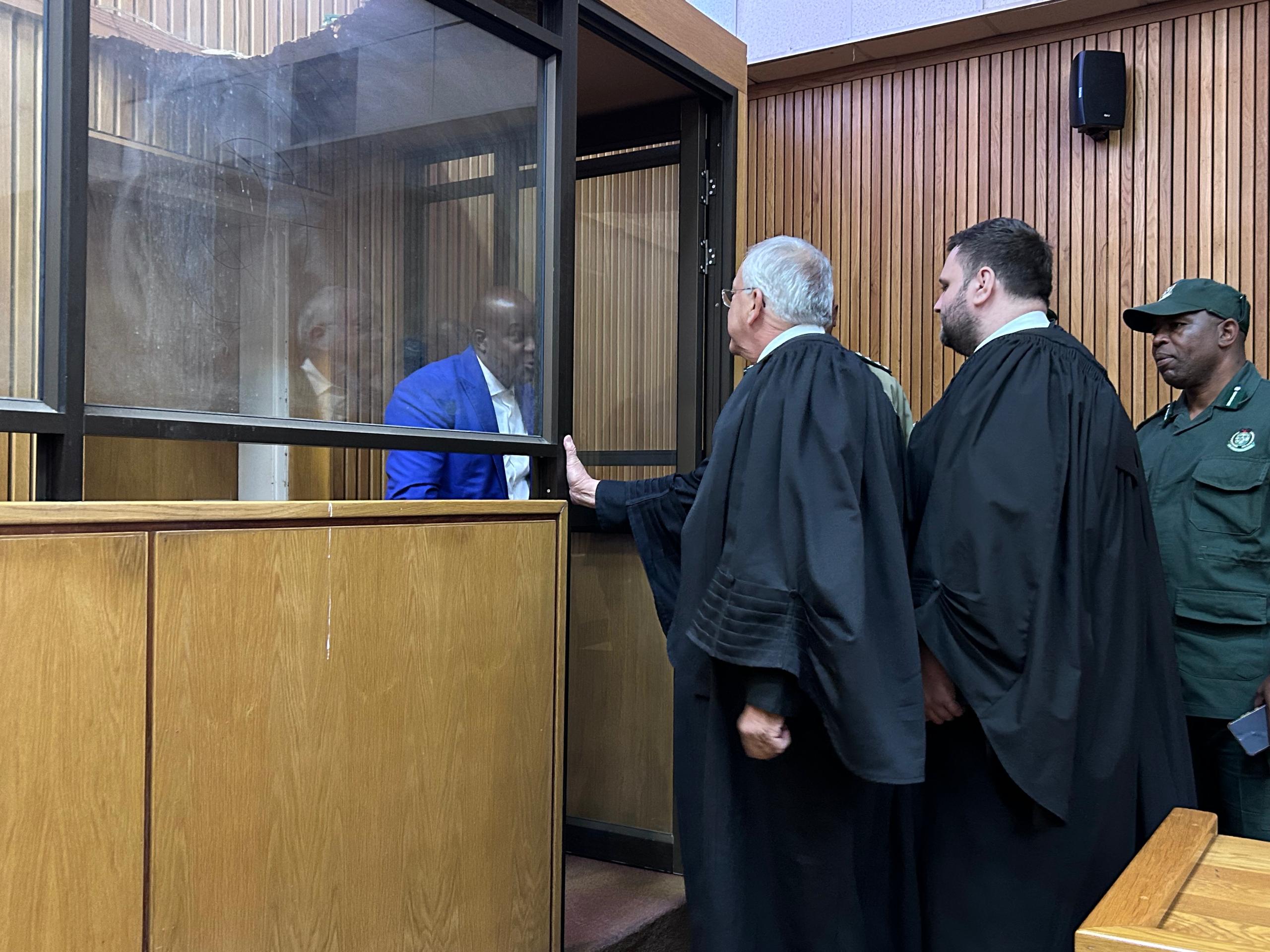
The crown submitted that Shongwe was found to have contracted assassins to carry out the hit, motivated by power struggles in professional football circles.
Hellens emphasised that the accused was a respected businessman and owner of a top-tier football club, and therefore could not reasonably claim susceptibility to societal or personal pressures that might mitigate moral guilt.
“There can be no considerations that would support any suggestion that a person of that class in the community would be susceptible to a moral weakness or a moral fault or a moral susceptibility which could arguably reduce the moral blameworthiness of the crime,” Hellens stated.
The court also heard that Shongwe not only issued the kill order, but also supplied the firearm and threatened the hitman, Mbuso Ncaza, with dire consequences if he failed to execute the plan. In a chilling quote captured in the judgment, Shongwe had told a confidant that Gamedze “could be removed within a minute,” this according to Hellens suggested his intent to kill was both deliberate and longstanding.
Hellens addressed the court on the evolving jurisprudence in the country concerning the burden of proof. He cited the Dlamini v Rex Appeal Case No. 11/1998, in which the Court of Appeal clarified that no onus rests on the convicted person to prove extenuation. Instead, the court must engage in a value judgment based on all available evidence.
“Extenuating circumstances are not about legal guilt that’s already been established. The court must now determine moral blameworthiness. This is a subjective test,” Hellens explained.

He cautioned, however, that the absence of onus does not mean the court could conjure mitigating factors from thin air.
“There must be a factual foundation, even if the accused remains silent. Without any compelling evidence, the default position in this case must be that extenuating circumstances do not exist.”
The crown underscored that the murder was not an impulsive act, but an orchestrated plot. Citing paragraph 275 of the court’s judgment, Hellens recalled how Shongwe made menacing remarks about Gamedze shortly before the killing.
He said the assassins, including Dzodzo Zikalala, Ncaza, and Siphiwe ‘Tata’ Ngubane had already been brought into the country and were actively tracking Gamedze, confirming a high level of premeditation.
Furthermore, the brutal nature of the killing, a close-range execution shot in the head in public, was described by the trial judge as resembling a scene from a mafia film: “tragic, emotionless and comical, only that it was real and serious.”