

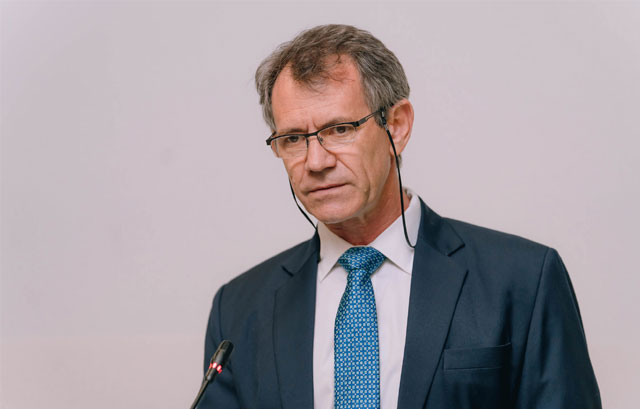
Minister of Finance Neal Rijkenberg is expected to table the Value Added Tax (VAT) rates regulations in the House of Assembly today.
This comes after the minister indicated that with the approval of 0.5 per cent VAT hike in South Africa, Eswatini would follow suit and that decision would be made with consultation with cabinet.
The minister also mentioned that with the potential of VAT hike in Eswatini, they will be expanding items which are zero taxed, but also move others to be taxed items.
He explained that condense milk was not used much by the ordinary Liswati and its being taxed would not create much of household pressure.
He said the items which would be put on the non-VAT charged goods will include everyday necessities such as edible offal, animal cuts like heads, feet bones and sanitary towels.
These changes mean these items will drop in price by the full 15 per cent, effectively lowering costs for consumers across the country.
“We’re doing all we can to minimise the impact,” said the minister.
He said this was done to cushion the poor should South Africa’s proposed 0.5 hike to take effect in May.

Rijkenberg said their approach was focused on removing VAT on more basic goods so that citizens can feel relief, even as the base rate rises.
He also reminded the nation that the country already boasted the longest list of VAT-exempt items in the region – an intentional decision aimed at economic inclusivity.
The list includes baby formula, LPG gas, maize, rice, brown bread, fresh produce, fertilisers, schoolbooks, and even domestic electricity use.
These deliberate decisions signal a government committed to ensuring taxation does not deepen poverty.
Eswatini’s pro-poor tax policy sets a benchmark for balancing economic needs with citizen welfare, reinforcing national unity through practical relief for households.
The minister stated that the proposed VAT adjustments have already been submitted to cabinet.
“With South Africa hiking its VAT as a country we have to option, but to follow, as most countries which are linked to South Africa will follow and because 75 per cent of our exports go to South Africa.
If we have a different tax rate it becomes chaos at the border so we have to align our tax,” he said.