


Married individuals, well-known figures and on occasion, sex workers are among the most frequent patrons of guest houses that have quietly reinvented themselves as hourly retreats for intimate encounters.
This emerged during investigations by this publication into the growing practice of charging by the hour within otherwise ordinary accommodation establishments in Manzini.
Several guest house operators, speaking anonymously, said the demand for short, discreet stays was driven largely by adults seeking privacy away from public scrutiny, often to conceal relationships that cannot be openly acknowledged. While such establishments were traditionally associated with overnight travellers, family visitors and professionals, some now admit that a significant portion of their business comes from clients seeking brief, confidential use of rooms for personal associations.
Operators said the nature of their clientele has shaped how the service is offered, quietly, without advertisement and with an emphasis on discretion, reflecting both the social sensitivities involved and the changing economic realities facing small accommodation providers.
By the time this reporter reached Fairview just after midday, the street looked like any other quiet Manzini neighbourhood. Neatly fenced homes, trimmed hedges, the low hum of traffic drifting in from the main road.
Nothing about the well-built guest house on the corner suggested it had quietly become part of a growing and controversial sub-economy within the country’s hospitality sector.
The reporter walked in and asked, casually, if there was a room available.
“Yes,” the receptionist said after a brief pause.
When the reporter said an hour, she nodded without hesitation. The rate was E120.
The exchange was quick, discreet and entirely routine and that, perhaps, best captures how deeply normalised hourly accommodation has become, even within registered guest houses that outwardly appear to operate within the country’s tourism framework.
A CONTROVERSY ALREADY UNFOLDING
Earlier last month, it was largely reported that the police had been drawn into a growing dispute in the hospitality sector following complaints by hotel, lodge and guest house operators over the proliferation of unregistered establishments offering accommodation on an hourly basis.
According to the report, the Eswatini Tourism Authority (ETA) confirmed that several cases, particularly in Manzini, had been reported to law enforcement after registered operators raised concerns about unfair competition, nonpayment of the mandatory 3% bed levy and operations allegedly falling outside the Tourism Act of 2001.
The issue surfaced during an ETA-hosted Bed Levy Compliance and Tourism Establishment Grading workshop, where industry players warned that the rise of hourly accommodation was undermining standards and eroding revenue meant to support tourism development and marketing.
What that report did not explore in depth, however, was the uncomfortable reality that some of the establishments offering hourly rates were not shadowy, unregistered operations, but ordinary, long-standing guest houses; fully built, staffed and known within their communities.
To understand how this is playing out on the ground, this reporter went on a fact-finding mission.
BUSINESS CONDUCTED QUIETLY, IN PLAIN SIGHT
Over several days, the reporter visited three guest houses in Fairview, Coates Valley and Madonsa, enquiring as an ordinary client. All were established facilities, the kind traditionally used by visiting professionals, families attending funerals or weddings, church groups and travellers passing through Manzini.
None of them advertised hourly accommodation. All offered without hesitation.
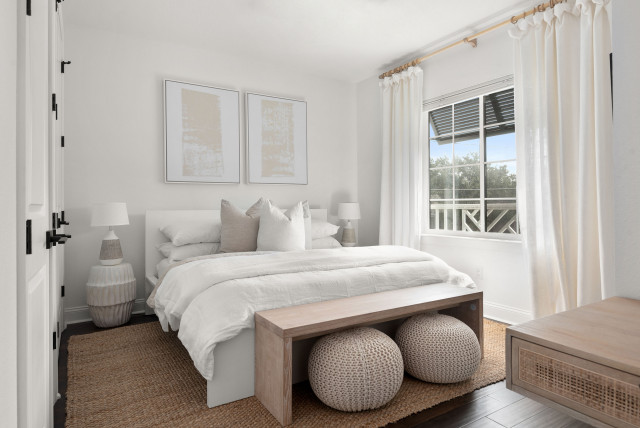
In Fairview, the room the reporter was shown would not have looked out of place in a mid-range hotel. A neatly made double bed with fresh linen, a flat-screen television mounted on the wall, tiled floors and a compact, but modern shower and bathroom area. The furnishings were contemporary, some bordering on state-of-the-art.
“This one is E120 an hour,” the receptionist said quietly. “You pay upfront.”
In Coates Valley, the guest house was older.
The room was plainly furnished, an ageing but sturdy bed, a smaller television, worn bedside tables and a functional bathroom. Nothing luxurious, but clean and serviceable.
“E100 per hour,” the woman at the front desk said.
Across the three areas, hourly rates ranged from E120 to E150, with some establishments charging E200, depending on room quality and location. In every case, the transaction was discreet, unremarkable and clearly familiar to staff.
WHO THE CLIENTS ARE
Several guest house workers and operators, speaking on condition of anonymity, said the majority of hourly clients were adult couples, many of them married, often not to each other. They revealed that some were prominent figures in the country and in some rare occasions, even some clergymen.
“Sometimes they come together, sometimes separately. Most of the time, they do not want attention,” one staff member revealed.
At Madonsa, this reporter observed one of the patterns repeatedly described to her. A man arrived alone, booked a room and paid, then returned to his car outside. Roughly 10 minutes later, a woman arrived in a different vehicle. They acknowledged neither each other nor the staff in public, walking separately to the same room.
ALSO READ | Trump threatens to sue Trevor Noah over Epstein joke at Grammys
About 45 minutes later, they left, again separately, each driving off in a different direction.
“This is normal. They do not want to be seen together,” a staff member said afterwards.
Operators said discretion was the main commodity being sold. Unlike hotels, guest houses blend into residential areas and are less likely to attract attention from passers-by or acquaintances.
“People do not want to risk meeting someone they know. Here, they feel safe,” one operator said.