


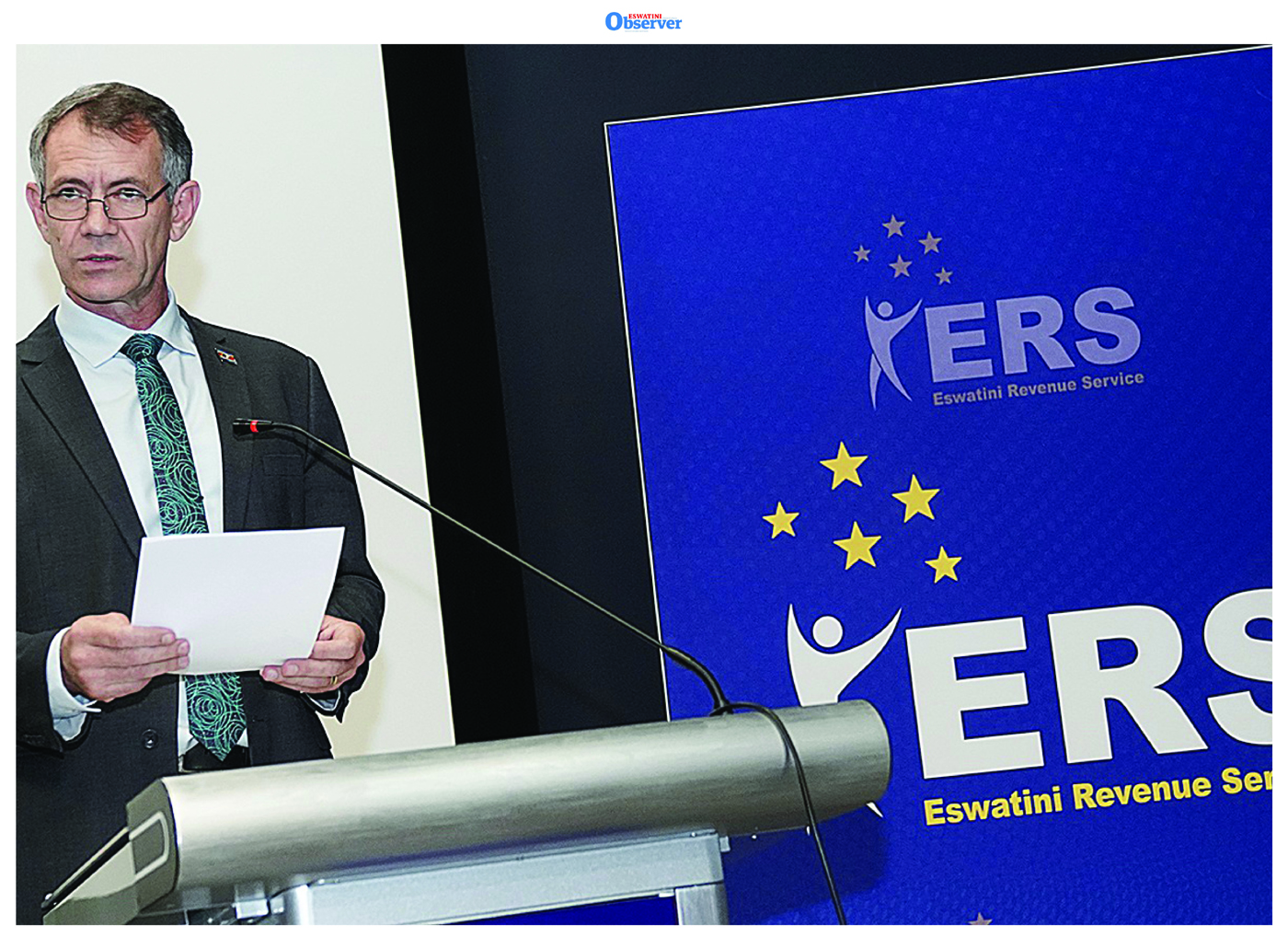
Government needs a strong, reliable and sustainable revenue base to provide funding for health, education, infrastructure, public safety, social protection, economic development and many other needs for locals
This was said by Minister of Finance Neal Rijkenberg, who was speaking during the launch of the Tax Core Electronic Invoicing Programme at the ERS Headquarters yesterday.
He noted that a recent tax gap study estimated that the country was losing approximately E4.259 billion in tax revenue annually due to non-compliance, underreporting, underpayment, non-filing and deliberate tax evasion.
This, he said, was a troubling figure that impacts both national revenue and fairness in the tax system.
He said tax evasion is frequently described as simply an administrative issue between a taxpayer and the ERS.
However, it goes beyond this because it represents a direct reduction in national funds.
For the current year, he said domestic tax collection is targeted at E19.48 billion.
He said meeting this target will require discipline, innovation and better use of technology, and will also require them to reduce the gap between what should be collected and what is actually collected.
He said the new programme is a practical intervention designed to help the Eswatini Revenue Service (ERS) collect more accurately, detect risk earlier and protect revenue that is due to the country.
“This is not only a matter for the ERS. It is a national matter, yindzaba yetfu sonkhe. When tax revenue is collected efficiently and fairly, the country is better positioned to deliver services, invest in development and reduce pressure on borrowing.
ALSO READ | ‘Businesses, consumers to contend with rising fuel costs’
However, our revenue system continues to experience significant leakages. These are tangible issues that the ERS is consistently working to address and mitigate,” said Rijkenberg.
The minister emphasised that this initiative was not aimed at punishing compliant taxpayers. In fact, he said compliant taxpayers stand to benefit significantly.
He said the system would help reduce manual reporting, improve the accuracy of records and create the possibility of pre-populated value added tax (VAT) schedules and returns as the system matures.
He said it would also save time, reduce errors and lower the risk of revenue losses caused by incorrect declarations.
The minister also said there was a fairness issue at stake.
He said businesses that comply should not be placed at a disadvantage by competitors who suppress sales or avoid paying the correct tax.
He said electronic invoicing would help create a more level playing field, where businesses compete on the strength of their products and services, not on their ability to evade tax.
“I encourage the business community, tax practitioners and all affected stakeholders to participate constructively in this process.
Work with the ERS, ask questions, provide feedback, prepare your systems and help us make this transition successful.
Government stands firmly behind the introduction of the Electronic Invoicing System because the need is clear.
Eswatini cannot continue to lose billions of Emalangeni through underreporting, non-filing, suppressed sales and other forms of tax evasion, while the demand for public services continues to grow,” Rijkenberg added.
When revenue is collected fairly, he said government is better positioned to fund the services and development priorities that emaSwati depend on.
He reiterated government’s commitment to supporting the ERS on this journey and called on all stakeholders to work with them in building a tax system that is modern, fair and strong enough to support the country’s future.