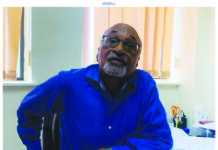



There are over 5 000 Emaswati currently employed in the Republic of China (Taiwan), a figure which Minister of Labour and Social Security Phila Buthelezi said was recently discovered.
This number excludes those who have gone there for studies. The challenge though, he said, is that there is no available information on what fields they are in and “whether they are remitting taxes back home.”
“We are a ministry for workers in the kingdom, but if we were asked about the record of people that have left since the start of 2026 we will not be able to. They obtain passports, buy air tickets and leave the country. There is no system in place for those departing to register in,” said Buthelezi.
To the minister, the absence of such information speaks of disorganisation.
In response to calls from parliamentarians during a portfolio debate about regulating the Eswatini diaspora, Buthelezi agreed, saying it is something that cannot be avoided.
He added that while it is good for Eswatini to export skilled labour, the process needs to be more structured and manageable.
Buthelezi emphasised that when an individual applies for an international passport, there should be government departments involved in ensuring that relevant information — such as the individual’s identity, skills, and destination — is recorded before the passport is issued. This would help create a proper registry for the workers who leave the country.
Buthelezi also revealed that the ministry of foreign affairs and international cooperation has embarked on a process of replacing Eswatini diaspora, but this is something still in the early stages. He said the departure of Emaswati should be neat, even their return.
“When a Liswati gets injured while overseas, there is the expectation that government should take responsibility of the process to return home, yet they left voluntarily in the first place,” he said.
Nevertheless, he assured that there is something that the ministry of foreign affairs is preparing and will engage other government ministries to make it work.
READ MORE | Alpheous turns down govt’s E435 000 settlement
In an effort to curb the country’s high unemployment rate, especially among the youth, His Majesty King Mswati III announced a new initiative in April 2025 to train Emaswati locally before they go to Taiwan for employment.
During a business dinner hosted at Mandvulo Grand Hall in July 2025, His Majesty discussed the initiative with Taiwan’s Foreign Minister Lin Chia-lung, with the aim of having 1 000 Emaswati employed annually in various industries across Taiwan.
The king revealed that this initiative stemmed from ongoing bilateral discussions between Eswatini and Taiwan. Eswatini, like many African nations, faces a high unemployment rate, particularly among young people. To address this, His Majesty said both nations had agreed to recruit and train Emaswati to fill job vacancies in Taiwan.
The king proposed the establishment of a local training facility for this purpose, ideally situated between Manzini and Mbabane. While consultations on the exact location are still ongoing, His Majesty stressed the importance of starting the recruitment process immediately.
“The construction of this facility might take some time, but to show our commitment, we agreed to proceed with recruiting Emaswati who are interested in working in Taiwan.
For now, we will use the Taiwan Technical Mission as a temporary training facility,” he said.
At this training centre, aspiring workers will learn the Mandarin language to overcome communication barriers, as well as gain knowledge about the companies they will work for, Taiwan’s culture, and any other important information that will help them integrate smoothly into the workforce and society once they arrive.
Encouraging Emaswati to take advantage of this opportunity, His Majesty said, “Those who are looking for opportunities should apply. They can go live happily in Taiwan, and we will ensure that their stay is as comfortable as possible, just as we will take care of the Taiwanese people residing in the kingdom.”
The king also highlighted that the exchange programme, which allows citizens from Eswatini to live and work in Taiwan, helps strengthen the bilateral relations between the two countries. This initiative not only aims to address unemployment but also to foster deeper ties between Eswatini and Taiwan.