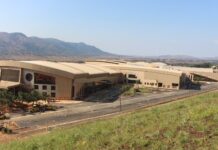



An official residence that stood empty for years because deputy prime ministers declined to live in it due to its appalling state is now set to be transformed into a halfway house.
It will be used for vulnerable children and victims of gender-based violence (GBV) in a project valued at about E3.7 million.
The former deputy prime minister’s State house located at Waterford Hill in Mbabane will be rehabilitated and converted into a facility that will temporarily shelter abused children, neglected minors and GBV survivors.
The project is being funded through a donation from the Republic of China (Taiwan).
Deputy Prime Minister Thulisile Dladla revealed the development in Parliament yesterday while presenting her office’s preamble during a debate on its annual performance report for the 2025/26 financial year.
She explained that the building, which has long remained unused and vulnerable to vandalism, would be repurposed to address urgent social welfare needs.
Dladla said the residence would undergo rehabilitation before it begins operating as a halfway house.
“As a halfway house, it will accommodate the people who need such a facility the most,” she told members of Parliament.
“The house will first be rehabilitated so that it is suitable for its new purpose.”
For years, the Waterford residence had become a financial liability for government, frequently appearing in Public Accounts Committee (PAC) reports because it was not being used for its intended purpose.
The building was originally designated as the official residence for the deputy prime minister, but none of the recent DPMs ever occupied it.
ALSO READ | ‘Nothing wrong with learners cleaning toilets’
Reports of vandalism, theft of fittings and repeated break-ins turned the property into a symbol of wasted public resources.
Dladla told the portfolio committee that government had previously attempted to secure funding to renovate and repurpose the property, but those efforts were unsuccessful.
“At one point we secured funding from the United States government, but that opportunity was short-lived because of a sudden change in donor funding policies,” she explained.
Government later approached Taiwan for assistance, which ultimately agreed to support the rehabilitation project.
Dladla said the decision to convert the property into a halfway house was also informed by the growing demand for facilities that provide temporary shelter and care for vulnerable children and victims of abuse.
She noted that the country currently has one halfway house dedicated to abandoned or neglected children, located in Manzini.
That facility, operated through collaboration between the Department of Social Welfare and the Royal Eswatini Police Service, is struggling to cope with the increasing number of children needing temporary care.
The Manzini Residential Child Care Facility currently houses 26 children who were abandoned, neglected or dumped by parents unable to provide proper care and support.
The centre functions as a temporary refuge where children are accommodated while authorities search for more permanent solutions, including reunification with relatives or placement in alternative care.
Despite limited resources, the facility has managed to reunite 13 children with their families.
However, the centre faces serious challenges.
The structure is ageing and requires extensive rehabilitation to ensure it remains suitable for habitation.
In addition, only three officers are currently responsible for providing care and support to all the children housed at the facility, placing considerable strain on staff.
Dladla expressed confidence that the transformation of the long-abandoned State house represents a shift toward making better use of government assets while simultaneously addressing pressing social challenges.