



World AIDS Day, marked globally on December 1, is always a moment of reflection.
For many countries, it is a day to honour progress and recommit to the fight against HIV/AIDS. But for Eswatini, I believe it is something deeply connected to our national memory. It is a day that brings back the painful years when HIV/AIDS ravaged our families, destroyed communities and redefined who we were as a nation.
In the late 80s and throughout the 90s, up to the year 2000 and slightly beyond, one of two things was certain: either you were infected or you were affected by the virus.
| Eswatini Observer WhatsApp Channel
This World AIDS Day, commemorated only a few days ago, brought about a deep moment of painful reflection. It reminded me that while we celebrate the progress made, we must also confront an unyielding reality — we are in danger of forgetting the years of the brutalising hand of the virus. And forgetting, as history has shown us time and again, is the first step towards repeating tragedy.
LOOKING BACK TO UNDERSTAND WHERE WE STAND
For nearly three decades, Eswatini carried one of the world’s heaviest HIV burdens. From the late 1980s into the early 2000s, the virus spread with terrifying speed. Epidemiologists mapped out the prevalence of the virus and concluded that one in three people in the country was infected with HIV.
This meant that entering a new relationship was extremely risky and, as it turned out, most people who innocently ventured into love affairs got infected and eventually lost their lives.
It also meant that women who became pregnant not only got infected, but also passed on the virus to their unborn children; both the mother and the child were destined to lose their lives. In those days, testing was a taboo, disclosure was rare and treatment was barely available. An HIV diagnosis was understood as a slow and certain death.
I remember the funerals, the collapsing families and the children left to fend for themselves. Some households had to be led by children as young as six after the passing of both their parents. Those who were declared HIV positive were stigmatised, with friends, family and relatives turning against those who were known to be HIV positive. No one was spared, rich and poor alike.
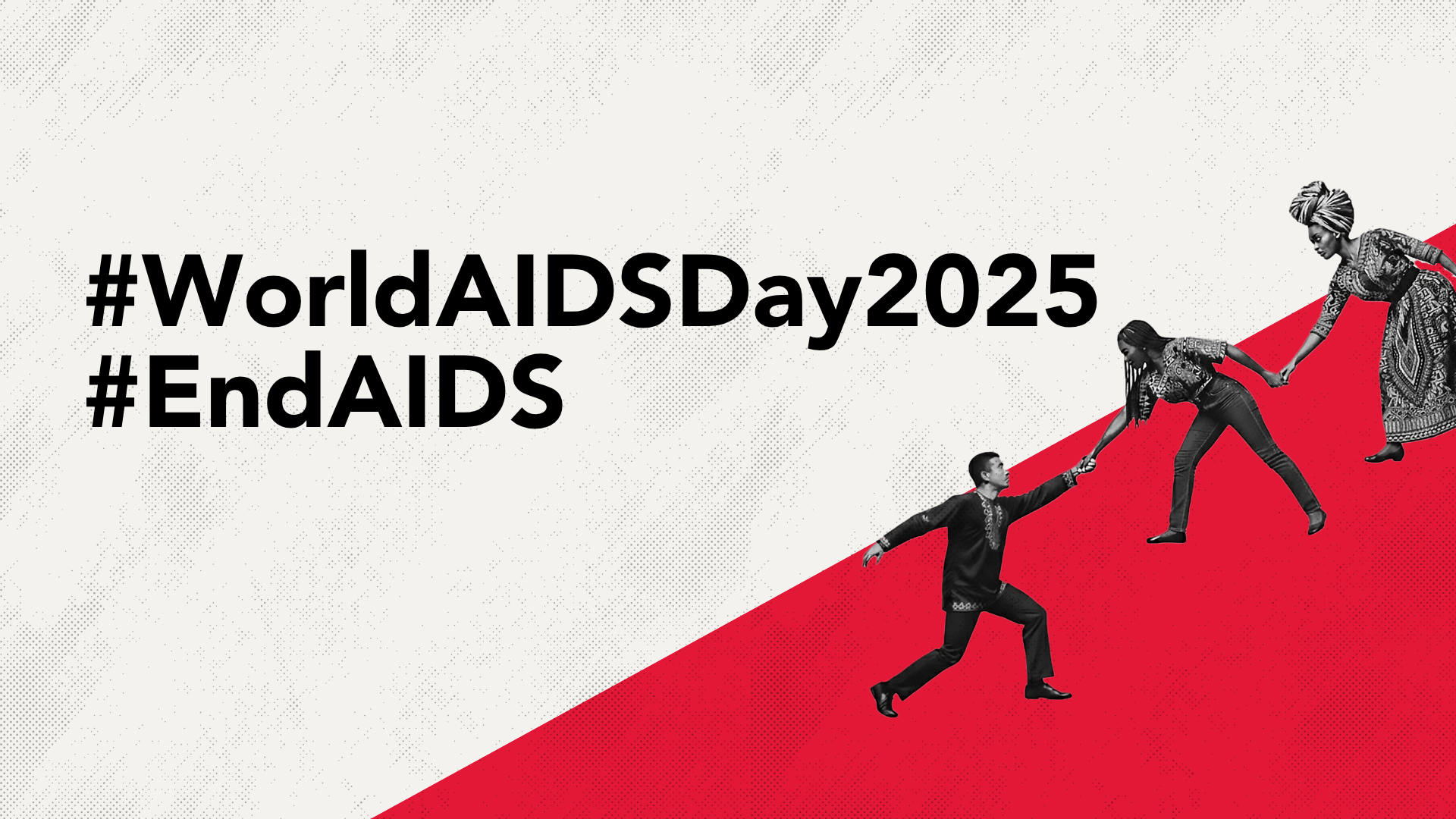
At the height of the pandemic, the country was known internationally for having the world’s highest HIV prevalence. Our national identity became intertwined with the virus, and for many citizens, travelling outside our borders meant facing stigma and judgement.
Recognising the scale of the crisis, His Majesty King Mswati III declared HIV and AIDS a national emergency. The establishment of NERCHA marked a turning point, ushering in a coordinated and strategic national response that began to reshape both the narrative and the trajectory of the epidemic.
As the number of orphaned and vulnerable children continued to rise, government introduced the Orphaned and the Vulnerable Children (OVC) Fund — a crucial lifeline for thousands of children who suddenly had no one left to care for them. Yet even this vital support could not heal the profound emotional and social wounds left in the epidemic’s wake.
Many babies were born with HIV simply because prevention services were not yet available. Infant mortality rose sharply. Economic inequality and deep social vulnerabilities allowed the virus to take root and spread further. Older men exploited young girls, and infections moved quietly but quickly through communities.
WHY WORLD AIDS DAY STILL MATTERS
If this year’s World AIDS Day served any purpose for the country, it was to remind us of a truth many have naively forgotten: the threat has not disappeared.
Today’s young people do not carry the memories of the 1990s and early 2000s. They did not live through the trauma, fear and stigma that once shadowed every family and every community. To them, HIV can feel like a distant chapter in a history book — something conquered, something past. And because of that, they underestimate it. Yet the virus remains very much alive among us.
An official report released a few months ago, revealing more than 10 000 teenage pregnancies in just two years, is far more than a troubling statistic. These figures demonstrate a resurgence of reckless behaviour, exploitative age-gap relationships and widespread misinformation about viral suppression.
These are the very patterns that once accelerated the spread of the epidemic — and they are resurfacing when we can least afford complacency. I am glad that this year’s World AIDS Day theme, “Overcoming Disruptions, Transforming the AIDS Response,” speaks directly to this concern.
OUR PROGRESS — AND THE FRAGILE REALITY BEHIND IT
Eswatini’s progress in the fight against HIV has been extraordinary. We became the first African country to achieve the UNAIDS 95-95-95 targets in 2020. New infections fell from 21 000 in 2000 to about 4 000 in 2023.
International partners like PEPFAR helped strengthen our health system and dramatically reduce new infections. But this success is uneven.
Young people, especially adolescent girls and young women, remain the most vulnerable. In 2020 alone, nearly 1 600 young women aged 15–24 were newly infected — a staggering number for such a small country. UNAIDS estimates that young women in this age group are three to five times more likely to contract HIV than young men.
This generation — raised after the peak of the epidemic — now faces the same dangers their parents lived through.
ALSO READ | New HIV jab targets young women first
During this year’s Limkokwing University graduation ceremony in Manzini, Prime Minister Russel Dlamini urged young people to refrain from reckless sexual behaviour, warning that such actions increase their risk of contracting the virus. On another occasion, he went further, openly calling out promiscuous behaviour (bugwadla) as one of the drivers of continued HIV transmission.
I am encouraged that the prime minister recognises the evolving dynamics of HIV/AIDS, and as decisive as his statements were, it remains the responsibility of the youth — and indeed all the people of this nation — to remain vigilant and not underestimate the consequences of complacency.
THE IMPACT OF FUNDING CUTS
This is why threats of funding cuts are so alarming. Early this year, the United States significantly reduced or withdrew support for key HIV programmes, including PEPFAR. This funding once made up nearly half of Eswatini’s HIV response budget.
The effects were immediate. Programmes that supported adolescent girls, such as DREAMS, shut down. Health facilities began experiencing drug shortages. Outreach workers who once brought testing and prevention services directly to communities were withdrawn.
Hospitals, already stretched, grew even more burdened. UNAIDS official Nuha Ceesay put it clearly earlier this year: “We can’t afford to go back.”
Yet without restored funding, the world may head towards six million new infections and four million AIDS-related deaths by 2029. For Eswatini, the implications could be even more severe.
FINAL THOUGHTS
Eswatini’s struggle with HIV is a story of profound loss, but also of extraordinary resilience. The anguish of the 1990s and 2000s must never fade from our national memory.
Yet an entire generation — raised in an era of social media, fast-paced lifestyles, materialism and medical progress — has grown dangerously unaware of the devastation HIV once unleashed.
Without decisive intervention, we risk repeating the very patterns that once tore families apart and reshaped the country’s destiny. Protecting our youth is not merely about sustaining progress; it is about safeguarding the future of Eswatini itself.
Now is the moment to renew our commitment to education, prevention, and collective responsibility — before forgotten lessons become yet another national tragedy.
Until next week,
God bless!
Feedback & Correspondence:
Email: johnpires@live.com
Mobile: +268 7606 5993
WhatsApp: +268 7602 7758
Eswatini Observer Press Reader | View Here