

CABINET has approved a 62.5% tuition fee increase for government-sponsored students at the University of Eswatini (UNESWA) in order to align the fees with those currently being paid by private sponsored students.
At present, government has been paying E16 000 per academic year for each government-sponsored student while privately sponsored students pay E26 000.
Following Cabinet’s approval, government-sponsored students’ tuition will now be aligned to E26 000 per year.
According to the Budget Estimates tabled by Minister of Finance Neal Rijkenberg, on Friday when he delivered the 2026/27 national budget speech, the ministry of labour and social security would receive an increased allocation under students’ tuition fees for the financial year.
The ministry has been allocated E352 405 001 for students’ tuition fees in the 2026/2027 financial year, compared to E322 405 001 in the 2025/2026 financial year. This reflects an increase of E30 million under tuition fees.
Minister of Labour and Social Security Phila Buthelezi confirmed that there had been an increment in the funds allocated for tuition fees to tertiary institutions under his ministry. He explained that the increase was specifically meant to cater for tuition fees at UNESWA. He said the university had been facing financial challenges and had raised concerns that the tuition fees paid by government for sponsored students were below the actual cost of providing education.
“Cabinet has approved that they increase the tuition fees, and government has deemed it fit to add the funds under tuition to cater for the fees of government-sponsored students at UNESWA,” he said.
Buthelezi added that the tuition fee per government-sponsored student had increased by approximately E10 000 per year. He emphasised that the adjustment was necessary and noted that since student allowances had also been increased, the ministry hoped to continue delivering on its mandate effectively. He further revealed that government would begin paying the revised tuition fees for its sponsored students in the upcoming academic year, which begins in August.
Prior to Cabinet’s approval, Minister of Education and Training Owen Nxumalo had publicly supported UNESWA’s proposal to increase tuition fees for government-sponsored students.
He described the adjustment as long overdue, noting that the university’s tuition fees had been significantly lower than those charged by some local private schools.
UNESWA had formally applied to increase tuition fees for government-sponsored students to E26 000, representing a 62.5% adjustment from the E16 000 that had been paid per academic year since 2010.
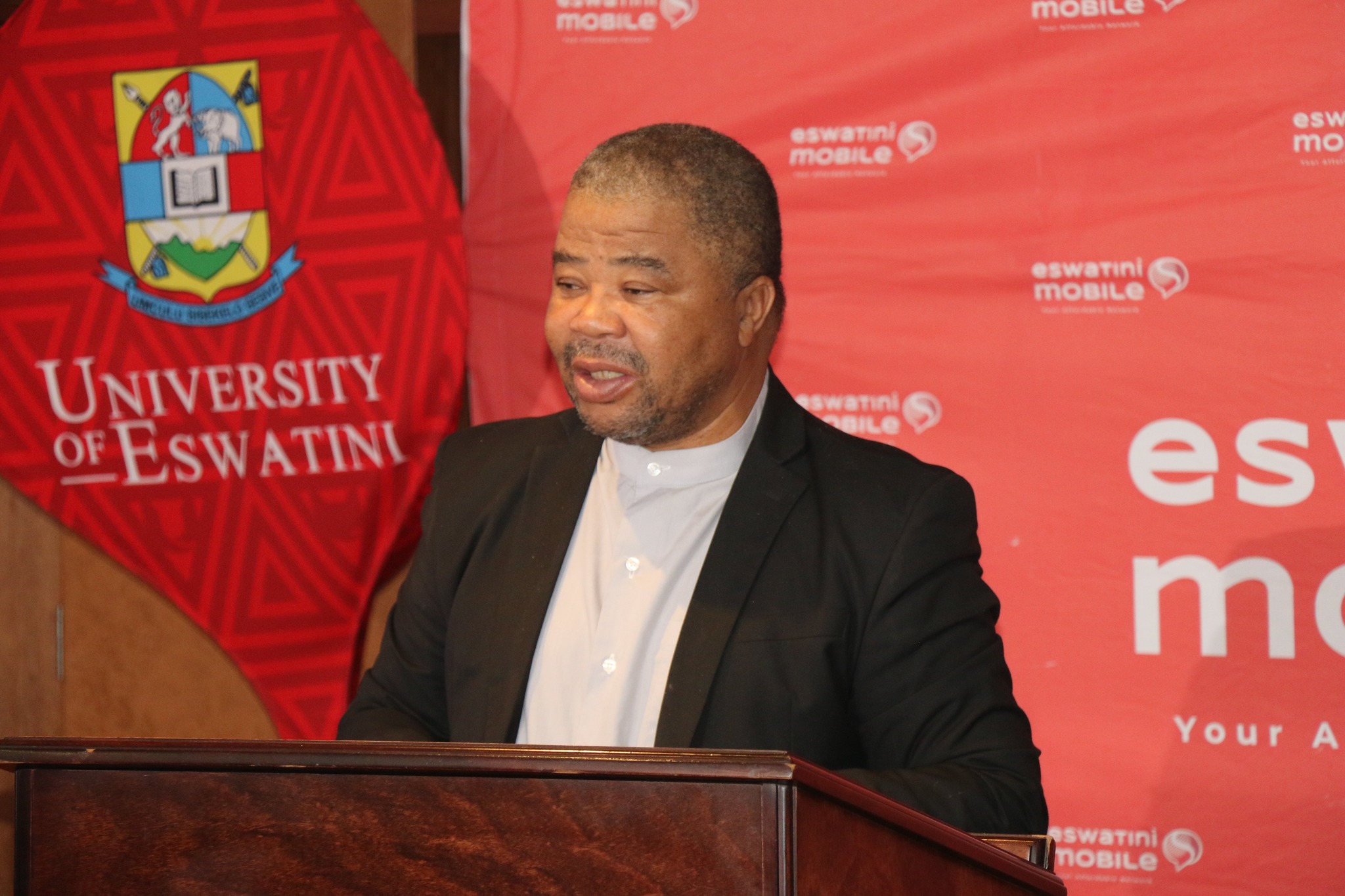
UNESWA Vice-Chancellor Professor Justice Thwala clarified that the move should not be viewed as a conventional increase, but rather as a normalisation or alignment of fees.
He explained that over the years, the average undergraduate tuition fee at the university had been E26 000. However, government had continued paying E16 000 per sponsored student, a figure that had remained unchanged since 2010.
He said undergraduate fees had reached E26 000 in line with the university’s PEU Circular, which provides that tariffs and fees may be increased annually using the prevailing inflation rate (major), typically around 3%. From 2010 to date, tuition for private students had risen accordingly to E26 000, while government payments had remained at E16 000.
“Government was not paying the E26 000 that was required as tuition fees at the university, and there has been a E10 000 difference per student up to now. Their argument was that there should be Cabinet approval, while the circular was clear that Cabinet approval was only necessary if the fees were to be increased beyond the major,” he said.
Thwala said the university presented its case before Cabinet and was successful in securing approval for the adjustment. He reiterated that privately sponsored students would continue paying E26 000, and that this was not a new increase for them.
“It is called alignment with the fees that are in the university calendar. This will help us a lot. If there are 4 500 government-sponsored students at the university paying the correct tuition fee of E26 000, the E10 000 difference per student would have made a significant difference,” he said.
He added that the alignment would generate approximately E45 million more in tuition revenue annually, funds the university had effectively been losing each year due to the gap.
Thwala said the additional revenue would assist the institution in addressing its financial challenges, including maintaining infrastructure, purchasing learning and teaching equipment, and covering utilities.
“We are short of chairs and desks, and this money will now help us. Our subvention was not increased this year because government has given us the challenge to fix the university as everyone knows that there was a task team looking into the affairs of the university, including its governance and finances,” he said.
He explained that government had challenged the institution to improve its efficiencies and governance systems before considering an increase in subvention.
However, he noted that the university would still have appreciated an increase in its subvention allocation of E486 312 806.
“We appreciate government for coming on board and working with us on this matter as well as the two ministers for pushing for the approval. Self-sponsored students should not be concerned, as the only fees adjusted were for government-sponsored students,” he said.