



“THE biggest thieves are at CMS.”
Businessman Kareem Ashraff has alleged that some of the people who are primarily responsible for the shortage of medical drugs and supplies in public health facilities are the workers at the Central Medical Stores (CMS).
Ashraff, who is also a director of Swazipharm Wholesale (Pty) Ltd which is the largest supplier of pharmaceuticals in Eswatini and also government’s major supplier of medical drugs and supplies, made these startling allegations yesterday during a press conference with the auditors’ forum.
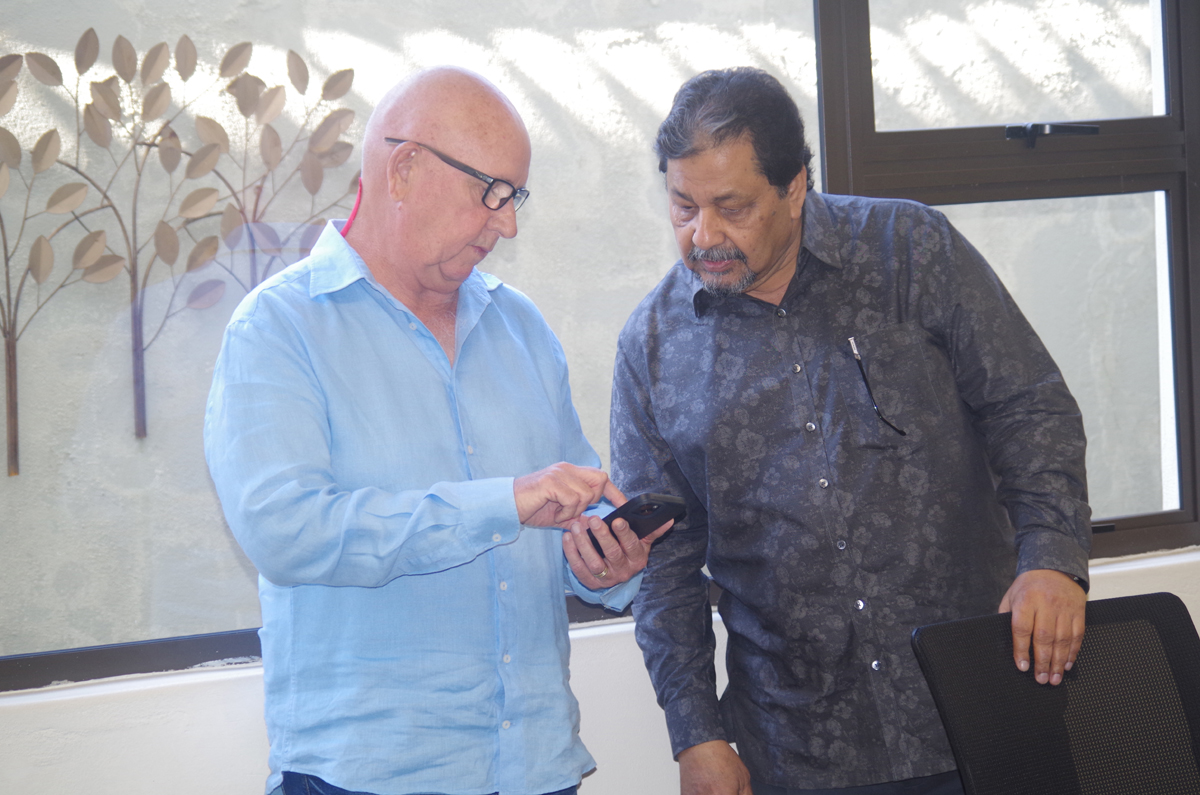
The meeting was attended by editors, senior reporters, his business associates, and the former Swazipharm director Dave Melvin.
Ashraff’s name and that of his business have been at the centre of the medical drug shortage in the country and a controversial audit report conducted by Funduzi Auditors in 2023. An abridged version of the report was tabled in Parliament last year. However, the report is heavily challenged due to its unsubstantiated findings and the questionable credibility of the audit firm itself.
| Eswatini Observer WhatsApp Channel
Among the allegations in the audit published by the office of the auditor general (AG) is the delivery of medical drugs with a shelf life of less than 18 months that expired before they could be fully used.
The businessman explained the struggles that government suppliers, especially those providing medical drugs, face.
These included the difficulty of securing orders on time due to the country’s small population; therefore, Eswatini’s orders are not a high priority for manufacturers.
supply
With the help of Melvin, he explained that to ensure a more timely supply, they had to plan ahead and place orders with the manufacturer or partner with others with larger orders for similar drugs.

They said the highest amount of time they can make these pre-orders is 36 months. This is mostly common to widely used medical drugs and supplies.
The director questioned the rationale behind storing drugs at the CMS until they expire instead of sending them to the public health facilities to help Emaswati. He said the sad part was that the supplier is then blamed for delivering medical drugs left with a short shelf-life.
“Why do we have drugs at the CMS instead of them being sent to hospitals? What are they doing at the CMS? Then they have the guts to say the drugs were supplied with less than 24 months’ shelf-life,” he said.
He added that even when drugs are delivered to the CMS, especially those for emergencies, patients in public hospitals will be in urgent need of them, but they are stored at the CMS until they expire.
The businessman also revealed that as a supplier, they pledge to replace those that expire while being used in hospitals.He alleged that there are a lot of discrepancies at the CMS that do not serve the public’s interests. Ashraff said instead of distributing the drugs to the hospitals and clinics, they are kept at the CMS until they have only one month left before they expire.
“They are keeping the drugs at medical stores to pose with them so they look like the big guys,” he said.
Further, he said the reason these drugs are kept at the CMS until they expire is to serve the personal interests of some of the workers.
Also Read: Mthandeni to Get Pardon
“What is wrong with delivering drugs with 13 to 16 months’ shelf life that have to be used faster and offering to replace those that expire before they are consumed? The whole idea of keeping the drugs until they are about to expire is to steal. I am told every guy at the CMS has got two to three pharmacies,” he said.
He said he was told that there were people who used to pack and load the drugs and medical supplies meant for public health facilities to deliver to pharmacies in remote areas. The businessman stated that the issue of drugs should not be pinned on him alone, but everyone should take ownership.
He also raised issues about the late payments to suppliers. He mentioned that he is owed for orders that were supplied in 2019.
Ashraff shared that the ministry of Finance orders them to re-invoice them and make the deliveries look like they were recently delivered. He also decried the lack of proper paperwork for records in government. This makes it look as if suppliers were paid for deliveries that did not occur.
He also lamented the lack of urgency in paying suppliers, stating that public officers act as if they are doing them a favour by paying them.
“Why is the local supplier suffering? Because they act as if they are doing the supplier a favour for buying from them,” he said.
‘Ashraff targeted by people with interests in Swazipharm’
FORMER Swazipharm director Dave Melvin says the current director of the pharmaceutical wholesaler is targeted by people who have interests in the company.
Melvin left Swazipharm in 2022 after Kareem Ashraff assumed majority shareholding.
Melvin explained that before Ashraff became the major shareholder, he was a minority shareholder.
He said there were a number of businesses and individuals who wanted a stake in the pharmaceutical company and made bids when the company was put on the market.
Without saying much, he hinted that they were in the same space and have some form of influence.
He said he could not name them because he signed non-disclosure agreements.
He added that ‘cooked’ audits such as the Funduzi forensic audit, just made to discredit him even further, because the E9 million Remdesivir drugs were never donated, and the United Nations (UN) also disputed the claims.
He said for the past two years, Ashraff and his family have been living a life of terror and constantly looking over their shoulders due to baseless allegations that were made to tarnish his name.
Some of the audits by the AG are based on the time before Ashraff took over Swazipharm.
The former director said, “For this to come out and the accusations, deliberate attacks, misrepresentation, and fraudulent claims have been hard. Swazipharm always does what is best for the nation, the kingdom, and the patients,” he said.
He added that it was heartbreaking to be accused after giving all one has. “I cannot describe how it has affected my family,” he said.
Melvin added that it was even worse for Ashraff as he was never there but only took over Swazipharm in July, 2022, and most of these baseless accusations happened before him.
“All the accusations and reports from this Funduzi report are false; they are an incompetence on a scale that is beyond belief or deliberate fraud,” he said. He emphasised that as someone who was at Swazipharm, they are ready to answer and provide proof on any of the accusations in the report.
“If Funduzi was a legitimate company doing a legitimate investigation, they should have come to us and interrogated us. We could have answered the questions, but they never did,” he said.
Eswatini Observer Press Reader | View Here