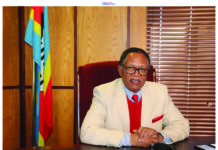



Water development projects have now been elevated to a priority level for funding following a growing appetite among investors.
This is according to Moses Vilakati, the Commissioner for Agriculture, Rural Development, Blue Economy and Sustainable Environment at the African Union Commission.
Speaking after the Africa Water Investment Summit, Vilakati explained:
“This summit enabled us to pool water projects needing financing, connecting them with investors seeking opportunities.”

The event, hosted just before the G20 Summit chaired by South Africa, has identified nearly 100 projects, with 25 earmarked for immediate funding based on their bankability, assessed by a professional team.
Vilakati noted that Eswatini has submitted a proposal, though adjudication is handled independently.
| Eswatini Observer WhatsApp Channel
Addressing the shift in investor interest, Vilakati said:
“Previously, water was sidelined in favour of roads and energy projects. Now, the appetite is there because we have bankable water projects.”
He cited Eswatini’s sanitation project in the Shiselweni region, which incorporates access to clean water.
The commissioner highlighted possibilities in domestic financing opportunities, stating:
“Geopolitical shifts have led us to engage local pension funds and banks, which show strong interest.”
The African Development Bank (AfDB) is investing US$12 billion annually into projects, but Africa requires US$30 billion annually to close the water funding gap. The AU supports countries by providing consultants to structure bankable proposals.
Eswatini faces a challenge to develop the Nondvo Dam, following lessons from the Maguga Dam, which no longer relies on outdated overflow systems. Vilakati added:
“The Nondvo Dam will serve agriculture, provide drinking water and support hydropower, making it attractive for financing.”
The Mbuluzana Dam also holds potential, particularly for the Royal Eswatini Sugar Corporation’s irrigation expansion.
Discussing regional projects, Vilakati cited a viable initiative spanning Lesotho to Botswana, alongside plans for a Central-to-Southern Africa project, both aimed at delivering essential water resources.
On dam sufficiency, he remarked:
“You can never have enough dams. Weather patterns guide our needs, and we must revive dam development programmes for irrigation and agriculture.”
On project selection, Vilakati clarified:
“Bankability is key. Financiers need proof that projects will repay themselves, like Maguga Dam, which is paying its costs and boosted downstream livelihoods.”
He said this signalled a significant step towards sustainable development and aligning with the AU’s 2025 Year of Water and Sanitation and Agenda 2063.
Eswatini Observer Press Reader | View Here