



Last week, newspapers disclosed that the Eswatini Electricity Company (EEC) had applied to the energy regulator for a 20.67% electricity tariff increase.
The announcement immediately triggered widespread concern and public debate understandably so, given the pressure already facing households and businesses.
The application revealed, among other things, that Ubombo Sugar Limited (USL) had increased its tariff by approximately 11%. Presented without context, this disclosure understandably raised questions. Since then, I have received a myriad of calls, messages and enquiries from concerned citizens seeking clarity on USL’s role, many of them contacting me directly in my capacity as Managing Director of USL.
These enquiries have not been accusatory; rather, they reflect a genuine attempt to understand whether domestic power producers and USL in particular, are contributing meaningfully to rising electricity prices.
What was missing from that initial disclosure was context, scale and contractual detail. Under USL’s first Power Purchase Agreement, signed in 2010 for 17 MW, tariffs increased only in line with CPI for 15 years, starting from a base tariff that was below the prevailing market rate at the time.
That structure was enabled by an advance payment of E150 million from EEC, which reduced project risk and delivered immediate value to the grid. For more than a decade, consumers benefited from power that was predictably priced, modestly escalated and consistently cheaper than imports.
When the agreement reached its natural expiry at the end of 2025, a pricing review was unavoidable. The resulting 11% adjustment, applied during the current extension period through 2028, reflects basic cost recovery after 15 years of CPI-only escalation. In absolute terms, the impact is modest, approximately E86 million per year.

By contrast and I stand to be corrected on this one, EEC’s current tariff application seeks cost recovery closer to E500 million inclusive of under recoveries from the previous year. The approximately E86 million resulting from USL’s 11% increase on PPA 1 is minor when set against the magnitude of funding required by EEC, particularly given that USL currently constitutes about 8% of total domestic electricity generation.
Even after this adjustment, power supplied by USL and by domestic IPPs more broadly remains materially cheaper than imported Eskom power. This article is therefore not a defence of any single company. It is an attempt to restore proportionality, economic logic and perspective to a debate that has become understandably emotive.
How Eswatini’s Electricity Model Took Shape
Eswatini’s electricity system did not evolve by chance. It was the product of a deliberate national development compact between industry, the utility and government, one that made sound economic sense when it was conceived. Business leaders such as Natie Kirsh articulated the core industrial logic: that reliable, competitively priced electricity was essential to anchor economic growth.
That vision was reinforced institutionally by Kirsh himself and by Dr Jeremy Gosnell, then managing director of what was then Ubombo Ranches (now Ubombo Sugar Limited). Both men sat on the EEC Board in the early years, ensuring that industrial realities were directly reflected in electricity policy and system design.
This alignment between business and utility governance was matched by clear political support and policy will, most notably from the then minister of commerce, industry and trade the late Dr Sishayi Nxumalo, whose leadership ensured that industrial competitiveness remained central to national economic strategy.
At the time, the assumptions underpinning this compact were sound. South Africa had abundant surplus generation. Eskom supplied electricity cheaply and reliably, with domestic demand well matched to fleet performance and ample reserve margins. Electricity supply was stable and there was little tension between domestic demand and regional exports.
Importing power for Eswatini was economically rational and strategically low risk. However, that context has changed fundamentally. South Africa has since experienced prolonged load shedding, while political and operational pressures have intensified to prioritise domestic demand ahead of international exports.
What was once a dependable regional surplus has become a constrained and increasingly expensive resource. For many years, the original model delivered precisely what it was designed to deliver. Today, however, its underlying assumptions no longer hold.
When Conditions Began to Change
South Africa’s power surplus has long since disappeared. Eskom has entered a period of structural decline. Imported electricity has become more expensive, more volatile and less reliable, while the inflation embedded in those costs lies entirely beyond the country’s control. What was once a strength has quietly become the single largest structural driver of electricity price inflation in the country.
At the same time, EEC’s import generation-heavy business model has become increasingly difficult to sustain within a constrained fiscal and balance-sheet environment. The utility simply does not have the capital resources to build domestic generation at the scale and pace required to meaningfully displace imports.
On the other hand, government, its single shareholder quite properly faces competing socio-economic priorities in health, education, housing and social protection which constrain its ability to fund large-scale power generation. Seen in this light, repeated tariff increase applications including the current 20.67% proposal are not anomalies. They are the predictable outcome of an electricity system that remains deeply exposed to foreign cost pressures.
Domestic Generation as a Stabilising Tool
Once this reality is acknowledged, the policy response becomes difficult to avoid. If imported electricity is structurally more expensive, volatile and inflation-prone, then the most effective way to protect consumers is to progressively replace imports with domestic power generation, particularly through Independent Power Producers operating under long-term, CPI-linked contracts.
The scale of capital required makes this unavoidable. USL has committed to a new 40 MW domestic generation project, backed by a private investment of approximately E1.5 billion, with a new PPA commencing in June 2028 following the expiry of the extended 17 MW agreement.

Crucially, this power will be delivered at a tariff still lower than the cost of importing an equivalent 40 MW from Eskom, with escalation limited to fixed CPI over a long-term horizon. This project illustrates both the capital intensity of domestic generation and why public–private partnerships are indispensable, given that neither government nor EEC has access to such resources.
System Reliability in a Modern Grid
Concerns are sometimes raised in some quarters that domestic IPPs ‘cannot provide baseload’. This reflects an outdated understanding of how modern power systems function. Reliability today is achieved through portfolio design, not monopoly generation. Dispatchable domestic generation, firm long-term contracts, diversified technologies and demand management together provide system stability. Eswatini already relies on imports for baseload.
Replacing imported baseload with domestic, contracted IPP power reduces risk rather than increasing it. Today, baseload is no longer the product of a single technology or a monopoly generator.
It is achieved through system architecture: a diversified mix of generation sources, firm contracts, dispatchable capacity, storage, and demand management. Kenya provides a clear example. Its power system is anchored by geothermal generation, complemented by wind, hydro and solar.
The result is a grid that delivers baseload reliability with over 90% renewable energy, largely developed through IPPs operating under long-term contracts. Far from weakening system stability, private participation has strengthened it.
South Africa, often cited in this debate, also illustrates the point albeit from a different angle. Eskom itself no longer relies on a single generation source. Its energy mix now includes renewables procured through the Renewable Energy Independent Power Producer Procurement Programme (REIPPPP), alongside coal, pumped storage and peaking plants.
Even within a large, vertically integrated utility, diversification not exclusivity underpins system reliability. Replacing imported baseload with domestic, contracted IPP power does not increase risk; it reduces it, by anchoring supply locally, diversifying sources and lowering exposure to external system stress. The real risk lies not in embracing IPPs, but in clinging to an outdated notion that baseload security requires monopoly generation.
Why Collaboration Matters
USL is not only a power producer; it is also one of the country’s largest and most intensive electricity users, ranking among the top customers of EEC. Rising electricity costs driven by imported-power inflation are therefore ultimately transferred back to us when we purchase electricity from the grid especially during our off-crop period when we do not generate our power.
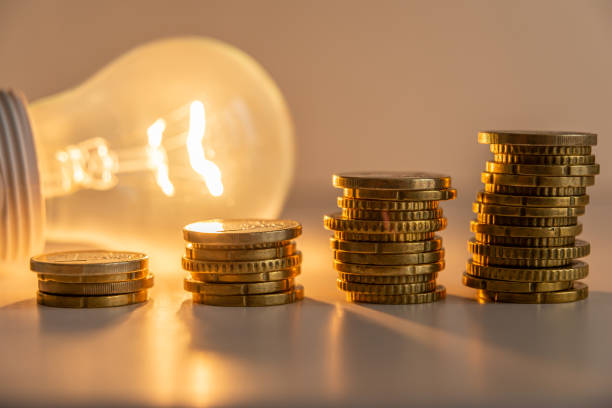
Over time, sustained cost pressure of this nature can make core industrial operations increasingly difficult to sustain. Like many large energy users, we are forced to consider options such as greater self-provision simply to protect business viability. Our Board is asking questions of sustainability.
However, we are acutely aware that a wholesale exit from the grid would further weaken EEC, erode its revenue base, and shift costs onto remaining consumers. We do not believe this outcome is in the national interest. The only way to avoid fragmentation of the system is to make faster, deliberate progress in reducing import dependency, expanding domestic generation and restoring confidence that the grid will remain affordable and reliable for all users.
Reframing EEC’s Role for the Future
Anther issue of importance is EEC’s business model itself. In my humble submission, a sustainable path forward requires accepting a structural truth in the country at a political level: electricity generation is no longer a business that EEC can or should exclusively control. We need to shift the mindset.
EEC’s enduring strength lies in its extensive transmission and distribution infrastructure.
By focusing on monetising, modernising and efficiently managing the grid, while working with the regulator and private sector to unlock domestic IPPs, EEC can strengthen its balance sheet rather than strain it. This is not a retreat. It is a strategic repositioning. In the main, this is beginning to happen but no fast enough!
Reforming Eswatini’s electricity model does not repudiate its past. It honours it.
The original objective championed by the likes of Kirsh, reinforced by Gosnell, and enabled by leaders such as Dr Sishayi Nxumalo was to secure competitively priced electricity in service of national development.
That objective remains unchanged. What must change are the means. In today’s context, expanding domestic power generation through public–private partnership is the most rational, consumer-protective and economically sound path available.
As a final word I admit that I am writing this while on holiday and perhaps should have resisted the urge to pick up the pen. But the gravity of the issue, the potential misconception of our role as a company and the genuine concern expressed by so many citizens made silence feel irresponsible.
Eswatini’s energy future is too important to be shaped by misunderstanding or misplaced blame. With honesty, cooperation and a willingness to adapt to new realities, we can stabilise tariffs, strengthen energy security and preserve the grid as a shared national asset.