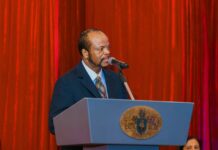



The Swaziland National Association of Teachers (SNAT) has accused the Ministry of Education and Training of gambling with the lives of children by pressing ahead with sweeping education reforms without adequate consultation, preparation or evidence that schools are ready.
SNAT Secretary General Lot Vilakati said the planned rollout of Competency-Based Education (CBE) and a new four-year secondary school programme, set to begin as schools open on Tuesday, is being rushed in a manner that risks harming pupils rather than improving outcomes.
At the heart of SNAT’s objection is the claim that teachers are being asked to implement a fundamentally new curriculum without syllabi, sufficient training, proper staffing or a publicly interrogated evaluation of earlier pilot programmes.
The union argues that far from being resistant to reform, teachers are alarmed by what they describe as a lack of basic readiness and stakeholder engagement.
“Government at this point is gambling with the lives of pupils. If a week before schools open teachers do not even have syllabi, then no teacher has planned lessons. That alone should concern everyone,” said Vilakati.
The ministry has announced that from this week, as schools open, there will be an overhaul of the education system through the introduction of CBE and the restructuring of secondary schooling into a single four-year cycle covering Grades 8 to 11.
According to the ministry, the reforms are intended to prioritise practical skills, creativity and mastery of competencies over rote learning and competitive examination rankings, while introducing new subjects such as music, dance, fine art and drama.
In principle, SNAT emphasised that it does not oppose the need to modernise education or equip pupils with skills suited to a changing economy. Its concern, the union insists, lies in how the reforms are being introduced and who has been excluded from the conversation.
Vilakati said SNAT met government representatives to raise concerns, but no agreement was reached. “We never agreed on the CBE issue, and we will never agree on it in its current form,” he said, outlining a list of unresolved issues that the union believes make the rollout premature.
Chief among these is the absence of a comprehensive report on how CBE has performed at primary school level. While CBE has already been introduced in earlier grades, SNAT said teachers, parents and the wider public have not been afforded an opportunity to scrutinise its successes, failures and unintended consequences.
“Had they presented the report on how CBE has been in primary schools, not just teachers but parents, civil society, the private sector and the media would have had a chance to look at it. That has not happened, and it is very concerning,” Vilakati said.
Without such an evaluation, the union argued, extending CBE into secondary schools amounts to scaling up an experiment without knowing whether it has worked.
The most immediate concern raised by SNAT is the lack of syllabi for the new curriculum just days before the start of the academic year. Teachers, the union said, are being placed in an impossible position — expected to deliver a new, competency-driven curriculum without clear guidance on content, sequencing or assessment.
“What have teachers planned with? CBE is a tall order. It requires careful planning, new approaches to teaching and assessment, and time. None of that can happen if the basics are not in place,” Vilakati said.
He also called for at least six months of retraining for teachers to equip them for the new system, warning that brief workshops or last-minute orientations are inadequate for a reform of this scale.
SNAT further argued that CBE demands smaller class sizes and more intensive teacher involvement to assess individual competencies, yet no credible plan has been presented to address existing staffing shortages.
Among the union’s demands are the permanent employment of an additional 4 000 teachers to reduce workloads, and the conversion of about 4 000 teachers currently on temporary contracts into permanent positions.
Without this, SNAT warned, the teacher–pupil ratios required for effective CBE — 1:45 in primary schools and 1:35 in high schools — will remain unattainable.
The introduction of new subjects such as music, dance and drama has also raised red flags, with SNAT insisting that these must be accompanied by the recruitment of appropriately trained specialist teachers.
“You cannot introduce new subjects without teachers for those subjects. That is setting the system up to fail,” Vilakati said.
The union has also called for the relocation of approximately 700 PGCE-qualified teachers currently deployed in primary schools to high schools, arguing that they are better suited to secondary education and should be remunerated accordingly.
Extending its concerns beyond CBE to the proposed four-year secondary school programme, Vilakati said while the programme was piloted in selected schools last year, no report on the pilot has been shared with stakeholders.
“There is no report that has been distributed for us to look at the successes, the challenges and then fine-tune it before rolling it out across all schools. Yet we are now taking it to all schools,” he said.
According to SNAT, this lack of transparency makes it impossible to assess whether the four-year cycle resolves existing bottlenecks or merely shifts them.
The union maintained that meaningful consultation with teachers, parents, civil society and the private sector is not a procedural luxury, but a prerequisite for reforms that affect millions of children.
SNAT also questioned whether employers, who are expected to absorb graduates after tertiary education, have been adequately engaged on the new education pathway and the competencies it seeks to produce.
“Government cannot be pushing this on its own. It is wrong not to consult relevant stakeholders,” Vilakati said.