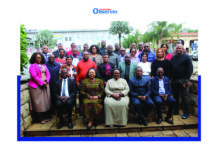



The Conciliation, Mediation and Arbitration Commission (CMAC) has successfully ended a six-week strike at the Southern Africa Nazarene University (SANU) after an intensive eight-hour engagement between the university administration and workers.
The intervention session took place at the university’s premises last Thursday from 2pm until around 10pm. It followed a request by the administration to Labour Commissioner Kingdom Mamba to intervene and resolve the impasse that had resulted in prolonged industrial action.
The university had previously attempted to stop the strike through the courts, but the bid was dismissed by Industrial Court Judge Faith Dlamini on January 15.
The strike, which began on January 12, centred on two major issues:
-
Implementation of a cost of living adjustment (CoLA)
-
Non-remittance of pension fund contributions
Workers said they had engaged in numerous fruitless negotiations with management over CoLA since 2022. The employer initially offered a zero wage increase, which the union rejected. The matter was referred to CMAC, and after negotiations reached a deadlock, workers embarked on protected industrial action.
Beyond wages, unions raised concerns over what they described as serious pension irregularities dating back to 2023. According to workers, pension contributions deducted from salaries had not been remitted to the relevant pension fund.
Administration’s Settlement Proposal
In seeking third-party mediation through CMAC, SANU proposed the following as part of its final settlement:
-
Waiving 50% of salary deductions for days not worked during the strike
-
Granting a once-off payment equivalent to 24 months’ backpay
-
Fully remitting pension contributions from January
-
Developing a structured plan to settle outstanding pension arrears
-
Waiving three days of industrial action falling in March
-
Processing salary adjustments immediately once an agreement was reached
However, negotiations stalled over disagreements regarding how and when pension arrears should be paid. While unions demanded an immediate and detailed repayment plan, SANU requested more time to formulate a sustainable proposal, citing the need to assess its financial position after receiving a government subvention.
The university had earlier offered a 3% CoLA, later revised to 3.5% covering the 2023/24 and 2024/25 financial years, alongside 12 months’ backpay for each year. Talks collapsed in early February over the application of the “No Work, No Pay” principle.
ALSO READ | EU Impressed With King’s Madagascar Conflict Intervention
During the CMAC meeting last Thursday, the parties agreed on a 4% CoLA with 24 months’ backpay.
This was confirmed by Swaziland Health Institutions and Allied Workers Union (SHIAWU) President Bonginkosi Tsela and SANU Registrar Sipho Mhlanga.
The breakdown of the agreement is as follows:
-
2% CoLA plus 12 months’ backpay for the 2023/24 financial year
-
1.5% CoLA for the 2024/25 financial year
-
The remaining 0.5% plus 12 months’ backpay to be paid once management secures additional funds
Further agreements include:
-
Monthly pension contributions will be remitted consistently from January
-
The outstanding E11 million pension debt will be paid once government releases SANU’s subvention at the end of April
-
Workers will assist in drafting a comprehensive repayment plan
“This plan will be informed by how much subvention we will receive from government, together with revised fees as per our request to the Ministry of Education and Training,” Mhlanga said.
Meanwhile, the 50% once-off implementation will be effected in workers’ February salaries.
Both parties described CMAC’s intervention as an eye-opener in resolving the dispute.
Exams to Be Written on March 2 – SANU
After six weeks of uncertainty, SANU has announced that examinations for students at the Manzini Campus will be written on March 2.
In a memorandum to students, Registrar Sipho Mhlanga stated that from today until Friday, a study week will be observed to allow students to prepare.
Mhlanga thanked students for their patience, resilience and understanding during the strike, which involved lecturers and other workers.
This follows a failed attempt by the university to proceed with exams earlier. On February 13, while the strike was ongoing, management had announced that exams would begin this week. However, students wrote to the administration requesting a postponement until the strike ended.
They expressed concerns that external markers might be used, potentially prejudicing them and affecting their results.