


Eswatini’s cooperation with the United States, highlighted by the signing of a major health financing agreement last week, also comes with clear expectations on the international stage, according to political analyst Professor PQ Magagula.
He argues that global partnerships are rarely neutral acts of generosity and that Eswatini should expect to consistently align with United States interests in international relations.
Speaking in the context of the newly signed bilateral Memorandum of Understanding (MoU) on health, Professor Magagula said international relations operated on the principle that there is no free lunch. When powerful States provide financial assistance, technical support, or political backing, they do so with an understanding that their interests will be respected and advanced by the beneficiary country.
“At least Marco Rubio, in the America First Global Health Strategy, is clear that support from the US government is not only meant to help another nation but is also expected to serve the interests and benefit of the people of the United States,” the retired University of Eswatini lecturer said.
“This is how international relations work. It is a scratch my back, I scratch yours arrangement.”
His comments come shortly after Eswatini and the United States signed a five-year MoU covering the period 2026 to 2030, under which a combined total of US$242 million (around E4 billion) will be invested into strengthening the kingdom’s health system.
Of this amount, the United States has committed US$205 million (approximately E3.48 billion), while the government of Eswatini pledged to increase its domestic health funding by US$37 million (E625 million) over the same period.
ALSO READ | Mum disappears, leaves girl (12) to look after siblings
The agreement, signed at the American Corner at the Mbabane National Library, focuses on addressing infectious diseases such as HIV and tuberculosis, strengthening national health systems and building long-term sustainability.
It also places emphasis on Eswatini gradually assuming greater financial responsibility as US support tapers off, a shift that mirrors broader changes in US foreign assistance policy.
In a letter accompanying the America First Global Health Strategy Report, US Secretary of State Marco Rubio stated that while the United States would remain the world’s most generous health donor, future assistance would be designed to directly benefit American interests.
He criticised existing foreign aid models for creating dependency, inefficiency and parallel systems, arguing instead for strong bilateral agreements that promote US national priorities while saving lives abroad.
Professor Magagula believes this policy direction reinforces the reality that Eswatini, as a recipient of significant US support, is expected to remain politically aligned with Washington on key international matters.
“If one country helps another, it is not expected that the supported country will side with views or elements opposite those of the country providing the support,” he said.
He was asked whether Eswatini’s acceptance of prisoner deportees from the United States this year is an example of ‘serving interests’ of the American people. Magagula responded in the affirmative.
He said such cooperation should be understood as part of a broader set of obligations that come with close bilateral ties.
“There is no free lunch in international relations,” he reiterated. “Support may be called upon in areas beyond economics, including politics and diplomacy.”
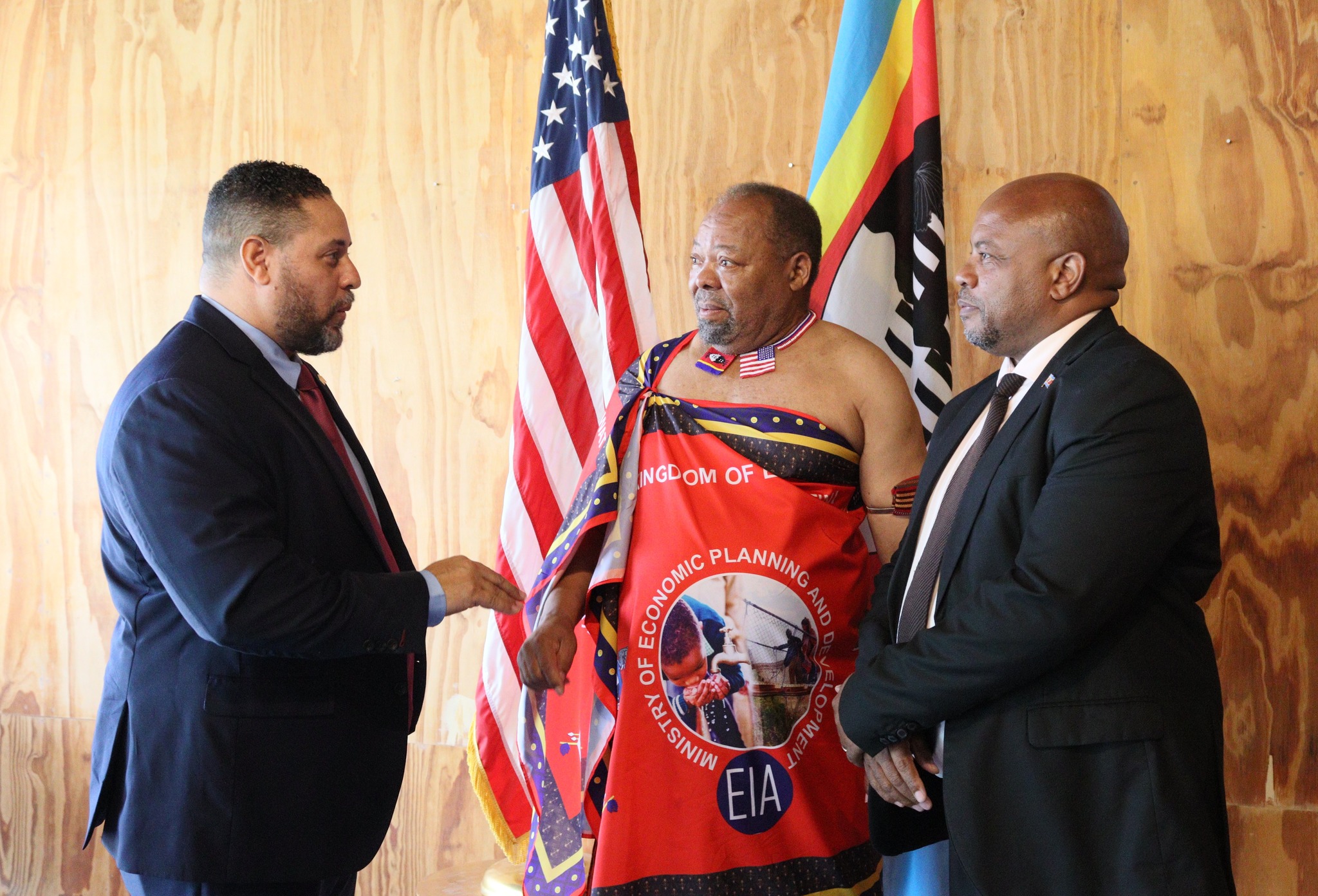
During the MoU signing ceremony, Minister for Economic Planning and Development Dr Tambo Gina underscored the long-standing partnership between the two countries, dating back to Eswatini’s independence in 1968.
He noted that since 2005, the United States has invested nearly US$900 million (approximately E15.3 billion) in the kingdom, much of it directed towards combating HIV and tuberculosis.
Gina highlighted the tangible benefits of this cooperation, including a dramatic increase in life expectancy from 42.5 years in 2005 to over 60 years by 2020, as well as a sharp reduction in mother-to-child transmission of HIV.
He described the new MoU as another critical milestone in advancing national health systems and ensuring long-term resilience.
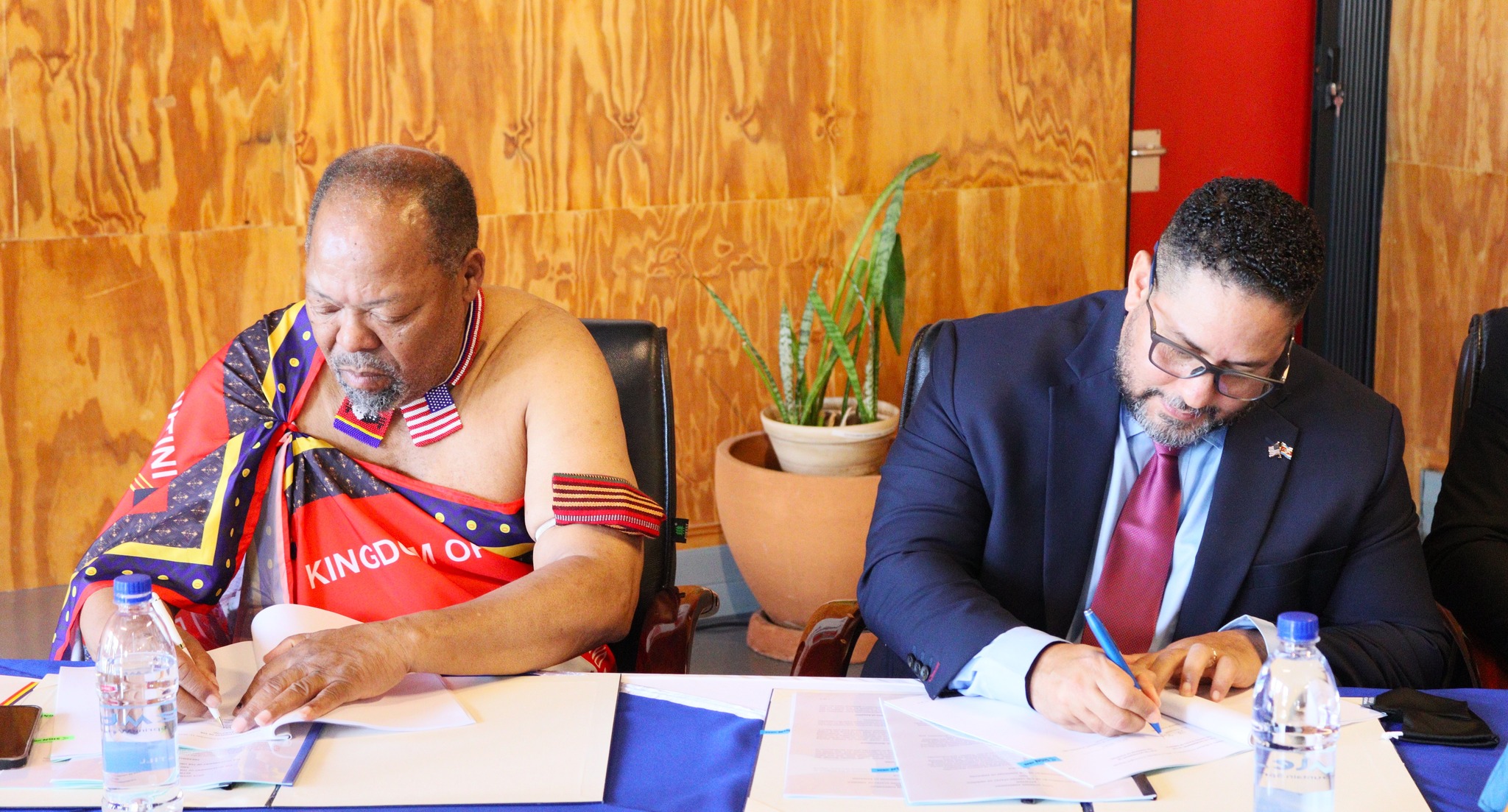
US Chargé d’Affaires Marc Weinstock echoed these sentiments, describing the agreement as a foundation for security, prosperity and other shared goals.
He emphasised that the MoU aligned with Eswatini’s National Multisectoral HIV/AIDS Strategic Framework and supports global targets such as the UNAIDS 95-95-95 goals.
While both governments framed the agreement as mutually beneficial, Professor Magagula cautioned that Eswatini must clearly understand the strategic implications of such partnerships.
In his view, development assistance, however generous, is never detached from power dynamics and expectations of loyalty.
He said the language of partnership should not obscure reality. When a country accepts support from a global power, it must also accept an unwritten obligation to support that power’s interests.
This is the price that comes with the benefits.
An Economics lecturer at the University of Eswatini, Sanele Sibiya, shared similar sentiments to that of Magagula.
“It is not just kindness. With international relations, the benefits have to be mutual,” he said.
Faith-based hospitals recognised
The crucial role that faith-based hospitals and clinics play in the healthcare delivery system in Eswatini, particularly in rural and underserved areas, is recognised.
According to the 2025 America First Global Health Strategy, faith-based organisations (FBOs) represent over 50% of the health delivery capacity in Eswatini, a testament to their significant impact on public health.
Faith-based healthcare providers in Eswatini have a long history of successful collaboration with the US government, delivering health foreign assistance in a cost-efficient and sustainable manner.
The America First Global Health Strategy report highlights that FBOs are trusted by local communities, especially in regions with high levels of religiosity, where faith leaders are influential.
These organisations also benefit from lower overhead costs due to their use of existing infrastructure, which makes them highly cost-effective.
Moreover, the report emphasises that faith-based programmes are poised for long-term sustainability, as they can eventually be supported by private donors or tithes and offerings from local congregations, reducing dependency on US foreign assistance over time.
The US government plans to continue leveraging the capacity and trust of faith-based organisations in Eswatini and other countries, recognising their potential to strengthen local healthcare systems and ensure lasting improvements in health outcomes.