


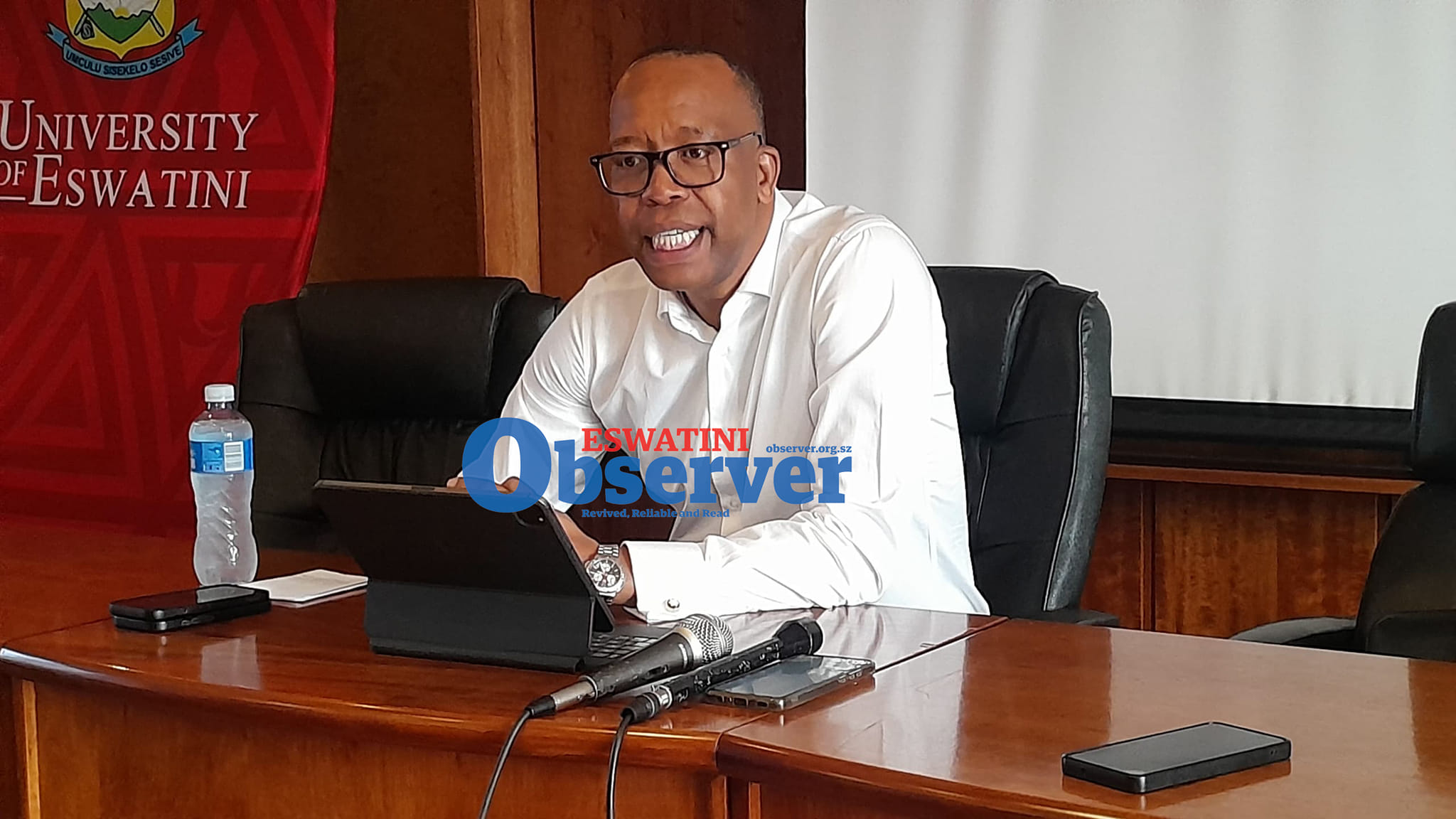
AFTER the presentation of the national budget speech in Parliament, the Central Bank of Eswatini convened the Post-Budget Seminar.
The seminar has become a norm over the years and is an event where captains of high-profile institutions in the country are invited as both guests and panellists.
While discussions may sometimes be led by the governor, the guest speaker is the minister of finance. On this occasion, the minister does not deliver the budget again but rises to rationalise it, such as justifying why more allocations were made towards investments rather than social welfare programmes.
RETHINKING THE POST-BUDGET SEMINAR
At some point during my younger years in this profession as a journalist, I felt that the Post-Budget Seminar was a mere formality, considering how unlikely it was to influence a budget already extensively worked on by economists at the ministry of finance, presented to Cabinet and tabled in Parliament.
I argued that discussions pertaining to the budget happening outside parliamentary processes were in vain, as those discussions would not sway the budget in any way. I was wrong. More than a ceremonial occasion, the Post-Budget Seminar is a necessary and effective part of national policy formulation.
Although I had once suggested that the bank should instead consider hosting a pre-budget seminar, as views collected there would likely be the outcome of robust debate and allow the ministry to confidently adopt them as part of what stakeholders believe is the right policy path for the country.
Perhaps the central bank may still have to revisit that suggestion.
WHY THE SEMINAR MATTERS
What I believe makes the Post-Budget Seminar a necessary and effective forum is the honesty and transparency with which the national budget is dissected by the minister himself, the panellists and the different experts rising from the floor to either ask questions or make recommendations.
Considering the fact that planning for and growing an economy is not a one-time event but rather a long trial and error process, the collective views and the spirit of the discussions in this seminar certainly account for a broader mindset shift for both those planning the national budget and those who hold different perspectives and expectations.
THE CALL FOR FREE SECONDARY EDUCATION
One of those who held a different view on how the budget should have been framed is the Director of CANGO, the Coordinating Assembly for Non-Governmental Organisations, Thembinkosi Dlamini.
Dlamini rose to lament the high cost of secondary education in the country, pointing out that evidence of this was the 35% reported dropout rate of students at this level due to financial constraints.
Dlamini sought the minister’s clarification on whether it was not yet time for government to consider funding universal free education for both primary and secondary levels in the country, to curb not only the dropout rate but also the stigma associated with the OVC fund. For a little perspective, the OVC fund currently allocates E1 950.00 per beneficiary, while some schools in the country have school fees rising as high as E15 000 per year per child.
These figures speak directly to the 35% dropout rate experienced at secondary school level in the country.
As Dlamini was making his submissions, I thought his case was valid, especially considering all the official social and economic indicators that drive our country. The context of the concern is a high unemployment rate, high poverty levels and deep inequality, making it almost inevitable for government to consider universal free primary and secondary education.
GOVERNMENT’S PRO-GROWTH STRATEGY
Prior to the minister’s response to Dlamini’s concerns, there was a general consensus within the room that the country should focus more on growing the economy rather than worrying about debt reduction or other factors. At the time, it was not entirely clear to me how this growth would be achieved, as economists sometimes do not fully unpack their ideas. But it certainly made sense when the minister finally addressed Dlamini.
In a nutshell, the minister made it clear that it was government policy to focus more on growing the economy than on channelling resources into social programmes.
The minister pointed out that the country had two options: one was to throw money directly at social programmes such as increasing grants and the other was to channel those resources towards addressing the root causes of poverty, inequality and the cost of education.
The minister indicated that, in the current economic climate, government had opted to channel its resources towards investments that would have positive social spinoffs for the country. Minister Neal said that because of this approach, Members of Parliament were giving him a hard time in their persistent calls for increases across almost all government grant programmes, including the OVC grant, the elderly grant, free primary education and grants for persons with disabilities.
With government adopting a pro-growth policy approach, the expectation and public call for universal free secondary education seem miles away.
STRUCTURAL ECONOMIC CONSTRAINTS
Our approach in this column is not to simply commentate on matters of public interest and leave it there. That would be a total waste of ink and paper. Here is a country with a policy dilemma: a loud cry from the public about the need for improved social welfare programmes, with vital social and economic indicators justifying that call.
On the other hand, there is a government that does not dismiss these cries as baseless but says the time has not yet come to find a balance between maintaining economic growth and improving the social conditions of its citizens.
Perhaps the situation becomes clearer when one considers other submissions made during the seminar.
I would like to zoom in on what I believe was a hard but very polite economic talk by Ubombo Sugar Managing Director, Muzi Siyaya. Siyaya, who was among the panellists on the day, helped the room reflect honestly on whether the country can find a balance between economic growth and social spending.
The Ubombo Sugar MD mentioned three long-standing structural problems affecting the country both socially and economically.
He christened these problems as SEM, referring to the country’s overreliance on SACU revenue, the constraints within the energy sector and the limited size of our market, particularly as a landlocked country. Siyaya pointed out that national budgets are measured by allocations and those allocations should primarily aim to address structural constraints that limit economic growth, such as the ones he highlighted.
In essence, Siyaya challenged the minister to be careful and decisive about where resources are allocated. His approach demonstrated that while the country may pursue a pro-growth strategy through its budget allocations, those allocations will have less impact if they do not address the country’s structural economic problems as he identified them.
If one looks at it from Siyaya’s lens, there would be no meaningful job creation to address poverty, inequality and unemployment if the country’s budget does not intentionally seek to resolve our energy constraints as a nation. Our ambition to industrialise and strengthen the manufacturing sector would remain a far-fetched dream, with serious long-term knock-on effects on the country’s social security landscape.
I earlier noted that Siyaya delivered a hard economic talk with a measured tone. This rings true because the question that lingered in my mind after his submission was whether we can safely conclude that, over the years, our finance ministers have made a fair attempt to address our structural economic problems.
I believe they have. However, the degree to which these constraints continue to limit economic growth proves that the country needs to do more to have them addressed.
FINAL THOUGHTS
While there are significant private sector-led projects in the energy sector, our continued reliance on imported electricity does not fully reflect a country that has adopted a pro-growth economic strategy.
In the same vein, the narrative of overreliance on SACU revenue is not new, but that should not make it a boring or tired one either.
In my view, this remains the most limiting constraint within our fiscal framework due to the volatility of that revenue stream, which makes it difficult, if not impossible, for government to make certain policy commitments that can address our long-standing structural economic problems.
Without a strong plan to address these challenges and decisive action taken to diversify our revenue sources, CANGO’s dream for free secondary education and improved grants for the vulnerable may remain nothing more than a distant aspiration.
Until next week, God bless.
Feedback & Correspondence:
Email: johnpires@live.com
Mobile: +268 7606 5993
WhatsApp: +268 7602 7758