



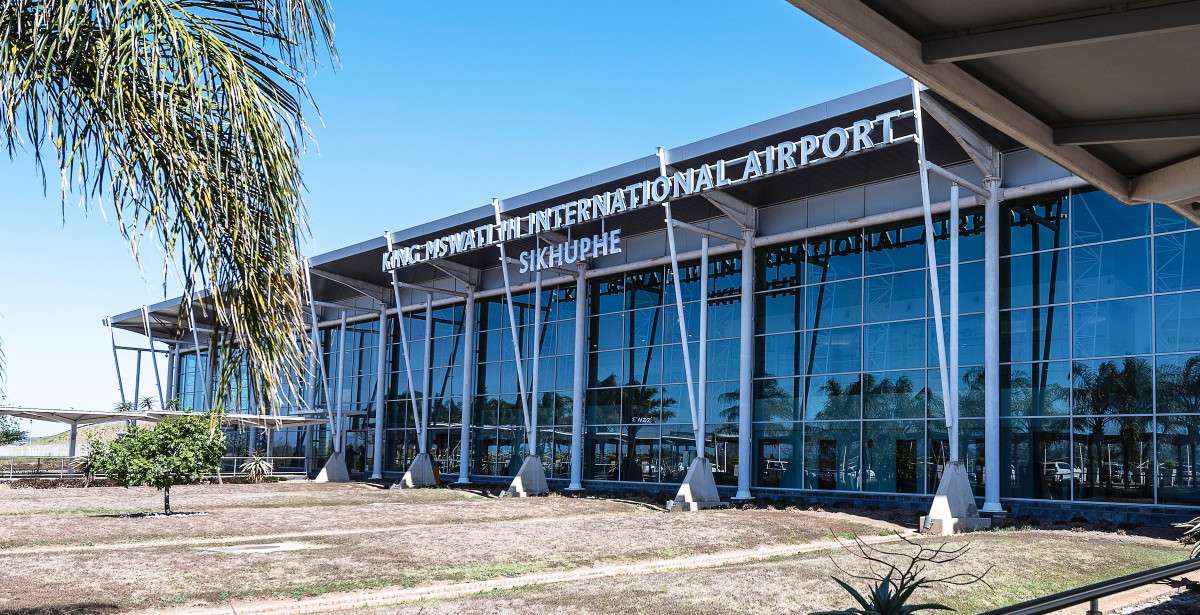
Sikhuphe – Government, through the Ministry of Public Works and Transport, successfully completed the construction of a state-of-the-art aircraft hangar at the King Mswati III International Airport.
Such a development marks a significant milestone in the country’s programme for national infrastructure development and helps in improving the standard of the KMIII International Airport.
The hangar project was executed by Steffanutti Stocks/Inyatsi Joint Venture (SBI JV) under a design-and-build contract arrangement. Construction of the facility commenced in 2023 and reached practical completion in February 2025, at a total cost of over E250 million. According to the project’s closing compliance report prepared for the ministry, an aircraft has already been moved into the hangar, marking a key operational milestone for the new facility.
A Modern Facility
The newly constructed hangar is designed as a large quadruple-volume aircraft shelter, covering approximately 9,850 square metres, and is capable of housing large aircraft. The facility not only provides secure housing for aircraft but also supports routine maintenance and operational requirements for aviation activities.
Beyond the main hangar structure, the development includes several supporting facilities that enhance the functionality of the site. These include:
-
Maintenance and repair offices
-
Male and female ablution facilities
-
Utility storage building
-
Parking areas
-
Apron markings to guide aircraft movement
In addition, the facility has been equipped with modern operational systems such as automated hangar doors, electrical distribution infrastructure, fire detection and firefighting systems, security biometric scanners, lighting installations, and landscaping improvements within the surrounding area.

These features ensure that the facility meets modern aviation infrastructure standards and strengthens the operational capacity of the King Mswati III International Airport, which remains the country’s main international aviation gateway.
Advancing Infrastructure Development
Government has consistently emphasised that investments in infrastructure are a critical pillar in national development. The construction of the aircraft hangar is, therefore, viewed as part of a broader national effort to modernise strategic infrastructure and ensure that public facilities keep pace with global standards.
The project was implemented through the Buildings Department within the Ministry of Public Works and Transport, which is responsible for delivering key government infrastructure projects across the country. Through such initiatives, government aims to strengthen national assets while creating facilities that support long-term operational efficiency and growth.
Modern aviation infrastructure is widely regarded as an essential component of national development, particularly in supporting international connectivity, government operations, and the country’s global profile.
Efficient Project Delivery
The project was implemented using a design-and-build contract model under the FIDIC Yellow Book, which allowed for greater efficiency in project delivery by integrating both design and construction responsibilities within a single contracting framework.
This approach helped streamline project execution and ensured strong coordination between the engineering teams and contractors. Despite facing several challenges during the construction phase, the project team was able to successfully deliver the facility while maintaining financial discipline.
Among the challenges encountered were periods of inclement weather which delayed excavation works as well as strong winds that affected the installation of the steel frame structure.
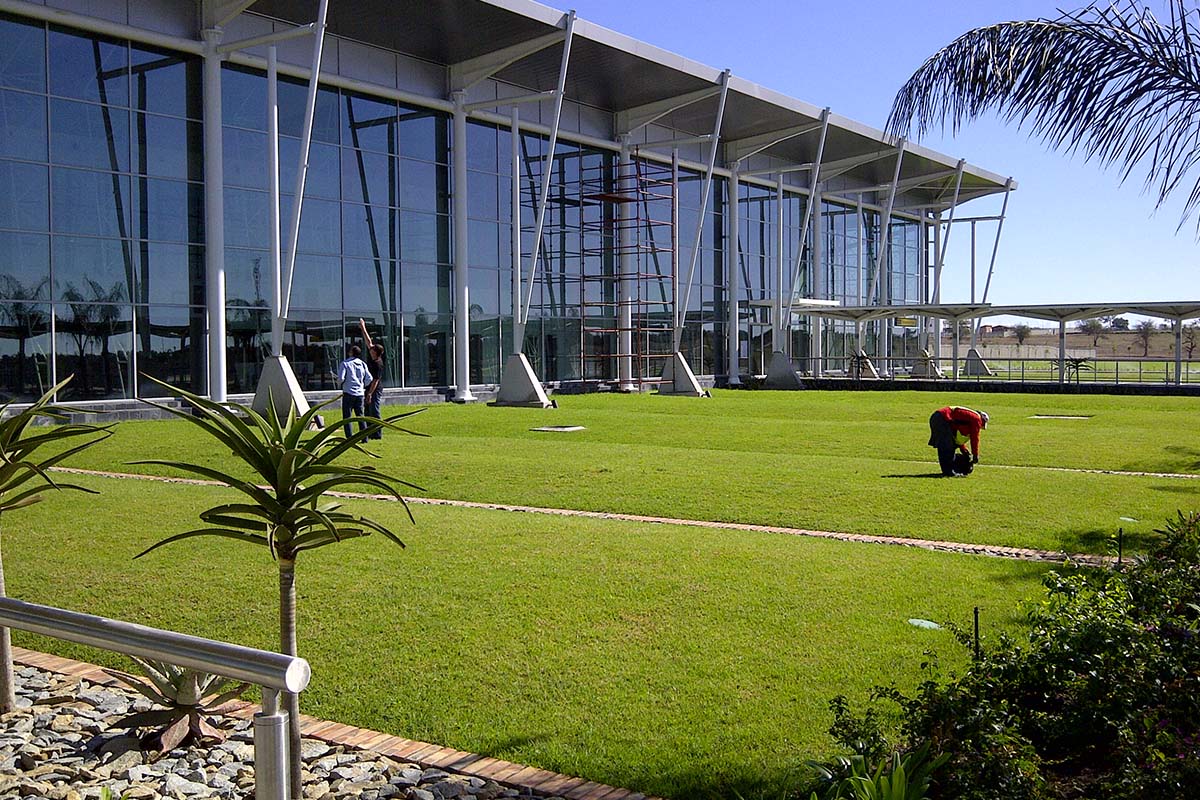
Through effective project management and coordination, these challenges were mitigated and the project was ultimately completed within the approved project cost, demonstrating sound management of public infrastructure development.
Compliance and Environmental Standards
Throughout the project lifecycle, the contractor implemented an Environmental Management Plan (EMP) in accordance with the Environmental Audit, Assessment and Review Regulations of 2022.
The compliance report indicates that the contractor maintained strong adherence to environmental and safety standards throughout the construction period. Monitoring mechanisms were put in place to ensure that construction activities complied with environmental requirements, including:
-
Dust control
-
Traffic management
-
Waste management
-
Occupational health and safety measures
This ensured that the project was executed responsibly while protecting the surrounding environment.
Supporting Eswatini’s Development Vision
The completion of the hangar reflects government’s continued commitment to investing in high-quality infrastructure that supports national progress and strengthens key public assets.
Such developments are aligned with the national vision championed by His Majesty King Mswati III, which seeks to position the country as a first-world country with modern infrastructure and world-class public facilities.
By continuously improving national infrastructure, particularly in strategic sectors such as aviation, government aims to enhance operational capacity, strengthen international standards, and support long-term economic growth.
With the completion of the aircraft hangar at the King Mswati III International Airport, the country continues to demonstrate its capabilities and position itself as a hub for investment, underscoring its commitment to building modern infrastructure that reflects the country’s ambition to become a first-world country with globally competitive facilities.