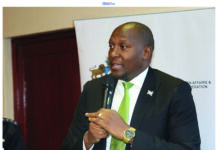



HUMAN Rights Lawyer Sibusiso Nhlabatsi says he is still being denied access to deportees who are being held at Matsapha Correctional Services Centre.
This is after the Supreme Court granted Nhlabatsi the right to access to Matsapha Correctional Services Centre for the purpose of consulting with the foreign nationals.
The country has received multiple batches of third-country deportees from the United States since last year. The first group was from Vietnam, Jamaica, Laos, Cuba and Yemen. Subsequent groups included individuals from Somalia, Sudan and Tanzania.
Nhlabatsi explained that he tried to visit the deportees over a week ago but was not able to see them.
“I went there on a Tuesday and they refused to let me in. The officers told me they were not aware of any judgment that allows me to see the deportees. They said they did not know about the court order,” he said.
He said he returned again on Friday. This time, he was allowed to enter the facility but he still could not meet the detainees.
“I was only attended by two senior officers. They told me there was no communication about my visit. So I had to leave again without seeing them. Correctional services is not following the Supreme Court judgment. They have refused to give me access,” he said.
After being denied the access, Nhlabatsi wrote a letter to correctional demanding immediate compliance to Supreme Court Judgment.
The situation comes after the Supreme Court dismissed an appeal by His Majesty’s Correctional Services (HMCS).
The department had challenged an earlier ruling that allowed Nhlabatsi to consult with the detainees.
RELATED | Supreme Court orders legal representation for US deportees
The Supreme Court confirmed that the foreign nationals have a constitutional right to access a lawyer, even though they are being held under a deportation arrangement between Eswatini and the United States.
HMCS Public Relations Officer Baphelele Kunene said Nhlabatsi had failed to give the names of the people he was visiting at the facility.
“When you want to see someone in jail, you have to provide their names,” he said.
Before this ruling, correctional services had argued that the detainees did not want to meet with Nhlabatsi.
They also said the men were not entitled to legal representation in the country because they had not been charged with any crime locally.
However, the Supreme Court rejected these arguments and ruled in favour of the lawyer.
After the judgment, Nhlabatsi welcomed the decision.
He said it was important because it restored the deportees’ legal rights and allowed them to communicate properly with their lawyers, including those outside the country.
Eswatini is one of at least eight African countries that have agreements with the United States to receive deported migrants.
In the past nine months, the country has received about 15 deportees under this agreement. All of them are being held at Matsapha Correctional Services.