


Local farmers and butchery operators have blasted government, pointing out that the Ministry of Agriculture has not been clearly communicating with them on issues around the foot-and-mouth disease (FMD) outbreak while also side-lining them in efforts to deal with this disease.
They bitterly complained that this was happening despite the fact that they were the most affected stakeholders by the outbreak.
They noted that continued outbreaks had negatively affected their businesses, threatening livelihoods and food security.
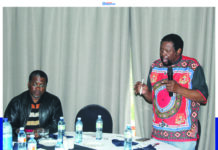
The stakeholders said this yesterday during a meeting held at Liberty Centre in Manzini. The objective of the meeting was for the stakeholders to make submissions on the effects of the disease on their businesses, and also make suggestions on what could be done to decrease the number of cases of livestock that contracts the disease.
So far, the FMD has been detected in cattle and recently pigs, in the Shiselweni, Lubombo and Manzini regions.
Regarding the cordon lines, the stakeholders said they were set up without notice, which further affected their businesses.
Some of the submissions were from those operating feedlots, who said they made losses as the livestock and meat movement ban prevented them from transporting these from one area to another.
One farmer said he had slaughtered his cattle for purpose of selling the meat, but he learnt after that he had already slaughtered the cattle that a cordon line had suddenly been set up around his area.
“I’ve lost E60 000. Inyama ibolile because I could not transport it to the market,” said one farmer, adding that this was a cause for concern because this was his way of earning a living.
Another farmer, Andzile Gule, who said he ran a feedlot at Ngculwini, submitted that his understanding was that the FMD vaccination was meant to prevent the spread of the disease as they helped the animals to build an immune system against it.
“Therefore, if all livestock in the country could be vaccinated, even if the disease could spread to other areas, it would find that the livestock’s immune system is able to fight it,” he said, emphasising the call to government.
Additionally, they said the current situation impacted feedlot owners the most as they have been forced to keep feeding stock that should have been long slaughtered and sold.
Businessman Bhutana Dlamini said he did not understand why cattle that had been reared for meat were not being slaughtered and sold, especially because not all of them are affected by FMD.
Loans
He said they had invested so much money in their farming businesses, and some had taken out loans to start them.
“However, asicatjangwelwa. No one is giving us direction on the matter. FMD is not a new issue as Mozambique, Botswana, and South Africa are faced with the same challenge, so their expertise on how to effectively deal with the disease should be sought,” submitted Dlamini.
Further, the stakeholders said since not all cattle were infected by FMD, farmers in areas where livestock had been vaccinated should be allowed to trade among themselves so as to keep those running butcheries in business.
“If government continues operating this way, farmers will sooner or later find illegal means to move their meat around the cordon lines, which could further spread the disease,” submitted one farmer.
The farmers and butchery operators added that they had received fragmented pieces of communication from various sources, which when they requested for clarification from veterinary assistants (bomadibhane) and veterinarians in the regions they had no answers.
The stakeholders said they had heard from their sources that the ban on selling or moving meat and livestock around the country would be lifted this month.
However, they said they later learned that this could not be done because the disease was detected in another area.
“All this was never communicated officially by the ministry. We are kept in the dark, yet we bear the brunt of the outbreak,” said the stakeholders.
Others said they foresaw a national shutdown that could result in butcheries running out of stock and beef and pork being unavailable in the country.
They said they wished that the ministry could provide periodic updates on the disease as was the case with COVID-19.
Therefore, they expressed hope in the Butchery Owners and Livestock Farmers Task Team, which is chaired by Emmanuel Dlamini, to forward their concerns to the Ministry of Agriculture so that they could engage and find lasting solutions to the foot-and-mouth disease challenge.
On the stakeholders’ concern about poor communication and neglect, Ministry of Agriculture Principal Secretary (PS) Sydney Simelane said the ministry constantly updated them and veterinary assistants through WhatsApp groups.
“We cannot convene meetings with stakeholders all the time because this would be costly. Updating them on processes through their WhatsApp groups is quicker and cheaper,” he said, adding that stakeholders were also free to contact either him or the minister directly for clarity and more information.
“They cannot solely rely on bomadibhane for information they need on FMD, but they know they could visit the ministry or contact me or the minister directly.”