


Government has urged the public not to panic despite emerging fuel shortages at some service stations, attributing the situation to global supply disruptions linked to ongoing geopolitical tensions in the Middle East.
Minister of Natural Resources and Energy Prince Lonkhokhela confirmed that the ministry had convened an urgent meeting with oil companies to assess the impact of the international crisis on the country’s fuel supply chain.
The meeting focused on evaluating the country’s current fuel reserves and identifying measures to ensure continued availability.
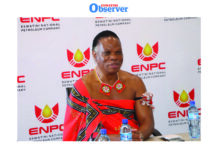
The minister was speaking during a press briefing at the ministry’s boardroom yesterday.
“The objective of the engagement was to determine where we stand as a country in terms of petrol supply, particularly in light of the global disruptions we are witnessing,” said the minister.
He explained that tensions in the Middle East have significantly affected fuel production and distribution worldwide, resulting in constrained supply from international markets.
As a country that imports 100% of its fuel, Eswatini is inevitably affected by these developments.
“Our fuel imports are primarily sourced from the Republic of South Africa, with additional supplies coming from Mozambique under quota allocations approved by the Ministry of Finance,” Prince Lonkhokhela said.
ALSO READ | Syndicate facing 168 charges, found with E708 000 cash
He noted that both these countries relied heavily on international markets, which were currently under strain.
He stated that the global disruption has created bottlenecks in the regional supply chain.
Fuel loading stations in both South Africa and Mozambique were experiencing congestion, with a surge in the number of tanker trucks seeking to access limited supplies.

“This influx of trucks at loading points has led to significant delays in fuel deliveries into the country, as a result, some fuel stations have experienced temporary stock-outs,” he said.
In response to the delays, certain fuel stations have begun rationing petrol to customers as a precautionary measure.
While this has raised concern among motorists, the ministry emphasised that rationing was a controlled strategy aimed at maintaining equitable distribution during the supply disruption.
Prince Lonkhokhela further explained that international supply constraints have increased the lead time required to import fuel.
Compounding the situation were logistical challenges caused by the ongoing conflict, including disruptions to traditional transportation routes.
“With the war affecting key supply corridors, the movement of fuel from production points to our region has slowed down considerably.
This naturally affects delivery schedules and availability at local stations,” he said.
Despite the challenges, government has moved to reassure the nation that the situation was under control.
The minister confirmed that fuel remains available within the country, albeit with distribution delays in certain areas.
“We want to assure Emaswati that there is no need to panic. Fuel is available, and the situation is being actively managed,” said the minister.
The Ministry of Natural Resources and Energy is working closely with oil companies to monitor supply levels and coordinate responses to emerging challenges.
Regular meetings have been scheduled to continuously assess the situation and implement necessary interventions.
NOW READ | Veteran ANC member Lukhele honoured by visit from Zuma
In addition, government has committed to keeping the public informed through timely updates as the situation evolves.
“We understand the concerns of the public and are committed to transparency. We will continue to provide updates so that citizens are aware of developments and can plan accordingly,” he said.
Meanwhile, Prince Lonkhokhela has underscored the urgent need for the country to finish the establishment of the Strategic Oil Reserve to safeguard the country against future shocks.