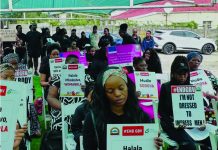



ONE Billion Rising Eswatini Festival once again proved to be more than a moment of commemoration; it is a powerful call to action.
Under the theme ‘Rising for Our Bodies, Our Earth, Our Future’, the festival will bring together civil society organisations, community members, activists, artists and partners to affirm a shared commitment to ending gender-based violence (GBV) and building a just, safe and sustainable society for all. Among the first voices that poured forth in solidarity were the Road Accident Action Group (RAAG) and Days for Girls, each highlighting critical yet often overlooked links between violence, infrastructure, dignity, and the future of Eswatini.
RAAG says unsafe roads and transport heighten risks for women and vulnerable groups. It stood in strong solidarity with all survivors of GBV, emphasising that the safety of bodies, communities, and the environment are deeply interconnected. RAAG underscored a crucial truth: road safety is not merely a transport or engineering concern—it is fundamentally a human rights issue, a gender issue, and a matter of social justice.
Across the country, poor road infrastructure, unsafe public transport, lack of adequate lighting, long walking distances and isolated routes continue to expose women, girls, children, persons with disabilities and other vulnerable groups to heightened risks of harassment, assault and violence. For many, daily mobility is not a matter of convenience, but a dangerous necessity.
When roads are impassable or unsafe, people are forced to walk long distances, often at night, or rely on unsafe transport options. These conditions significantly increase exposure to GBV, especially for women and girls who already face disproportionate risks in public spaces.
RAAG highlighted that unsafe roads did not only increase the likelihood of violence; they also compounded its consequences. Poor and damaged road networks delay access to healthcare, police services, shelters and justice for survivors of GBV. In emergencies, particularly during extreme weather events, flooded or damaged roads can mean the difference between life and death, between reaching safety and suffering further harm. Climate change has intensified these risks, making the call for resilient and sustainable infrastructure more urgent than ever.
Speaking on behalf of the organisation, RAAG Director Sanele Sibandze stressed that road safety must be viewed through a holistic lens. “As RAAG, we believe that safe, inclusive, and climate-resilient roads are essential to protecting bodies, preserving our Earth and securing our future. Road safety must be gender-responsive, people-centred and environmentally sustainable,” he said.
The message strongly resonated with the festival’s theme, linking bodily safety, environmental responsibility and intergenerational justice. In line with the vision, RAAG issued a clear call to action.
The organisation urged for the development and maintenance of safe, well-lit roads with proper walkways that prioritised pedestrians and vulnerable road users. It called for reliable, affordable and safe public transport systems that reduced the need for dangerous travel options. RAAG further emphasised the importance of infrastructure planning that deliberately considers the safety of women, children, persons with disabilities and other at-risk groups.
Strong collaboration between road authorities, GBV stakeholders and communities was identified as essential, alongside increased investment in sustainable transport solutions that protect both people and the planet.

RAAG’s message was clear and uncompromising: rising for our bodies means protecting people from violence in all its forms; rising for our Earth means building sustainable and resilient infrastructure; and rising for our future means ensuring that no one is left unsafe on our roads. Road safety saves lives and road safety prevents violence. Together, the nation must rise.
Days for Girls Solidarity
Adding to the powerful chorus of solidarity, Days for Girls also stood firmly behind the call to rise for Our Bodies, Our Earth, Our Future.
“The organisation emphasised that gender-based violence is a direct violation of bodily autonomy and human dignity and that it continues to limit the freedom, safety and potential of women and girls locally and across the world. No society, they noted, can truly progress while half its population lives in fear,” said Days for Girls Director Lindiwe Dladla.
Days for Girls highlighted the profound link between safety, education, and sustainable development. When girls are safe, educated and respected, entire communities are strengthened and futures become more sustainable. Conversely, violence undermines development, perpetuates inequality and robs girls of opportunities to thrive.
The organisation therefore called on government, institutions, men and boys to play an active role in dismantling the culture of violence and building an Eswatini rooted in respect, equity and care.
Their message echoed the spirit of One Billion Rising: collective action is essential. Ending GBV is not the responsibility of survivors alone, nor of women and girls in isolation. It requires the commitment of all sectors of society, policy-makers, community leaders, service providers, families and individuals. It requires challenging harmful norms, speaking out against injustice and creating systems that protect dignity and life.
As the One Billion Rising Eswatini Festival drew together diverse voices and experiences, the solidarity statements from RAAG and Days for Girls reinforced a powerful truth: the struggle to end GBV is inseparable from the struggle for safe environments, sustainable development and a just future.
Rising for our bodies, earth and future is not a symbolic act; it is a daily commitment to action, accountability and hope. Together, Eswatini rises against violence, for dignity and for a future where every person can move, live and dream without fear.