
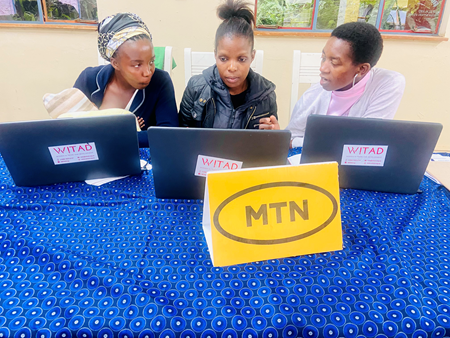
By the time a young mother with limited resources realises she needs vocational skills to secure a stable income, she is often already burdened with multiple responsibilities such as childcare, household duties and sometimes even caring for elderly parents.
The idea of leaving her family to seek low-paying work in urban areas is not just daunting; it disrupts family structures and exposes her to exploitation. Yet, without marketable skills, she remains trapped in cycles of poverty and dependency.
Challenges Young Mothers Face in Skills Training
Before solutions can work, training programmes must acknowledge the realities of young mothers:
Psychological warfare – partners or family members who belittle her ambitions, accuse her of neglecting her children, or even threaten abandonment if she becomes ‘too independent’.
Time poverty – they cannot attend full-time, rigid classes.
Limited mobility – travelling long distances for training is difficult.
Immediate financial needs – they cannot wait months or years to see income.
Childcare constraints – many programmes ignore this barrier.
Responsive Capacity Building
How, then, can vocational training be designed to ensure a fast transition into profitable income generation while allowing her to stay rooted in her community? The Women in Trade and Development (WITAD) initiative answers this by focusing on demand-driven skills that integrate women into coordinated production chains, enabling them to earn without uprooting their lives. This model not only preserves family structures but also strengthens local economies by keeping production rural while accessing formal and global markets.
Fast-Track, Flexible, and Family-Friendly
Vocational Training
Instead of year-long courses, WITAD breaks training into three weeks of intensive modules followed by longer periods of mentorship, where women learn: sewing and design for advanced tailoring for bulk contracts; regenerative farming of fast-growing, high-value crops and vegetables, food processing, renewable energy and digital skills. Sessions are generally scheduled around childcare-friendly hours (e.g., after children and basic chores have been carried out) which can mean fewer hours per day compared to a college. Additionally, most women simply want to learn by doing instead of spending a lot of time acquiring theoretical principles (in their second language) and having to rewrite such to prove their academic prowess. While some training activities take place in villages to reduce travel burdens, the infrastructure and equipment challenges in some of the communities lead to some training workshops being centralised and residential for the women’s safety i.e. prevention of travel after work hours.
Embedded Business Mentorship
Ending a vocational programme at technical skills transfer leaves women unsure of how to monetise them. WITAD pairs training with small-enterprise coaching and market linkage services.
Coordinated Production
Rural women often miss out on formal markets because they cannot meet large volumes alone while urban migration for employment destroys the family structure and children are highly exposed to abuse. Collective production models solve this problem through shared processing hubs: one industrial sewing machine or food processing technology serves multiple women. Through aggregation systems, small harvests are combined to supply supermarkets/exporters and digital coordination tracks orders and logistics. For example, a cooperative can pool smallholder-grown grain, process it into flour to reduce post-harvest losses and export it, enabling each woman to earn 5 times more than selling raw grain locally.
Conclusion
The rural women-centred capacity-building approach proves that vocational training can be fast, flexible, and family-supportive. This happens by focusing on: immediately profitable skills (not just certificates), collective production (so smallholders access big markets) and integrating renewable energy and technology (cutting costs and expanding reach). Young mothers can build livelihoods without sacrificing their homes or children’s well-being. In this way, we can build stronger rural economies, stable families, and women who are producers, not just labourers. We can also foster an improvement of household diets through access to nutritious processed foods and faster absorption of older children (youth) into the businesses.
Contacts
sebenzile@witad.org.sz
www.witad.org.sz