



A handful of Asian nationals were busted for ‘manufacturing’ tonnes of ice pops in their three-bedroom house around Mbabane.
They were busted by a team comprising members of the Royal Eswatini Police Service (REPS) and environmental health officers from the ministry of health last Wednesday.
According to sources, the police and their stakeholders who made the bust received a tip-off from concerned members of the public who knew of the illegal ‘manufacturing’ of ice pop which is later sold to some wholesalers, and shops in Mbabane.
“The people of the area were worried that the ice pops might put the lives of the public in danger. We understand that this has been going on for quite sometime now. What worries everyone is that the ice pops are made under unhygienic conditions.”
Another source alleged that the Asian nationals were operating the illegal food production site in a rented flat, however, they not sure if the landlord knew of the ‘operation.’
The discovery has alarmed health authorities, who warned that such illegal food processing posed significant risks to consumers.
Among the major concerns identified were the high likelihood of contamination, the absence of any verification of the safety and quality of the final product, and the lack of any mechanism to determine the product’s shelf life.
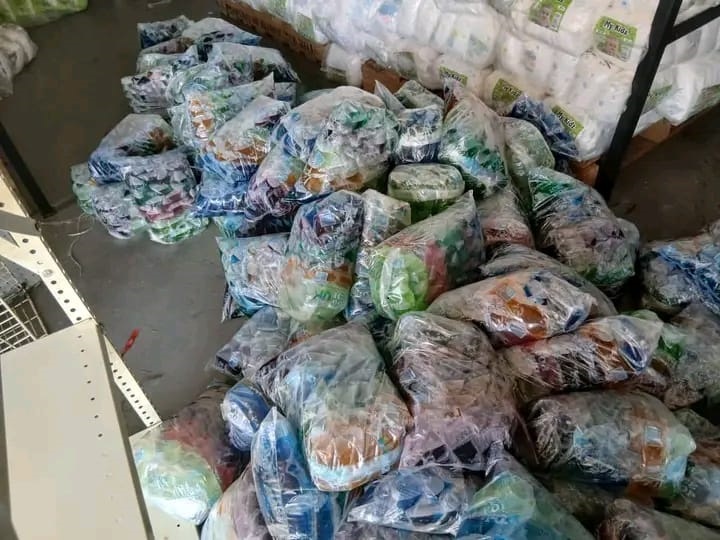
Sources alleged that during the bust, inspectors found several materials that were not up to the required standard. These included improper storage containers and equipment unsuitable for food processing.
Ministry of Health Communications Officer Nsindiso Tsabedze said food processing was governed by strict regulations designed to protect public health.
He explained that one of the fundamental requirements for any structure used for food handling or processing was that it must first be certified by the relevant authorities.
“This certification process ensures that the facility meets specific health standards… A bedroom converted into a factory cannot meet such basic standards.”
He emphasised that without a food safety management system in place, there was no way to control or monitor potential hazards during production.
“This raised the risk of harmful bacteria, chemical contamination, or physical impurities in the food, potentially causing serious illness among consumers, especially children, the main consumers of ice pops.”
Tsabedze confirmed that the discovery was part of a broader enforcement drive aimed at clamping down on illegal food operations.
“We are conducting a drive so as to ensure that these kinds of illegal operations are stopped… Food that is produced in unapproved facilities is not tested, may be contaminated, and poses a real danger to consumers.”
He further warned that individuals involved in illegal food production could face penalties in line with existing public health laws.
He urged the public to purchase food only from reputable and licensed vendors and to report suspicious food production activities.
Meanwhile, Deputy Police Information and Communications Officer (PICO) Nosipho Mnguni confirmed police involvement but said no arrests had yet been made.
Efforts to get comments from the Eswatini Standards Authority (SWASA) proved unsuccessful by the time of publication.