

Minister of Economic Planning and Development Dr Tambo Gina says 46.6 per cent of children are deprived in three or more dimensions in the country.
The minister said the highest deprivations among the children were observed in rural areas at 51.8 per cent whilst urban areas had the least deprivations at 23.1 per cent.
He further mentioned that among the four regions, Lubombo depicted the highest deprivation at 55.4 per cent with the least being Hhohho at 39.5 per cent.
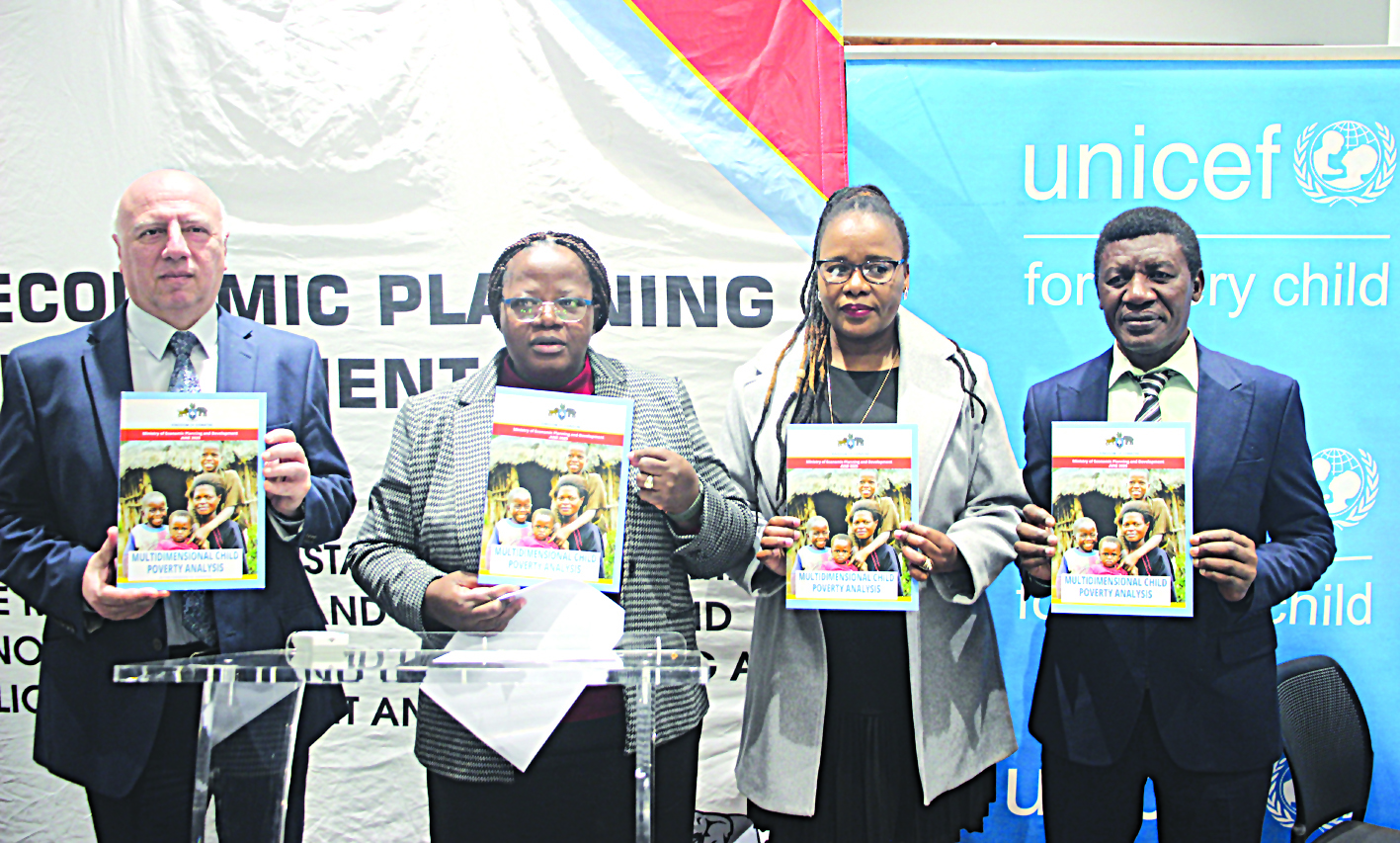
This was revealed during the child poverty analysis report dissemination workshop held at the Hilton Garden Inn in Mbabane yesterday.
The minister was represented by Principal Secretary Thabsile Mlangeni.
The minister said yesterday marked a significant milestone in their collective journey towards ensuring a brighter, more equitable future for every child in the kingdom.
“This workshop is not merely an event for discussion; it is a call to action, grounded in evidence and driven by our shared commitment to eradicate child poverty,” said Gina.
He said the analysis they disseminated provided them with an in-depth, data-driven understanding of the multi-dimensional nature of child poverty in the country.
He stated that similarly to the first multi-deprivation and overlapping child poverty analysis conducted in 2018, the analysis in the new report focused on eight dimensions namely: nutrition, health, child protection, education, water and sanitation, housing and information to measure child poverty.
Also Read: Unlock Summit draws full house, inspires new thinking
He added that it moved them beyond assumptions, offering a clear picture of which areas were children most deprived and remedial interventions.
“This is a critical step in designing targeted, effective, and sustainable interventions,” he said.
He said as the ministry of economic planning and development, their mandate was to guide the nation’s development trajectory, ensuring that growth was inclusive and reached every segment of society.
Gina said the child poverty analysis aligned perfectly with national development agenda and commitment to the Sustainable Development Goals (SDGs), particularly SDG 1 (No Poverty), SDG 2 (Zero Hunger), SDG 3 (Good Health and Well-being), SDG 4 (Quality Education), and SDG 10 (Reduced Inequalities).
Gina said the National Development Plan (NDP) under national outcome three on Enhanced Social and Human Capital Development stated that Eswatini’s target was to reduce the child poverty rate from 56.5 per cent in 2016 to 40 per cent in 2027.
The minister also underscored the importance of the insights from the analysis which represented a comprehensive child poverty situation in the country and deprivations profile as well as identifying the most deprived children and their characteristics.
He said the analysis also shed light into geographical and demographic inequalities as well as analysed the relationships between different dimensions of deprivation enabling targeted interventions.
e said in an effort to address some of the challenges highlighted in the report, government was strengthening social protection programmes to provide safety nets for vulnerable families. He said government was also improving access and quality of essential services, particularly in health, education, and water and sanitation as well as promoting economic opportunities for families to enhance household incomes.
Minister Gina said the complexity of child poverty demanded a robust collaboration and partnership. He also extended a special thanks to the United Nations Agency for Children (UNICEF) for providing crucial technical and financial support during the analysis.
Eswatini Observer Press Reader