


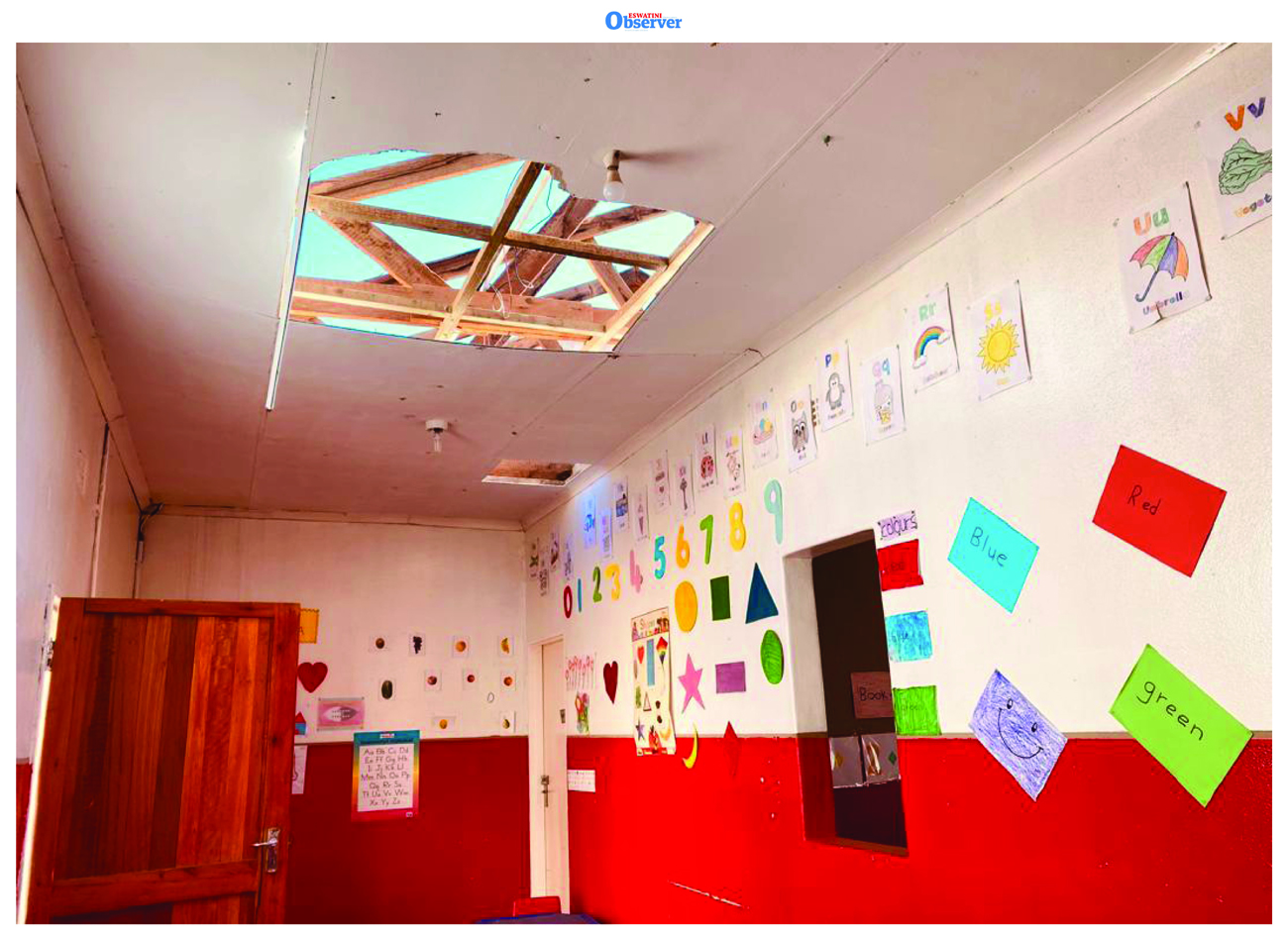
Government has committed E20 million towards response and recovery efforts following the storm experienced since January.
According to National Disaster Risk Management Authority (NDRMA) Communications Manager Magman Mahlalela, the allocation was intended to support humanitarian assistance as well as the rehabilitation of damaged public infrastructure, including roads and bridges affected by the storms.
Mahlalela said since January, the country had experienced three major storm events, which affected a total of 4,176 households, representing approximately 20,735 people, with the Hhohho region being the most affected. He said the constituencies most affected were Mayiwane Inkhundla, Mhlangatane Inkhundla, Maphalaleni Inkhundla, Ndzingeni Inkhundla, Timphisini Inkhundla and Nkhaba Inkhundla.
He added that other heavily affected areas included Matsanjeni South Inkhundla and Zombodze Emuva in the Shiselweni region, as well as Mtfongwaneni in the Manzini region.
“More than 12 schools have reportedly been damaged in the affected constituencies, including classrooms, teachers’ residences and water systems. Two health facilities also reported significant damage,” he said.
READ MORE | Successful OACPS meeting seals Eswatini’s capacity to host
Mahlalela clarified that the responsibility for assessing, rehabilitating and supporting schools falls under the ministry of education and training, which would therefore be in a better position to provide detailed figures and progress updates.
“The rising frequency and severity of storms in the country reflect the wider effects of climate change, placing increasing strain on infrastructure, livelihoods and development progress, particularly for vulnerable households,” he said.
Mahlalela added that the storms were damaging essential facilities such as schools, health infrastructure, roads and agricultural land, thereby disrupting service delivery and weakening community resilience.
He said government, through the NDRMA, continued to prioritise disaster risk reduction, preparedness and climate-resilient infrastructure in order to minimise future impacts and strengthen community resilience.
He said agile early warning systems remained a key priority, with increasing emphasis being placed on preparedness measures rather than response alone.
Mahlalela stated that the NDRMA continued to work closely with government ministries, regional structures and humanitarian partners to ensure a coordinated, timely and effective response to storm-related emergencies, while also building long-term resilience to climate-related disasters.