


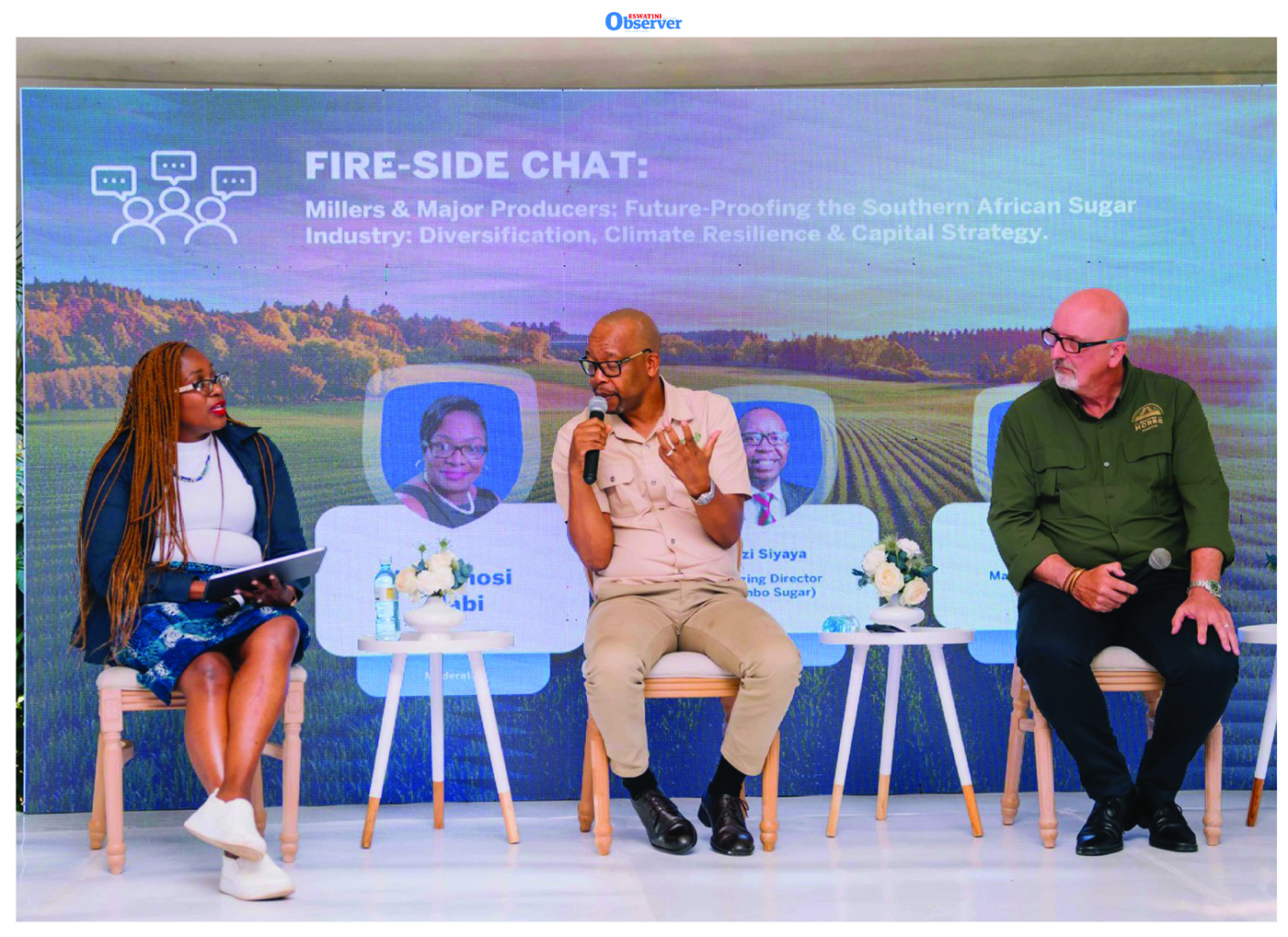
The local sugar industry continues to explore a wide range of export markets, amid the global price instabilities which have been influenced by a variety of economic challenges.
This was highlighted during a Standard Bank Regional Sugar Summit, which was held at Simunye Country Club yesterday.
Key players in the sugar industry, that included sugarcane growers, processors and exporters from within and outside Eswatini came together to collaborate, share experiences and to find ways to ensure the sustainability of the industry that has been known as the ‘engine of the Eswatini economy’.
When opening the summit, Standard Bank Chief Executive Officer Mvuselelo Fakudze said the discussions focused on ‘Future-proofing the Southern African sugar industry; diversification, climate resilience and capital strategy’.
Fakudze noted that the sugar industry had sustained many companies and livelihoods over the past many years.
He said the sugar industry was one of the first sectors that attracted Standard Bank to Eswatini many years ago, and the bank has committed to play a part in growing the industry.
Fakudze said the bank was happy to participate in the economic growth of Africa through agriculture, particularly sugarcane growing.
Minister of Commerce, Industry and Trade Manqoba Khumalo noted that the summit came at a pivotal time when trade dynamics, industry policy, and regional integration were converging to reshape the trajectory of agriculture and manufacturing across Africa.
He stated that Eswatini had been actively engaged in tariff negotiations within the Southern African Customs Union (SACU) configuration to secure expanded market access for the sugar industry.
Khumalo said the negotiations were essential in safeguarding the regional market from destabilising import surges, while simultaneously creating certainty for long-term industrial investments.
Beyond SACU, the minister said government was advancing engagements under the EAC-COMESA-SADC Tripartite Free Trade Area.
He said the objective was to secure improved market access into East Africa, surpassing previous arrangements.
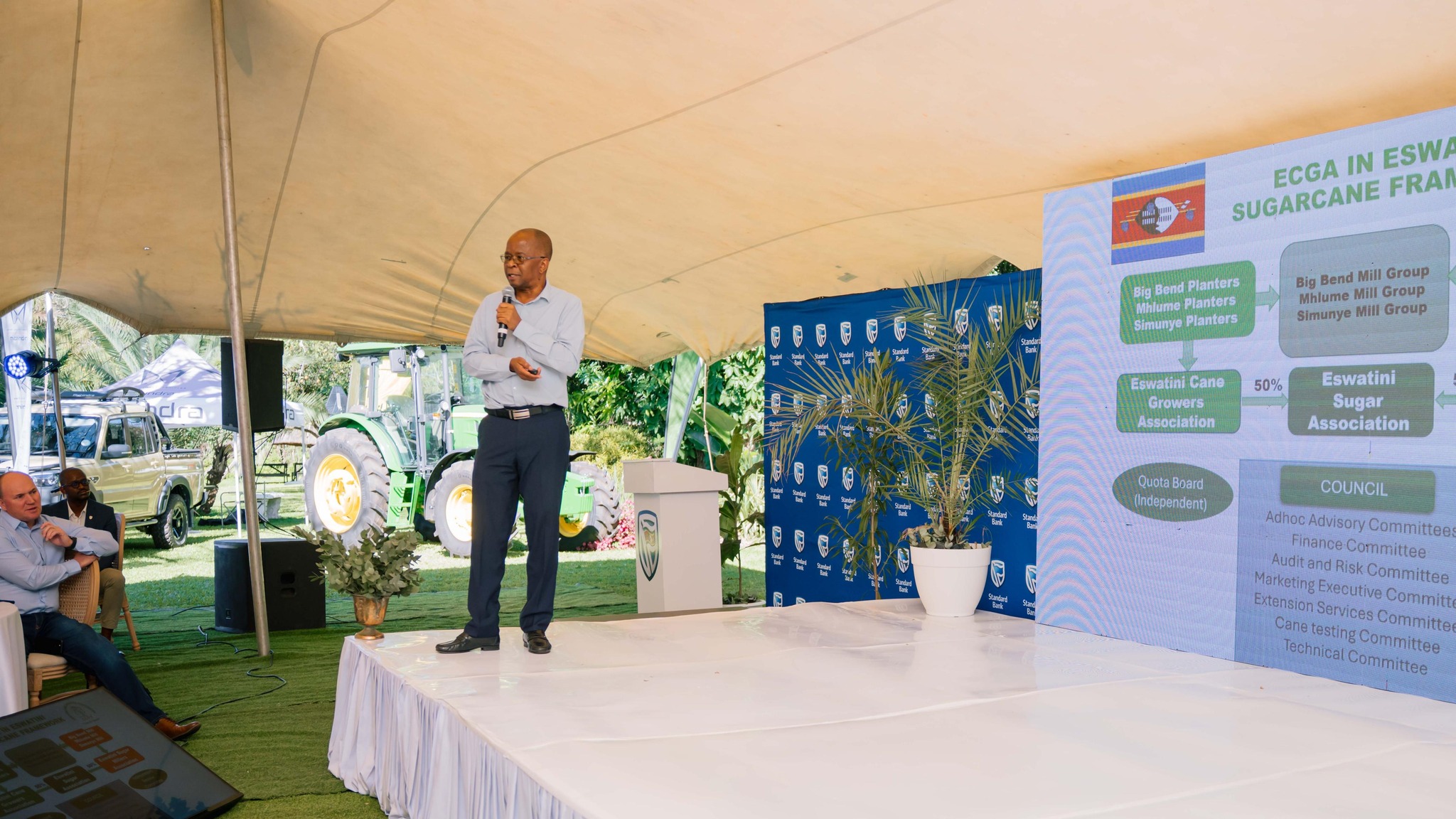
Khumalo said the expansion was not only critical for raw sugar exports, but also for unlocking opportunities in higher value sugar-based products and strengthening regional manufacturing linkages.
ALSO READ | Ubombo Sugar injects E2.8bn for expansion, power exports growth
At continental level, Khumalo said Eswatini was also actively participating in the African Continental Free Trade Area (AfCFTA).
He said the focus was to unlock preferential access into West and North African markets, regions where historically the country had limited entry.
Khumalo said government continued to advocate for meaningful inclusion of sugar and its derivatives, recognising the sector’s strategic contribution to economic growth, rural livelihoods, industrialisation and employment creation.
He said this was embedded in the national development agenda, where the sugar sector is positioned as a catalyst for agro-industrial transformation.
The minister said the AfCFTA Implementation Strategy prioritised agro-processing as a key driver of integration into regional and continental value chains.
Through this approach, Khumalo said the country was positioning the sugar industry as a foundation for broader industrial development.
He stated that opportunities extended beyond refined sugar to ethanol production, biofuels, pharmaceuticals, confectionery manufacturing, specialty sugars, and even sustainable packaging solutions.
With that in practice, Khumalo noted that market access alone was not sufficient.
He said the ambition now was to deepen domestic industrial capacity and significantly increase local value addition.
“We envision a sugar industry that stimulates wider economic activity through supplier development, manufacturing partnerships, innovation, logistics, energy generation and inclusive participation of smallholder farmers,” he said.