


The past week carried a festive mood across the country as Emaswati from different walks of life gathered to celebrate two important milestones; His Majesty’s 40 years on the throne and 58th birthday.
Distinguished guests from across the world arrived to be part of the occasion.
Among them were several Heads of States who came to honour His Majesty King Mswati III and stand with the kingdom during a moment of national pride.
One expected guest, however, never arrived.
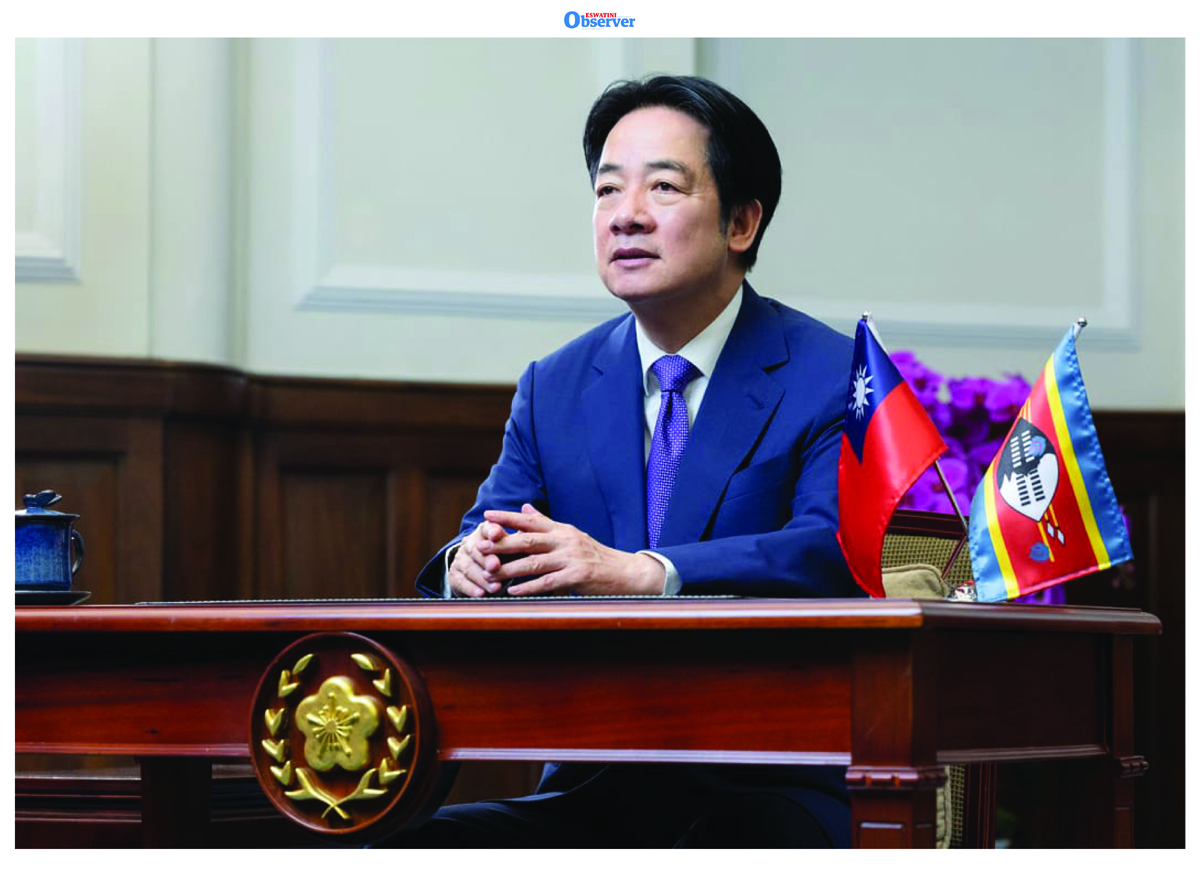
President Lai Ching-te of Taiwan, who had been expected to attend following earlier diplomatic arrangements, was unable to make the trip after reports surfaced that three African countries — Madagascar, Mauritius and Seychelles — denied overflight clearance for the aircraft meant to bring him to the country.
That development immediately turned what should have remained a ceremonial matter into something far bigger.
It was no longer simply about a cancelled State visit.
The blocking of a sitting president on an official journey to another sovereign nation showed how global power struggles can reach even the most peaceful corners of the world.
ESWATINI AND TAIWAN’S LONG FRIENDSHIP
Eswatini today remains the only African country with formal diplomatic ties to Taiwan, a relationship stretching back close to 60 years.
Through changing governments, shifting alliances and growing pressure from larger powers, the kingdom has maintained that friendship with consistency.
Over the years, Eswatini has never hidden its support for Taiwan’s participation in international affairs.
On more than one occasion, the country has used global platforms to argue that Taiwan deserves space within the wider international community.
ESWATINI NOT HOSTILE TO CHINA
While maintaining diplomatic ties with Taiwan, Eswatini has never positioned itself as an enemy of China.
The kingdom’s foreign policy has long rested on the principle of respecting other nations and avoiding interference in their internal affairs.
That thinking also reflects the wisdom handed down by Sobhuza II through the phrase Ngite Sitsa.
In simple terms, Eswatini’s friendship with Taiwan should never be mistaken for hostility towards China.
A country can maintain one relationship without declaring hostility towards another. That is how mature diplomacy should work.
WHEN SOVEREIGNTY IS TESTED
This is why the blocked visit is a cause for concern.
Yes, Taiwan was directly affected because its president could not travel.
But Eswatini was affected too.
The kingdom had invited a guest to a national celebration and through decisions taken elsewhere, that invitation could not be fulfilled.
Supporters of mainland China have gone even further, openly celebrating the reported denial of overflight access and arguing that the same kind of restrictions should also apply to His Majesty Mswati III whenever he travels to Taiwan.
That line of thinking is where diplomacy begins to lose balance.
It shifts from defending a policy position to punishing third parties who have their own sovereign choices to make.
For many people, this may appear to be a simple travel issue, but in reality it touches on something deeper — whether a sovereign State is free to host the guests it chooses without outside obstruction.
THE TYPICAL FACE OF MODERN PRESSURE
The broader objective behind such moves is easy to understand.
China wants to reduce Taiwan’s international space and discourage countries from maintaining official ties with Taipei.
That has long been Beijing’s position and it is pursued with determination across the world.
But the effects are not felt by Taiwan alone.
Countries that continue relations with Taiwan can also feel pressure — sometimes openly, sometimes quietly.
It may come through diplomatic isolation, delays, awkward encounters, cancelled visits or growing caution from neighbours who do not wish to upset a powerful economic partner, as seen in the reported decisions of the three African countries involved.
That is often how modern influence works.
It does not always come through loud threats or public statements.
At times it arrives through silence, hesitation and decisions made behind closed doors.
AN AFRICAN QUESTION
What makes this situation more sensitive is that the countries mentioned are fellow African States.
Madagascar, Mauritius and Seychelles are not distant powers with no connection to this region.
They are part of the wider African family, linked through shared institutions, common development goals and regional cooperation.
Like Eswatini, they understand the challenges of smaller economies navigating a world dominated by larger powers.
No country can be faulted for protecting its interests.
China is a major investor and trading partner across Africa and every government has the right to weigh its economic realities carefully.
Even so, diplomacy is about finding balance in the face of rising tensions.
In this case, there was room for a more measured approach — one that respected China’s position while also respecting Eswatini’s right to host its guest.
Allowing an aircraft to pass through airspace does not amount to changing diplomatic recognition.
Many countries that do not formally recognise Taiwan still engage with it through trade, travel, business and cultural exchanges.
SHOULD ESWATINI CHANGE COURSE?
Eswatini must now decide how to deal with situations like this.
Should it abandon Taiwan simply to ease pressure and align with the majority, as many countries have done over time?
Some will argue yes, pointing to China’s economic strength and global reach.
Those are real factors and cannot be dismissed lightly.
But foreign policy is not only about size and money. It is also about trust, memory and consistency.
Eswatini has stood with Taiwan for generations.
That relationship has become part of the kingdom’s diplomatic identity.
To discard it under pressure would send its own message — that small states can be pushed into changing course whenever larger interests demand it.
That would set a dangerous precedent.
This does not mean Eswatini should close the door to China.
On the contrary, wise diplomacy would seek open channels with both sides wherever possible.
There is nothing unreasonable about maintaining long-standing ties with Taiwan while also seeking constructive engagement with Beijing.
LESSONS FROM HISTORY
The world is full of countries that manage complex relationships without surrendering their independence.
History reminds us that recognition disputes can last for decades before finding resolution.
China itself once fought for its seat at the United Nations.
North and South Korea entered the UN despite remaining divided.
Germany did the same during the Cold War years.
This matter is not unique to Taiwan, nor is it permanent.
The issue between Taiwan and China will evolve with time through negotiation and changing realities.
FINAL THOUGHTS
What Eswatini needs most now is to remain steadfast in its sovereignty — the confidence to say that friendship with Taiwan is its choice, just as friendship with China is the choice of others.
No nation should be punished for the lawful relationships it maintains.
If Eswatini ever changes course one day, that decision must come from thoughtful national interest, not from pressure applied through blocked routes, denied airspace and cancelled visits.
Until next week,
God bless.
Feedback & Correspondence:
Email: johnpires@live.com
Mobile: +268 7606 5993
WhatsApp: +268 7602 7758