



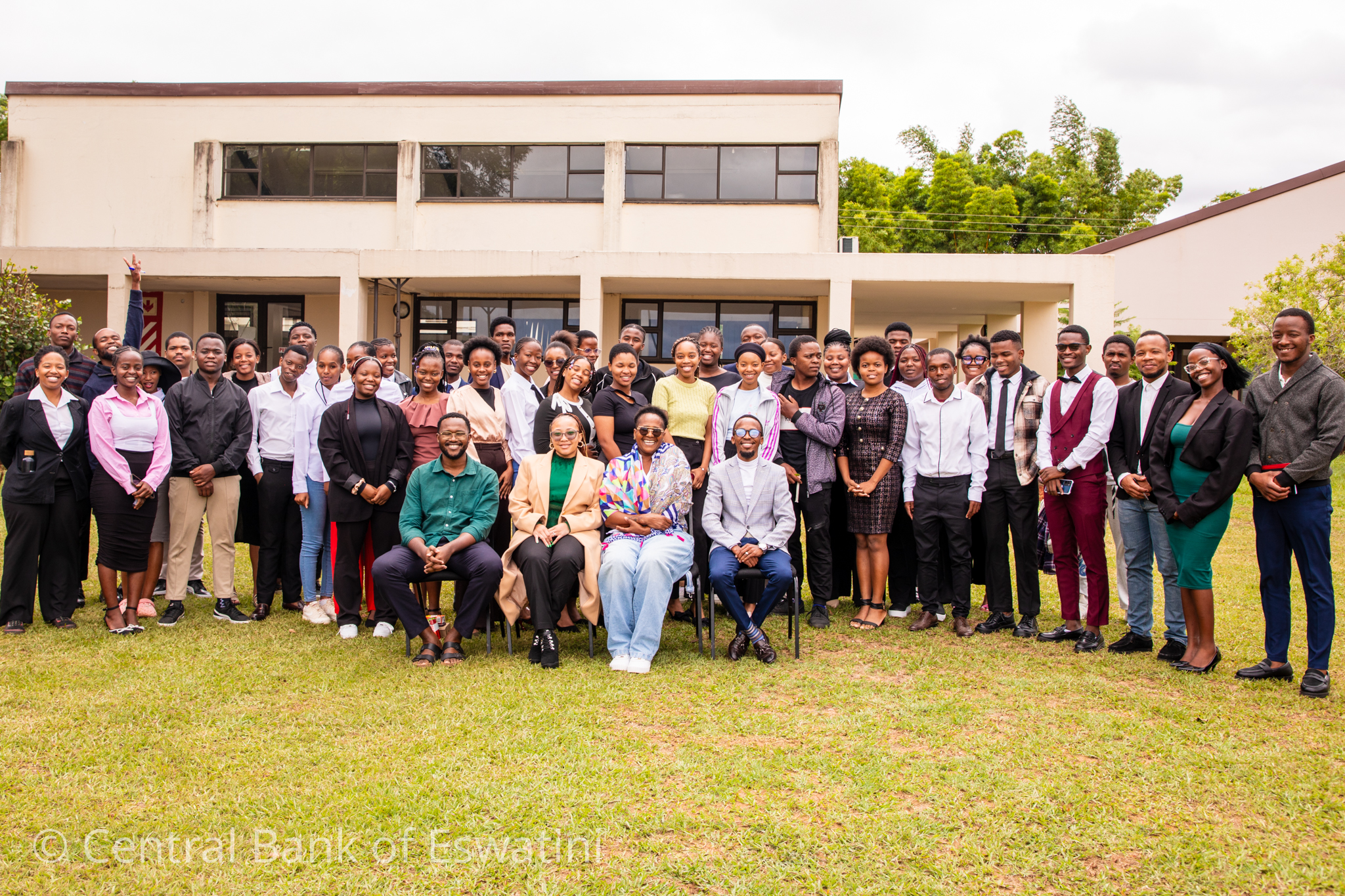
Last week was Global Money Week and during the course of the many activities aligned with the campaign, I had a conversation with one of Eswatini’s leading financial literacy coaches that left me really disturbed.
In my conversation with Xolisile Tfwala, I had begun by commending the Central Bank-led stakeholders for the decision to consistently make the country’s Global Money Week more about the country’s young people.
During our conversation, I indicated how crucial it was for the country to reinforce financial literacy campaigns for young people beyond the Global Money Week activities. This desire arose out of a genuine concern to see Eswatini make systematic progress out of a myriad of both social and economic challenges that most definitely have their roots in poor financial literacy education. I will delve deeper into some of these major challenges as we progress.
Let me begin by giving you a picture of how bad the situation looks in the country as far as the troubles caused by poor financial management are concerned and this impression is based on the disturbing conversation I had with the financial literacy coach, Xolisile Tfwala.
Tfwala pointed out that a prominent psychologist, who is her business associate, reached out to her lamenting how most of her work as a psychologist over the past few years had become more and more about offering professional help to individuals who were not just financially distressed, but had progressed to deep mental health challenges as a result.
Now, I am sure you do appreciate that anyone who can afford a therapy session with a psychologist who runs a private practice is an individual who has medical aid cover and by extension, a better-paying job. It further transpired during the discussion that these therapy sessions often led to many individuals being referred to the Manzini Psychiatric Centre for treatment. That is what disturbed me during that conversation with Tfwala.
This indicated to me that we, as a country, are faced with a massive challenge to build a financial literacy culture at a grassroots level.
A STRUCTURAL PROBLEM
Before this article begins to sound like a psychologist who is violating client confidentiality ethics, let me say that this, to me, sounds like a loud cry from the mental health fraternity.
It basically says offering psychological help for poor financial skills is dealing with the matter the wrong way around.
The heart of the conversation between the psychologist and the financial literacy coach was that the country needs more financial literacy coaches than it needs psychologists. It also says the country needs to look at how deeply rooted poor financial management is, with a view to addressing it as a structural challenge rather than an issue that affects a few individuals here and there.
My intention, therefore, with this piece of writing is, first of all, to challenge relevant key offices in the country to admit that poor financial literacy education is fundamentally the cause of many of our country’s social problems. My second intention is to plead with these key offices to be persuaded to view our society’s lack of systematic financial education as a structural challenge for the development of this nation.
FROM NATIONAL CONCERN TO NATIONAL PRIORITY
I may have more than one basis for my argument for this matter to be viewed as one of Eswatini’s structural challenges.
At this juncture, I prefer to highlight the significance of this issue at the level at which it has been escalated in this country as a concern. I find it important to bring this to the fore, more so because of my continued observation that there persists a tendency in this country to treat ceremonial matters that carry significant weight and meaning as mere formalities — such as remarks made by the king during the official opening of Parliament. Yes, that is where I was coming from.
During this year’s official Parliament opening, His Majesty King Mswati III spoke earnestly about numerous pressing issues that the country is faced with, including gender-based violence (GBV) and SMME growth.
These are matters that are directly connected to our subject matter here.
It is my view that once a national matter is brought up by the Head of State in an important national setting such as the nation’s legislative house, then that matter naturally becomes both a legislative and administrative priority for the country.
For the king to bring up GBV in the manner we saw this year proves how concerning this matter has become in this country. My question is: are we going to see this call by the King becoming just a passage in a script that he read, or will we view it for what it is — an instruction to Parliament and all the necessary bodies to deal with this matter with the urgency with which it has been raised?
THE LINK BETWEEN FINANCIAL DISTRESS AND SOCIAL CHALLENGES
Those dealing with gender-based violence will confirm the direct linkage between it and a lack of financial education.
This makes it even more critical for our legislators to prioritise discussions around finding a way out of this problem for Emaswati.
At the scale at which stakeholders in the financial services sector, mental health, law enforcement agencies and others portray the depth of GBV and financial distress in this country, it truly calls for decisive action from our key offices and institutions.
I mentioned in this column last week how commendable it was for the prime minister’s office to decisively intervene in what had been a thorny issue for the nation — the electricity tariff hike.
The intervention from the prime minister’s office, leading cabinet, proved that there is a lot the country can achieve when remarks from the Speech from the Throne translate into policy and action. It is my prayer to once again see government intervention lead a national conversation around how the country can holistically overhaul its education system, especially our elementary structures in pre-school, primary, secondary and high school education.
THE NEED TO REFORM OUR EDUCATION SYSTEM
I was there at the last Sibaya in 2023 when former Minister of Foreign Affairs and Ambassador Solomon Dlamini made submissions to the effect that he had noted that our education system is still modelled on, or presents a curriculum that he went through back in the 1960s and 1970s.
This should tell us that the country still enrolls its children in a curriculum that does not equip them with present-day skills in financial planning and social sciences that address our major challenges, such as GBV, the high rate of failure of the marriage institution, and our struggles in the small, micro and medium enterprise space. The honest truth is that the mentioned challenges are not accidental.
They are a result of a lack of empowerment in these areas.
The time has come for the country to question and reject the notions, structures, models and systems that simply promote a mentality that money is only to be spent. If we do not have this conversation led from the top, we will continue to have well-paid government officers who constantly look for opportunities to steal or defraud the national treasury. We will continue to have an unproductive workforce, as many people simply go to work with no drive to add value due to mental health and financial distress. It also means we will continue to see the social and economic marginalisation of women at the hands of men who exploit this gap. It also means that, more and more, this country is going to have weak or non-existent social safety nets as families continue to break down due to pressing financial pressures.
FINAL THOUGHTS
I was touched by a statement made by the late former prime minister Barnabas Sibusiso Dlamini years ago.
A death through an accident had happened on one of the country’s roads, and he made a public statement mourning the death of that person, saying, “One death is one too many.”
This statement comes back alive much stronger today. How many deaths are we waiting to see in this country as a result of financial distress-motivated suicide? How many women must die at the hands of men who refuse to let them go because they cannot provide after mismanaging their finances?
These challenges cannot be resolved by one individual, one agency, or one institution. Our collective effort and desire as a nation to create a better social and economic fabric for Eswatini must not waver. But this, again, requires decisive leadership from the top. +
Feedback & Correspondence:
Email: johnpires@live.com
Mobile: +268 7606 5993
WhatsApp: +268 7602 7758