


Church bodies across the country have moved to respond to the Indlovukazi’s warning against the commercialisation of the gospel, largely affirming her concerns while acknowledging gaps in oversight and internal accountability within the church landscape.
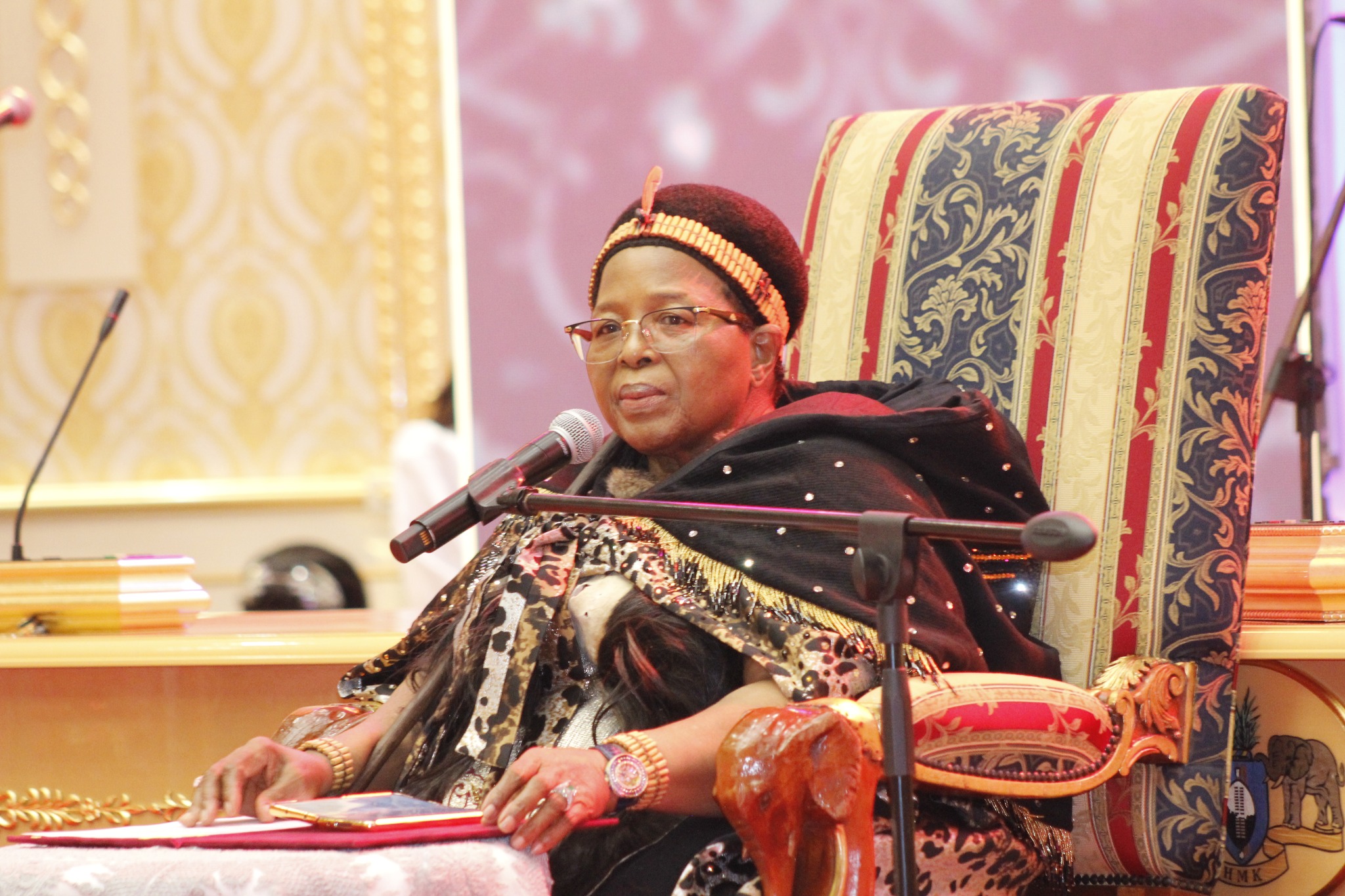
The reaction follows remarks delivered by Her Majesty during the National Prayer Service at Mandvulo Grand Hall last Saturday. Anchoring her sermon on Proverbs 23:23, the Queen Mother cautioned clergy to “buy the truth, but do not sell it”, questioning whether the rapid mushrooming of churches was linked to ministers diverting from spiritual integrity in pursuit of numbers and financial gain.
She challenged congregants to reflect on what they were carrying away from the service, saying that when the Word of God is preached, it must drop in the spirit.
Drawing from the Mount of Transfiguration, she likened the prayer gathering to a holy moment where one might wish to remain in God’s presence.
However, her tone sharpened as she questioned whether some clergy were sincerely seeking divine revelation or resorting to underhand methods.
“Yebazalwane, tsengaliciniso, ungatsengisi ngalo,” she said, stressing that brethren must buy the truth and not sell it.
She raised concern that in the quest to grow congregations, some pastors and prophets were allegedly seeking “other things that God does not approve of”, including consulting diviners to obtain powers that would attract followers and generate money.
League of Churches: ‘The Word Is Short, the Offering Is Longer’
League of Eswatini Churches Bishop President Samson Hlatjwako described Their Majesties’ message as powerful and truthful.
He recalled that concerns over the mushrooming of churches were not new, noting that His Majesty had previously summoned church leaders to Engabezweni Royal Residence to encourage grouping churches under recognised bodies to ensure order.
A committee, which included the late Isaac Dlamini and Bishop Hlatjwako, was appointed to oversee the process. However, the initiative was not fully completed.
“As the League, we do not encourage division within the church unless there are valid reasons,” he said.
Bishop Hlatjwako agreed with the Indlovukazi’s concerns regarding financial practices.
“It is true what Their Majesties have said. The Word of God is now short in some churches and the offering is longer.”
ALSO READ | KING ORDERS IMMEDIATE END TO DRUGS SHORTAGE
He criticised the prescribing of fixed offering amounts, saying believers should not be pressured into giving specific sums.
“The things of God are given freely by His grace and they should also be given freely,” he said, cautioning against questionable prophetic practices.
However, he conceded that the League currently had no formal monitoring mechanisms in place.
ECC: ‘A Call to Preserve the Integrity of the Gospel’
The Eswatini Conference of Churches (ECC) CEO Themba Ngozo described the Indlovukazi’s remarks as timely and Spirit-led.
Ngozo said the ECC interpreted Proverbs 23:23 as a call to preserve the integrity of the Gospel, free from self-interest.
He acknowledged that prioritising financial gain over spiritual nurture could erode trust and exploit vulnerable congregants.
On accountability, Ngozo said the ECC promoted biblical standards of leadership, transparent financial practices and regular audits where feasible.
Regarding allegations of reliance on divination or sorcery, he said the ECC unequivocally condemned such practices, maintaining that true power flowed only from the Holy Spirit.
Council: ‘Commercialisation Begins with Wrong Intentions’
Council of Eswatini Churches Chairperson Zwanini Shabalala said while he could not speak officially for the entire body, the gospel had been freely given and must be accepted by faith.
He noted that commercialisation began when preaching shifted from bringing people to God to generating income.
He emphasised the need for clear church policies to promote financial integrity and accountability, warning that when ministry intentions turned toward wealth or fame, individuals might reach for other sources of power.
He described the Indlovukazi’s message as a fair warning to clergy not to use the Lord’s name for personal gain.
A Rare Convergence
While none of the church bodies outright denied the existence of problematic practices, all acknowledged the need for vigilance, integrity and renewed focus on spiritual authenticity.
Taken together, their submissions reflect a rare convergence — that the Gospel must remain freely given, that financial exploitation is a legitimate concern, and that the church must guard against both commercial motives and questionable spiritual influences.
Whether the Indlovukazi’s warning will translate into concrete reforms remains to be seen.
What is clear, however, is that her words have opened a national conversation on faith, accountability and the moral stewardship of the pulpit.